
If you're looking for the best app to learn Dutch in 2026, Praktika is the best overall choice for most learners. It gives you spoken Dutch conversations with human-like AI tutors, instant corrections on pronunciation, grammar and word choice, and explanations in your native language while you're still a beginner.
Praktika fits people with a real reason to speak Dutch soon. Maybe your company is relocating you to Amsterdam and you don't want to be the only person in the office who can't follow the coffee-break chat. It also suits partners of Dutch or Flemish speakers, new residents of Rotterdam, Utrecht or Antwerp, and commuters who have 10 to 15 minutes a day to practice.
The other nine apps take different routes: gamified lessons with Duolingo, structured courses with Babbel and Busuu, immersion with Rosetta Stone, audio with Pimsleur, short multi-language lessons with Mondly, native-speaker videos with Memrise, and live human teachers on italki and Preply. Each one suits a different learner, and the reviews below show which.
This comparison is based on factual App Store and Google Play reviews and a detailed analysis of each app in November 2026.
Best App to Learn Dutch at a Glance
This table compares the 10 apps side by side on fit, features and trade-offs.
Use it to shortlist two or three, then read the full reviews further down.
| Tool | Best For | Key Features | Pros | Cons |
|---|---|---|---|---|
| Praktika | Speaking Dutch with confidence | AI tutors with memory, instant corrections, native-language explanations | Open spoken conversations in Dutch; tutors that remember you | No certificates; mobile apps only for now |
| Duolingo | A daily Dutch habit | Bite-sized lessons, streaks and leagues, 40+ languages | Free core course; highly motivating | Trains recognition more than speaking; little grammar explanation |
| Babbel | Structured Dutch grammar | Expert-built lessons, real-life dialogues, review, podcasts | Clear explanations; lessons adapted to your native language | Limited open conversation; speech recognition complaints |
| Busuu | Corrections from native speakers | Community feedback, study plan, cultural notes | Human corrections on your exercises; grammar in context | Ads in the free version; AI conversation only in some languages |
| Rosetta Stone | Immersion without translation | Picture-based lessons, pronunciation checks, offline mode | Full immersion; calm, ad-free lessons | No grammar explanations; strict speech recognition |
| Pimsleur | Hands-free Dutch on the commute | 30-minute audio lessons, spaced recall, flash cards | Speaking out loud in every lesson; hands-free | Fixed pacing; AI coach not offered for Dutch |
| Mondly | Short lessons in many languages | 41 languages, conversation chatbot, hands-free mode | Well-organized lessons; wide language range | Speech recognition complaints; course quality varies by language |
| Memrise | Hearing real Dutch speakers | Native-speaker videos, goal tracks, AI conversation practice | Real accents; goal-based vocabulary | Paywalled grammar; redesign complaints |
| italki | Private Dutch teachers on demand | 1-on-1 video lessons, flexible booking, lesson summaries | Native teachers; pay per lesson | Lessons need scheduling; teacher quality varies |
| Preply | A regular weekly tutor | 1-on-1 video lessons, goal setting, lesson subscriptions | Wide tutor choice; personal accountability | Auto-renewal complaints; lessons need booking |
If your goal is to speak Dutch at work and in daily life, start with Praktika and add Pimsleur for the commute if you like audio. If you prefer a human teacher in every session, compare italki and Preply.
Why Learn Dutch With an App?
Dutch is the language of the Netherlands, the Flemish half of Belgium and Suriname. It's closely related to English and German, so words like water, appel and boek look friendly from day one.
The catch is that many Dutch speakers also speak excellent English. In Amsterdam you can order coffee, sign a lease and sit through meetings in English, which makes it tempting to put Dutch off for another year.
Office jokes, lunch conversations, the neighbors and your kids' school still run in Dutch, and that's where newcomers feel left out. Colleagues who are still building their English can find options in our guide to the best apps to learn English.
What Dutch Apps Do Well
A good Dutch app turns dead time into practice. Ten minutes on the tram, the train from Haarlem or the wait at the gemeente adds up faster than a weekly evening class you keep postponing.
Apps also help with the parts of Dutch that reward repetition. You see het huis and de tafel often enough that the articles start to stick, and many apps adapt to your level and remind you to come back tomorrow.
Where Most Dutch Apps Fall Short
Most apps teach you to recognize Dutch, and recognition doesn't stop a Dutch colleague from switching to English. To keep a conversation in Dutch, you need to produce a sentence out loud, at speed, with someone waiting.
Pronunciation is the second gap. The throaty g in goedemorgen, the ui in huis and uit, and the difference between man and maan barely exist in English, and a tap-to-answer exercise can't tell you whether you said them right.
Word order trips up English speakers too. In a sentence like Ik weet dat hij morgen komt, the verb moves to the end, and separable verbs split apart (Ik bel je morgen op), which only sticks after you've said them many times with feedback.
Best App to Learn Dutch Overall
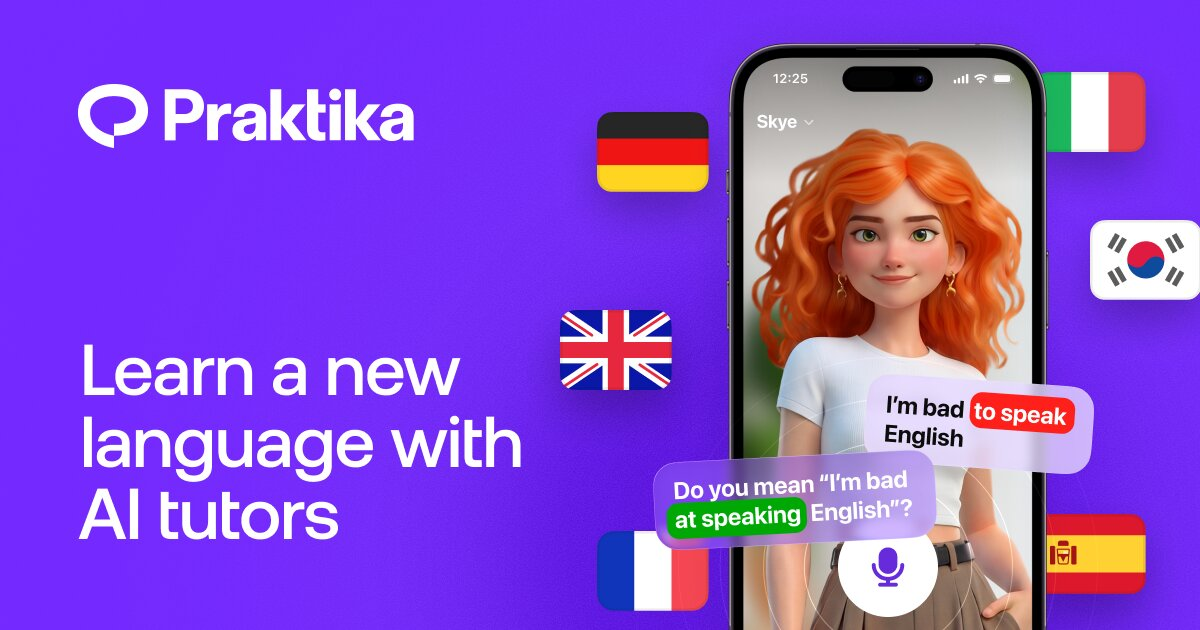
Praktika is the best app to learn Dutch overall. It's built for the hardest part of moving to a Dutch-speaking country: speaking out loud with enough confidence that people answer you in Dutch.
Every session is a spoken conversation with a human-like AI tutor who remembers your goals, your mistakes and the words you've learned. You can learn Dutch with an AI tutor who corrects your pronunciation, grammar and word choice as you talk, shows a better way to say it, and explains why without stopping the conversation.
Few AI-native apps teach Dutch at all, since most of them focus on English or Spanish. Praktika teaches 14 languages, Dutch included, and beginners get explanations in their native language until they're ready for more Dutch.
Best App to Learn Dutch: In-Depth Review & Comparison
Below, we review each app in detail: who it suits, its standout features, its strengths and limits, and what users say about it in the app stores.
The order reflects how well each option helps most beginners speak Dutch in real life, starting with the strongest all-round choice.
1. Praktika
Overview
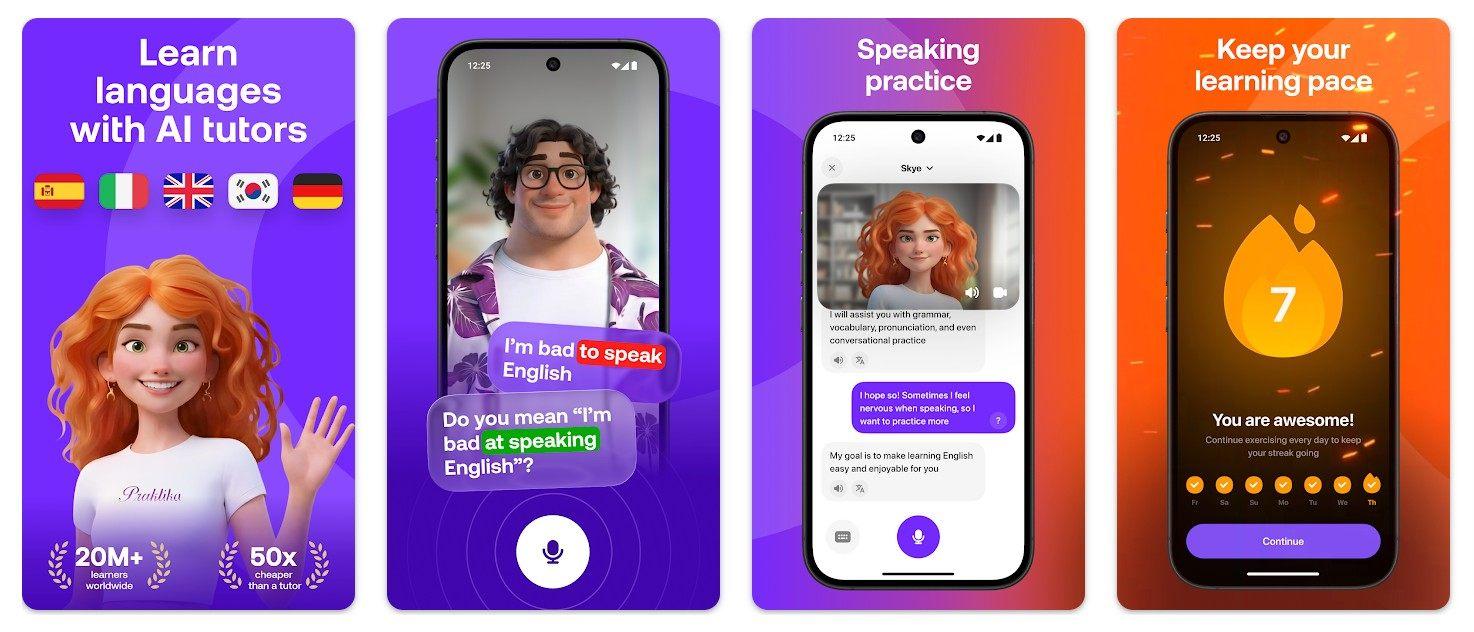
Praktika is an AI tutor app built to get you speaking a new language out loud, with confidence. You hold spoken conversations with human-like AI tutors who remember your goals, your mistakes and the words you've learned, and who correct you as you talk.
The idea behind it is that everyone deserves a private tutor. Praktika puts one in your pocket, ready at 2 a.m., on the tram to Zuidas or in ten minutes between meetings, with no appointment to book.
More than 30 million people have learned with Praktika, and around 2 million use it every month across 200+ countries and territories. OpenAI featured Praktika as a case study in January 2026, and companies use the same app through Praktika for Business, including to prepare staff who are relocating abroad.
Ideal For
Praktika is the strongest pick for Dutch learners who want to talk more than they study. It fits these groups best:
- Relocating professionals who want to join conversations at work in Amsterdam, Rotterdam or Eindhoven
- Partners of Dutch or Flemish speakers who want to chat with the family at birthdays and dinners
- New residents handling the landlord, the GP's assistant, the gemeente and the neighbors
- Complete beginners who need explanations in their own language at the start
- Learners who freeze when a Dutch speaker answers faster than they expected
It also suits anyone who feels too shy to try their Dutch on real people yet, since the tutor never judges a mistake.
Top Features
Every Praktika feature is designed to raise your speaking time and the quality of your feedback.
- AI tutors with persistent memory: Your tutor remembers your goals, recurring errors and vocabulary over months, so if you keep mixing up de and het, the next session picks up from there.
- Corrections as you speak: Pronunciation, grammar and word choice are corrected in the moment, with a better phrasing and a short explanation, which helps with sounds like the Dutch g and ui.
- Native-language explanations: The tutor starts in your language and switches gradually to Dutch, so you can begin from zero.
- Adjustable feedback and speed: Choose a Soft, Balanced or Strict feedback style and a slower speaking speed that lets you catch every word before you move up.
- Practice scenarios and role-plays: Rehearse ordering at a café, a work meeting or small talk, or upload your own document with Custom Topics and role-play it.
You can also photograph your surroundings, such as a Dutch menu or a letter from the gemeente, and practice the words in it.
Why We're the Best App to Learn Dutch
Praktika trains the skill that keeps a conversation in Dutch: answering out loud, in full sentences, without a long pause. You produce Dutch from your first session, and every sentence gets feedback, so the switch to English happens less and less.
It also fits a commuter's day. Sessions average 12 minutes, every session is scored, and your progress maps to CEFR levels, where 73% of active learners gain a full level in about 20 hours of practice, on average.
Pros
Praktika's strengths make it feel like a private Dutch tutor you can open any time.
- Open spoken conversations in Dutch in every session
- Instant feedback on pronunciation, grammar and word choice
- Tutors that remember your context and adapt to your goals and pace
- Explanations in your native language for beginners
- 14 languages, with switching or adding a language at any time
This combination is hard to find in any other single app on this list.
Cons
No app suits everyone. These are the cases where Praktika may not be your first choice:
- You need an official certificate: Praktika tracks your CEFR level, doesn't issue certificates and isn't a certified exam pathway, so pair it with an official exam if your visa or employer requires one.
- You only study on a computer: Praktika runs on iPhone and Android today, with a web app still in testing.
- You want a human on the other side: Tutor marketplaces such as italki and Preply connect you with live teachers.
For learners whose goal is speaking Dutch with colleagues, neighbors and family, these trade-offs rarely matter.
Customer Reviews
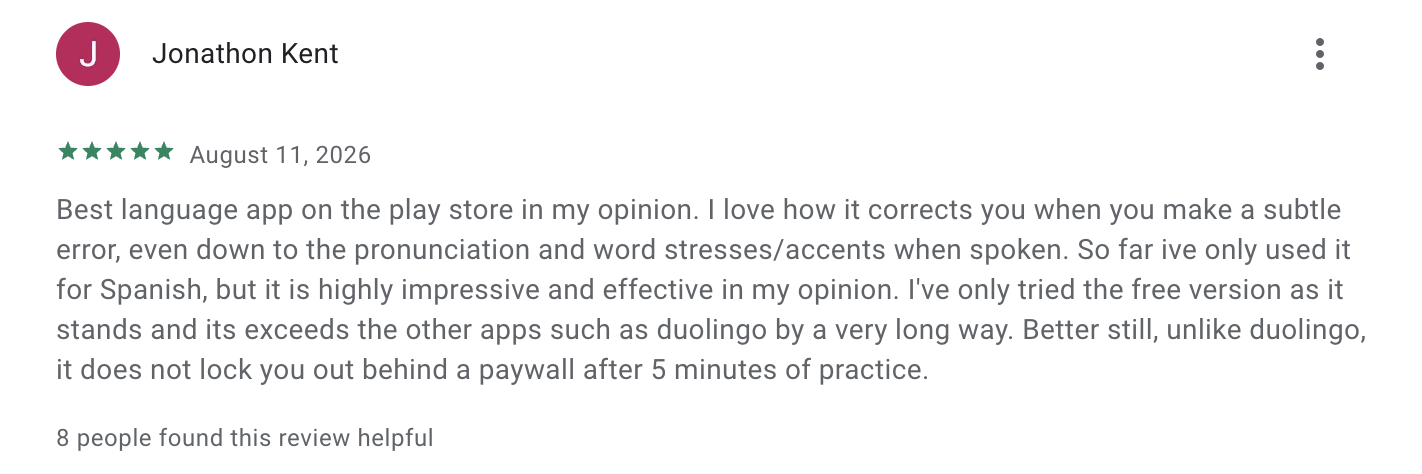
Praktika holds a 4.8-star average across more than 1.2 million ratings on the App Store and Google Play. Its reviews are full of learners who finally started speaking after years of tapping through other apps.
Users highlight corrections that go down to pronunciation and word stress, tutors whose voices sound like real people, and practice with no appointments and no timetable. Many say it's the first app that made them answer in complete sentences.
Final Verdict
Praktika is the best app to learn Dutch for anyone who wants to speak it. It combines open conversation, instant feedback and a tutor that remembers you, in sessions short enough for any commute.
If you want your Dutch colleagues to keep answering you in Dutch, it's the most direct path from knowing words to holding a conversation.
2. Duolingo
Overview
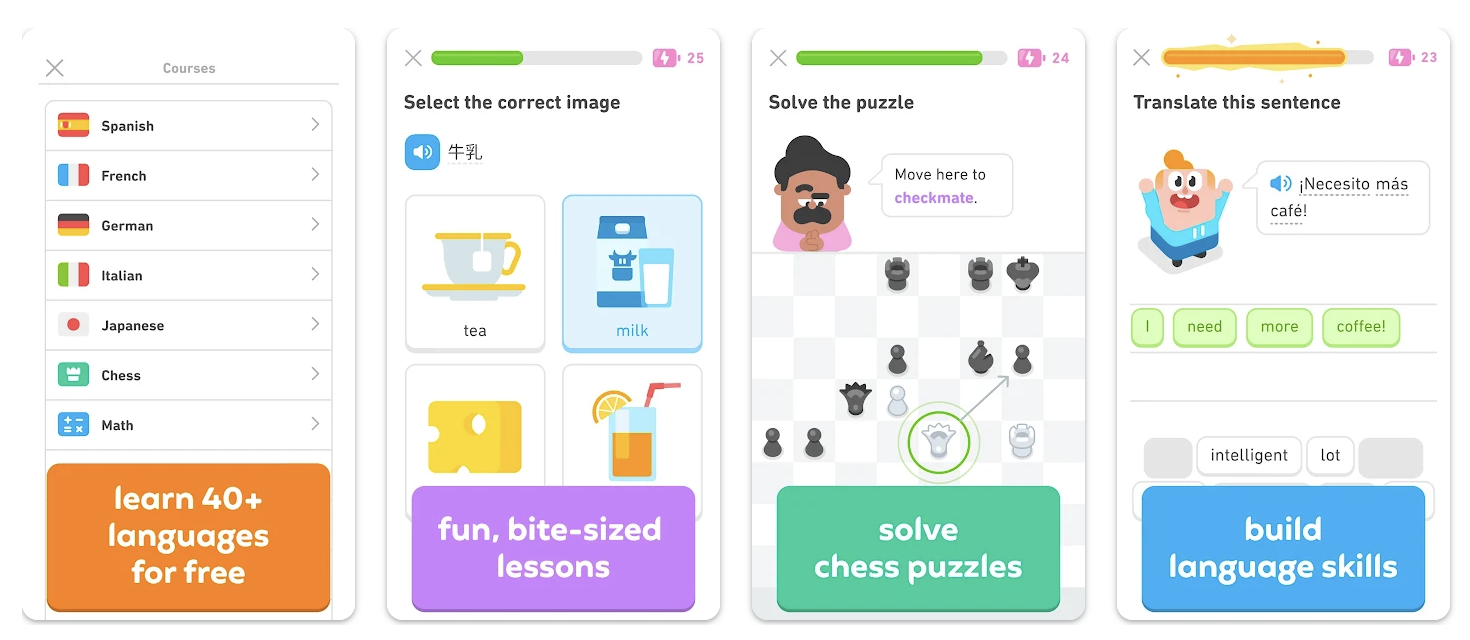
Duolingo is the world's most downloaded education app and the best-known name in language learning. Founded in Pittsburgh in 2011, it turns study into a game, with short lessons, streaks, leagues and a green owl that reminds you to come back.
Its long-running Dutch course for English speakers sits alongside 40+ other languages, plus chess, math and music. The core course is free, and the top tier, Duolingo Max, adds AI features such as Video Call in select courses.
Ideal For
Duolingo works best for learners who want an easy, low-pressure start with Dutch.
- Casual learners curious about Dutch before a move or a holiday
- Families who enjoy learning through games together
- Budget-conscious learners who want a free option
- Habit builders who want a daily routine before choosing a speaking app
It's less suited to people who need to speak Dutch with confidence by a specific date.
Top Features
Duolingo's features are built around motivation.
- Bite-sized lessons: Short exercises across reading, listening, writing and speaking
- Streaks, XP and leagues: Game mechanics that reward daily practice
- Stories and practice: Extra reading and review to recycle vocabulary
- Duolingo Max: AI features such as Video Call, offered in select courses
These tools make it easy to keep going on busy days.
Why It Stands Out
Duolingo stands out for reach and motivation. Its free course and game design make Dutch feel approachable from the first lesson.
It's one of the smartest starting points for spelling and first words like ik, jij and dank je wel.
Pros
Duolingo's strengths are accessibility and engagement.
- Free core Dutch course
- Habit-forming streaks and rewards
- Short lessons that fit any schedule
- A long-running, widely used Dutch course
For building a first habit, it's hard to beat.
Cons
Duolingo's weaknesses show up once you try to speak Dutch with a real person.
- Exercises train recognition more than spoken production
- Little explanation of word order or de and het
- The energy system limits practice in the free version
- AI conversation features aren't confirmed for every course, so check Dutch
Many learners keep long streaks without being able to hold a short conversation.
Customer Reviews
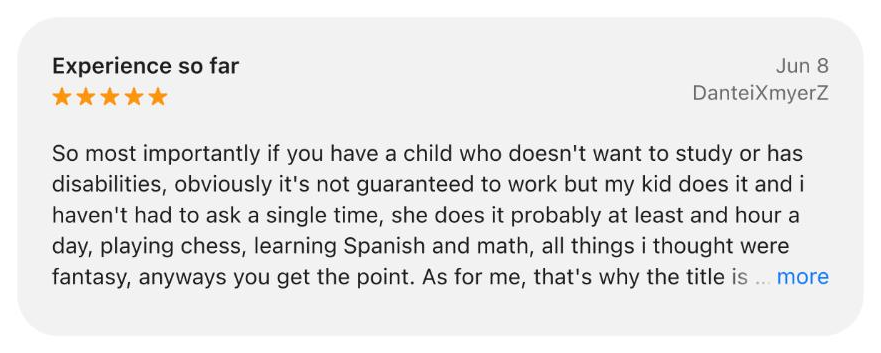
Duolingo holds 4.7 stars on the US App Store (5.5M ratings, Editors' Choice) and 4.8 stars on Google Play (51M reviews, 500M+ downloads). Users praise the habit-forming game design, the steady flow of new vocabulary and how engaging it is for families.
Recent complaints focus on the energy system, reward clutter, bugs, little grammar explanation and surprise charges after free trials.
Final Verdict
Duolingo is a great free starting point for casual learners who want a fun daily Dutch habit. It makes the first few hundred words feel painless.
It isn't built to make you a confident speaker, though. Learners who want to hold conversations at work or with family will need a speaking-focused app alongside it.
3. Babbel
Overview
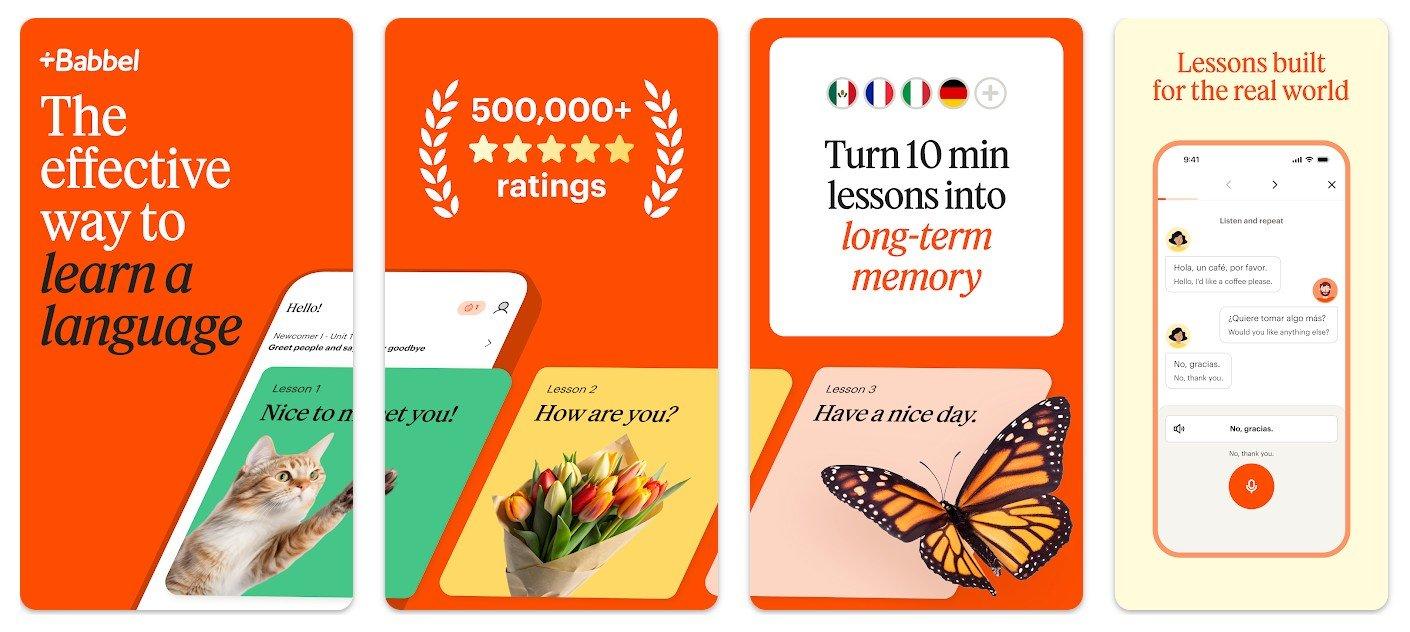
Babbel is a Berlin-based language app that teaches through structured, grammar-led courses. Its lessons are built by more than 200 language experts and adapted to your native language, so English speakers get explanations aimed at the mistakes they tend to make in Dutch.
Babbel teaches 14 languages, Dutch among them, in short lessons built around real-life dialogues. Review sessions, podcasts and writing lessons add depth, and you can follow the guided path or pick topics in your own order.
Ideal For
Babbel suits Dutch learners who like knowing the rules.
- Adults who want clear, structured lessons
- Grammar-minded learners who want de and het and verb position explained
- Self-paced learners who like choosing their own path
- Expats who want practical dialogues for shops, trains and offices
Learners who mainly want open conversation may find the speaking practice thin.
Top Features
Babbel's features focus on clear, practical lessons.
- Native-language tailoring: Lessons adapted to the language you already speak
- Dialogue-based lessons: Real situations, from shopping to small talk at work
- Spaced review: Flashcard-style practice to keep words fresh
- Podcasts and writing lessons: Extra formats for listening and writing
Together they give you a course-like structure inside an app.
Why It Stands Out
Babbel stands out for the quality of its explanations. Reviewers often say it explains far more than Duolingo, with lessons that build understanding through context.
That helps in Dutch, where separable verbs and subordinate clauses are easier to apply once someone has spelled out the rule.
Pros
Babbel's strengths are structure and clarity.
- Grammar explained clearly in context
- Lessons adapted to your native language
- Practical, real-life dialogues
- Podcasts, review and writing lessons
It's one of the most respected course-style apps for Dutch.
Cons
Babbel has weaknesses in speaking and open practice.
- Speech recognition often marks correct answers as wrong
- Only one free lesson before subscribing
- Babbel Speak, its adaptive AI dialogue feature, covers select languages only, so check Dutch
- Thin content at advanced levels
It builds knowledge well but offers limited real conversation.
Customer Reviews
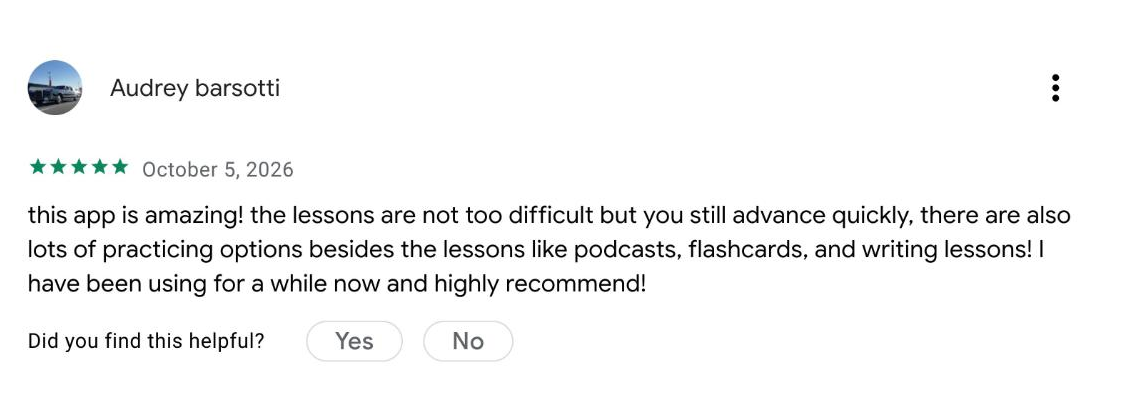
Babbel holds 4.7 stars on the US App Store (756K ratings) and 4.4 stars on Google Play (1.13M reviews, 50M+ downloads). Reviewers value its explanations, the no-games format, the self-paced structure and its podcasts, flashcards and writing lessons.
The main complaints are about speech recognition, the early paywall, a limited language list and weaker advanced content.
Final Verdict
Babbel is an excellent pick for adults who want grammar-first Dutch lessons with clear explanations. It turns short sessions into real understanding of how Dutch sentences work.
Its speaking practice is limited and its speech recognition frustrates many users. Learners who want to talk with colleagues soon will need a conversation-focused app as well.
4. Busuu
Overview
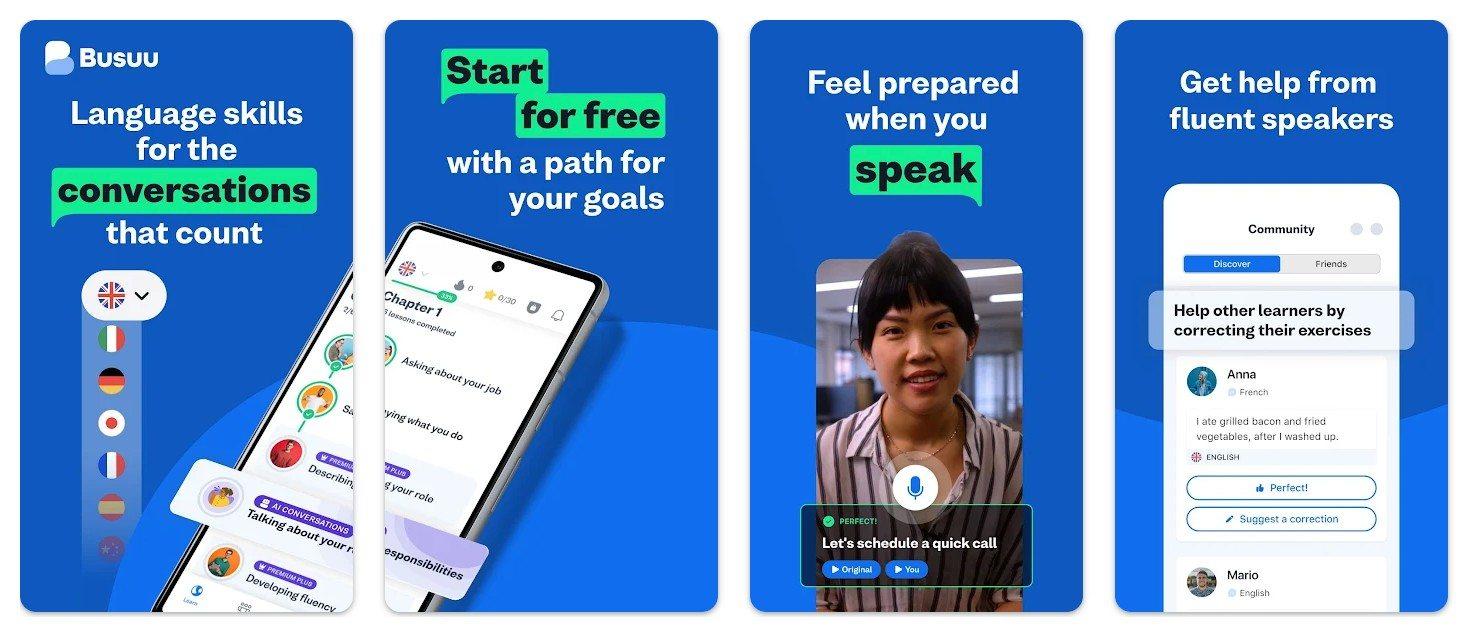
Busuu combines expert-designed courses with feedback from a global community of native speakers. You complete exercises, fluent speakers correct your writing and recordings, and you help learners of your own language in return.
The app teaches 14 languages, including Dutch, with grammar explanations, cultural notes, videos of real speakers and a study plan with checkpoints. Busuu is a Chegg service, and its Premium Plus tier adds AI-powered Conversations in some languages.
Ideal For
Busuu fits Dutch learners who want human input on their progress.
- Learners who want native-speaker corrections without booking a tutor
- Beginners who like structure and clear checkpoints
- Grammar-minded learners who want rules explained in context
- Learners curious about Dutch culture, thanks to the cultural notes
It's less suited to learners who want daily open conversation in Dutch.
Top Features
Busuu's features balance self-study with real feedback.
- Community feedback: Fluent speakers can correct your written and spoken exercises
- Grammar and culture: Explanations and cultural tips inside lessons
- Study plan: Goals, timelines and checkpoints that show progress
- Real-speaker videos: See how words are pronounced and how mouths move
The community remains its signature feature.
Why It Stands Out
Busuu stands out because it brings real people into a self-study app. Getting your Dutch corrected by native speakers adds a layer of feedback few apps offer.
Reviewers also say its lessons go deeper on grammar and context than gamified apps.
Pros
Busuu's strengths come from people and structure.
- Corrections from native speakers
- Grammar explanations and cultural notes
- A study plan with checkpoints
- Videos of native speakers pronouncing words
It's one of the smartest ways to get human feedback inside an app.
Cons
Busuu has some limits, especially in the free version.
- Frequent ads in the free version
- Speech recognition glitches
- AI conversation limited to the top tier and some languages
- Community corrections take time to arrive
Daily speaking practice isn't its strong point.
Customer Reviews
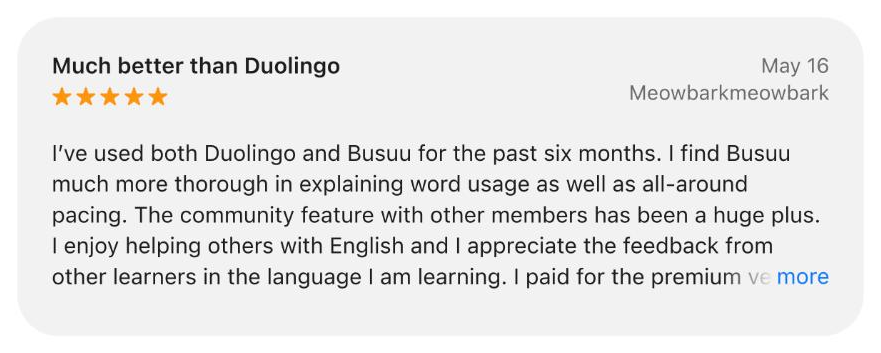
Busuu holds 4.7 stars on the US App Store (101K ratings) and 4.7 stars on Google Play (1.24M reviews, 50M+ downloads). Users praise the community corrections, the grammar detail, the cultural notes and the real-speaker videos.
The most frequent complaints are about ads in the free version, speech recognition problems, limited AI conversation and pricing tactics.
Final Verdict
Busuu is a smart choice for learners who want a structured Dutch course plus corrections from native speakers. The community feature adds real value.
The free version's ads and the limited spoken practice hold it back. Learners who want to speak Dutch with confidence soon will need more conversation than Busuu provides.
5. Rosetta Stone
Overview
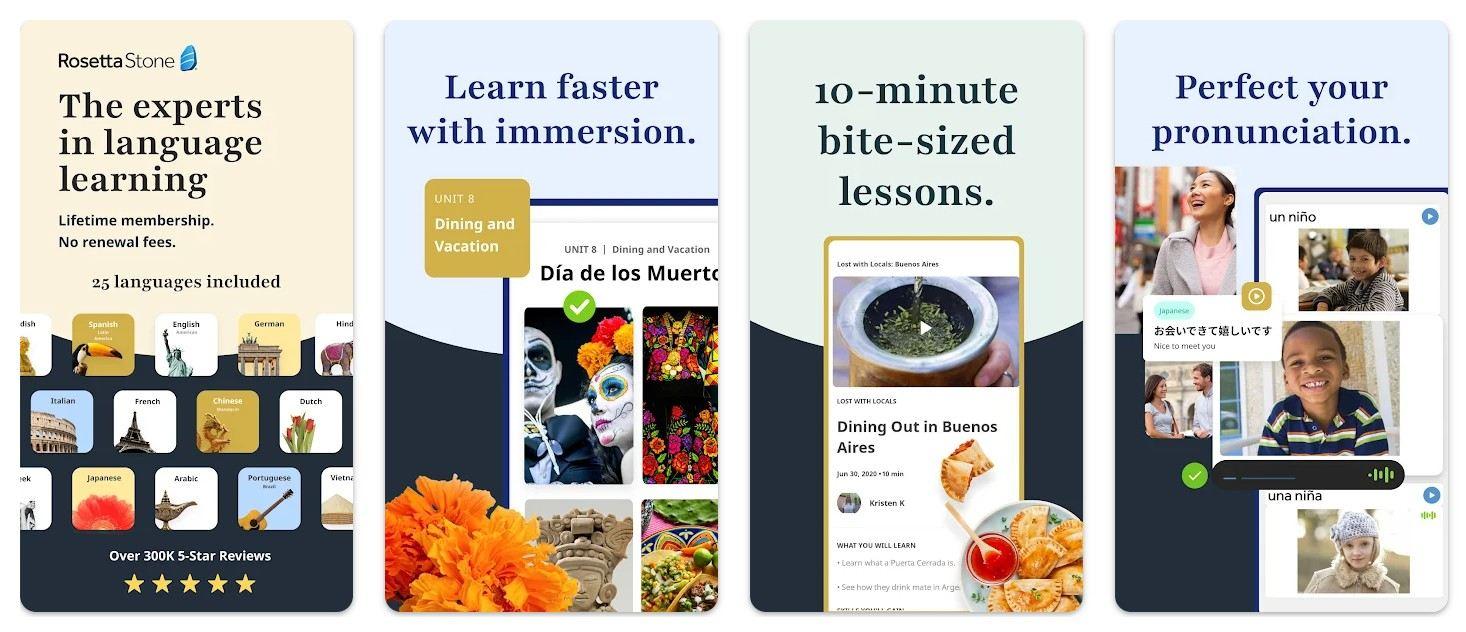
Rosetta Stone pioneered immersion-based language software and has been teaching since 1992. Its method skips translation entirely: you connect Dutch words and sentences to pictures, the way children learn their first language.
Now part of IXL Learning, it offers 25 languages, Dutch included, with 10-minute lessons, pronunciation practice and offline downloads. Rosetta Stone Classic now serves existing subscribers and enterprise or education users, while new learners start with the newer Rosetta Stone Sapphire.
Ideal For
Rosetta Stone suits Dutch learners who enjoy learning through context.
- Visual learners who think in images
- Learners who want total immersion without English on screen
- Offline learners who study on planes or trains
- People who dislike gamified apps and want a quiet study space
Learners who need grammar explained step by step may find it frustrating.
Top Features
Rosetta Stone's features revolve around immersion.
- No-translation lessons: Pictures and Dutch only
- Pronunciation checks: Speech feedback on your spoken answers
- Short lessons: Around 10 minutes each
- Offline mode: Download lessons and study anywhere
The method pushes you to think in Dutch from the start.
Why It Stands Out
Rosetta Stone stands out for its pure immersion approach. You build direct links between Dutch words and meaning, without translating in your head.
It's also calm and ad-free, and reviewers often describe it as more thorough than gamified apps.
Pros
Rosetta Stone's strengths come from its method.
- Immersive, translation-free lessons
- Pronunciation practice in every unit
- Offline downloads
- 25 languages available
It's a focused alternative to game-style apps.
Cons
Rosetta Stone's approach doesn't work for everyone.
- No grammar explanations, which makes Dutch word order hard to work out
- Speech recognition often rejects correct answers
- Early vocabulary isn't always practical for daily life
- Confusion during the move from Classic to Sapphire
Learners may understand more Dutch than they can say.
Customer Reviews
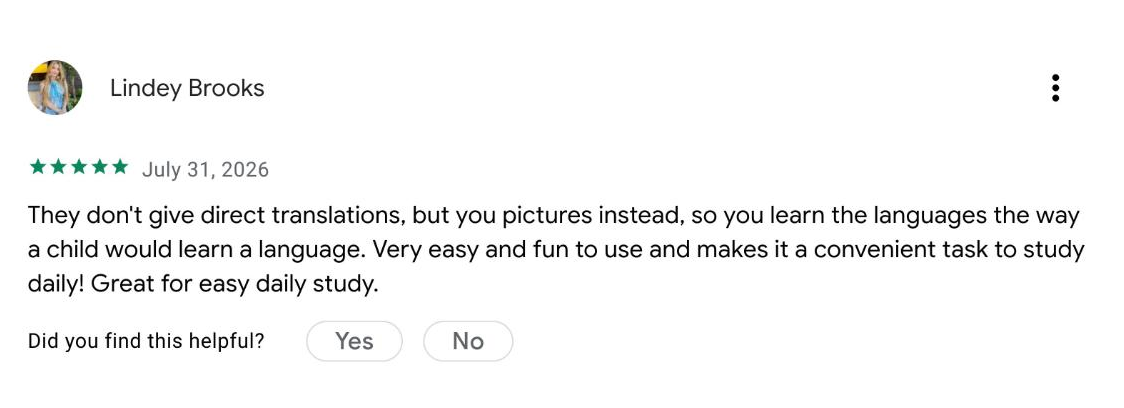
The Rosetta Stone Classic app holds 4.8 stars on the US App Store (239K ratings) and 4.8 stars on Google Play (406K reviews, 10M+ downloads). Users praise its picture-based immersion, pronunciation audio, offline mode and calm, ad-free lessons.
The main complaints concern speech recognition, the absence of grammar teaching, clunky menus and access problems for lifetime subscribers moving to Sapphire.
Final Verdict
Rosetta Stone is a good fit for patient, visual learners who want Dutch immersion without distractions. It's especially handy offline.
Without grammar explanations or open conversation, many learners plateau. Those who want to speak Dutch with confidence will need more active speaking practice.
6. Pimsleur
Overview
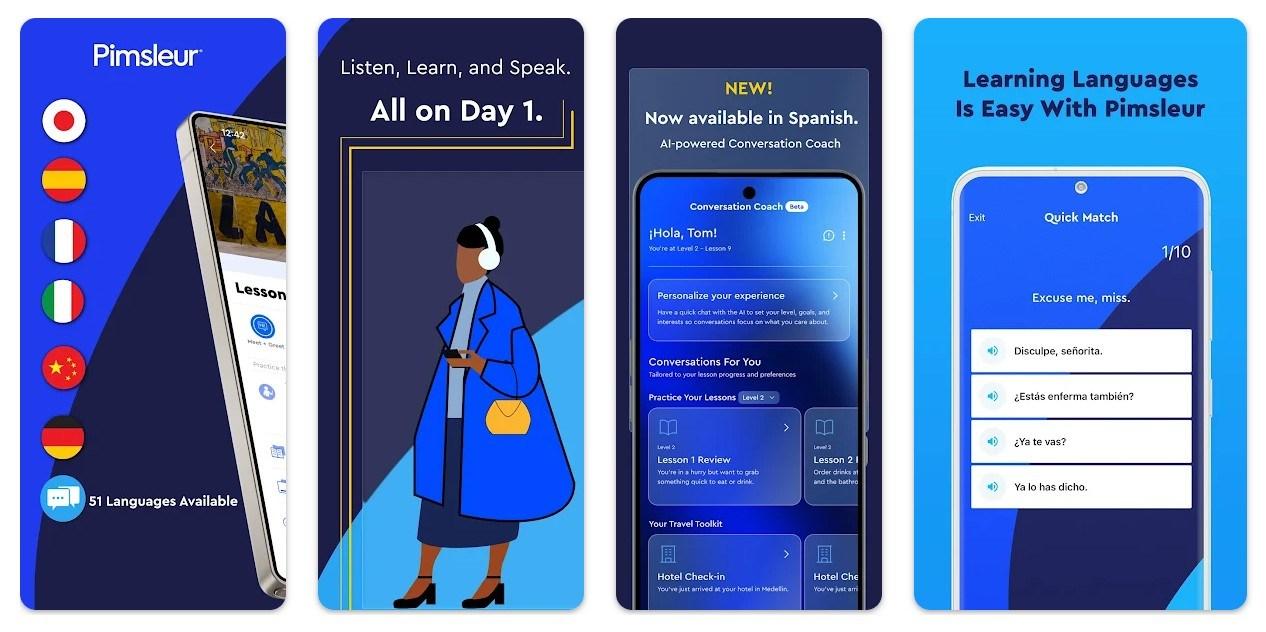
Pimsleur is an audio course that teaches you to speak by listening and responding out loud. Each 30-minute lesson asks you to recall phrases and answer before the speaker does, using the method Simon & Schuster has published for around 50 years.
The app covers 51 languages for English speakers, Dutch among them, with flash cards, quick-match games and a Pronunciation Challenge between lessons. Its AI Conversation Coach (Beta) is offered only to Latin American Spanish and French learners for now, so Dutch learners get the classic audio course.
Ideal For
Pimsleur is ideal for Dutch learners who want to practice hands-free.
- Commuters who drive, cycle or ride the train to work
- Auditory learners who learn best by listening
- Travelers preparing for spoken exchanges in shops and stations
- Routine lovers who like one fixed lesson a day
Visual learners may miss written support, especially for Dutch spelling.
Top Features
Pimsleur's features build on its audio method.
- 30-minute audio lessons: Each one builds on the lesson before
- Spaced recall: Phrases return at set intervals so they stick
- Pronunciation Challenge: Focused practice on how you sound
- Flash cards and games: Vocabulary review between lessons
The audio lessons remain the heart of the course, and they suit a long commute well.
Why It Stands Out
Pimsleur stands out for fitting speaking and listening practice into daily life. You respond out loud in every lesson, without looking at a screen.
Reviewers say it focuses on pronunciation and listening more than most apps, which helps with Dutch sounds you can't learn from text alone.
Pros
Pimsleur's strengths come from its long-standing method.
- Hands-free audio lessons
- Speaking out loud in every session
- Native-speaker audio
- 51 languages, Dutch included
Few apps fit into a commute this well.
Cons
Pimsleur's format has trade-offs.
- Fixed pacing that some learners find rushed
- Few visuals and limited reading
- Inconsistent voice recognition in the extras
- The AI Conversation Coach isn't offered for Dutch
Most dialogues are scripted, so you rarely get to say what you want to say.
Customer Reviews
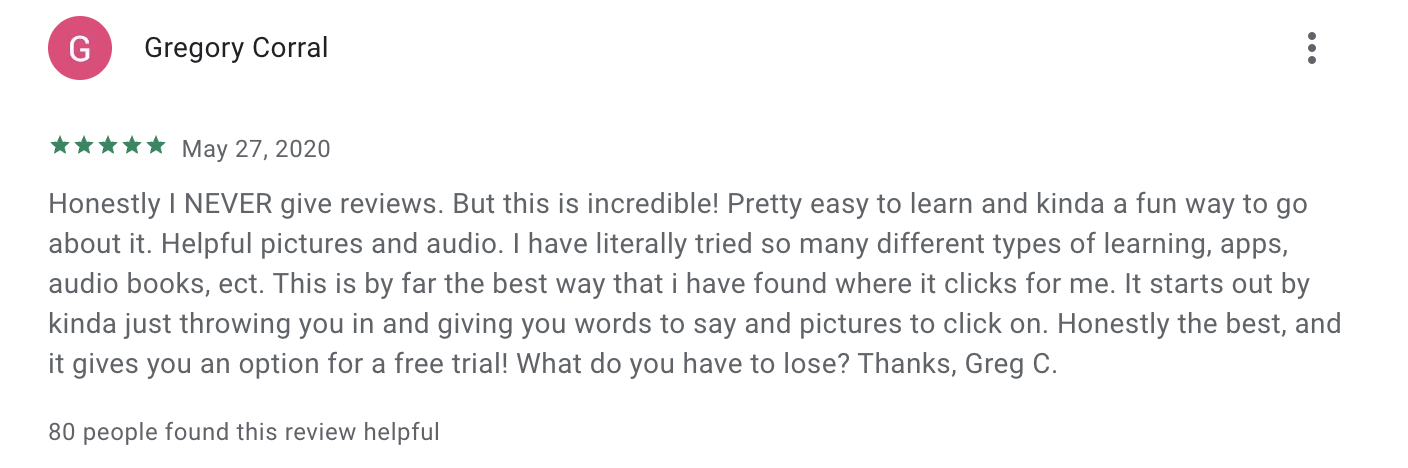
Pimsleur holds 4.7 stars on the US App Store (30K ratings) and 3.9 stars on Google Play (16.7K reviews, 1M+ downloads). Learners praise its focus on speaking and pronunciation, the hands-free format and its cumulative lessons.
Complaints cover plan costs, rigid pacing, subscription management and weak visual support for some languages.
Final Verdict
Pimsleur is a strong pick for learners who want to build Dutch listening and speaking skills on the go. The audio is excellent for training your ear.
Scripted lessons and fixed pacing limit open conversation. Learners who want personalized speaking practice with feedback will get more from a conversation-first app.
7. Mondly
Overview
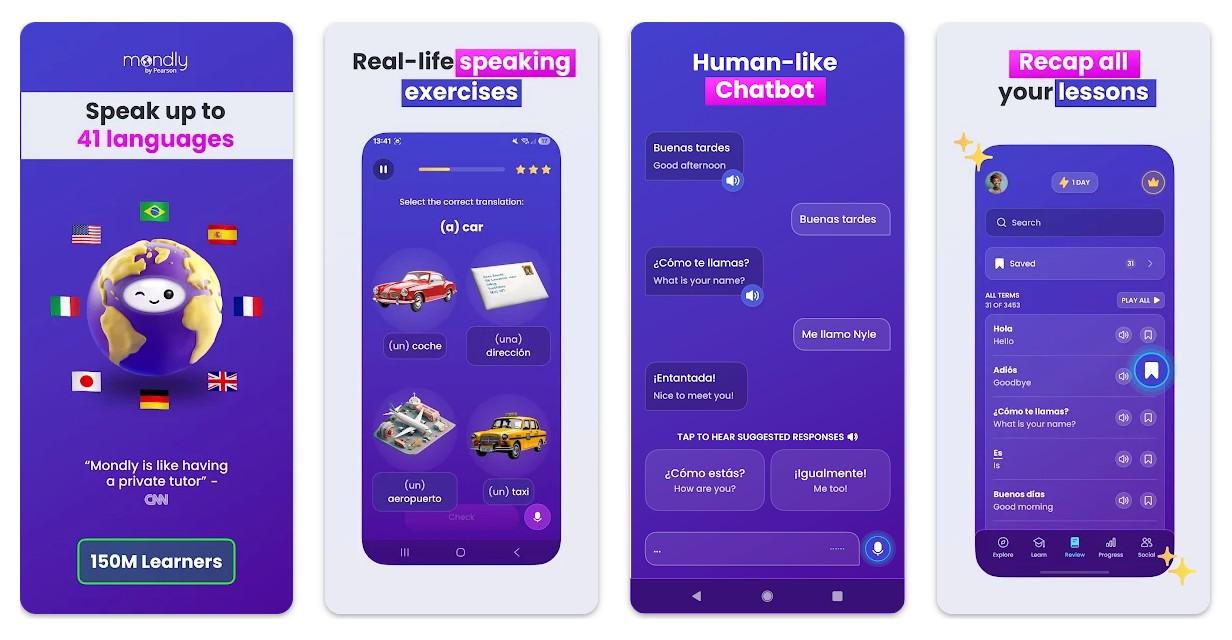
Mondly is a language app from Pearson that teaches 41 languages through short daily lessons. Founded in Romania in 2014 and acquired by Pearson in 2022, it mixes vocabulary, grammar and speaking exercises with a human-like chatbot for conversation practice.
Dutch is one of its 41 courses, with a flexible learning path, a hands-free mode and lesson recaps. A separate virtual reality app adds immersive scenarios.
Ideal For
Mondly suits learners who want variety and range.
- Multilingual learners studying Dutch alongside another language
- Beginners who want short, visual lessons
- Hands-free learners who like to practice while doing other things
- VR fans who want to try immersive scenes
It's less suited to learners who need Dutch grammar explained in depth.
Top Features
Mondly's features cover the basics of language practice.
- 41 languages: Switch between courses in one app
- Human-like chatbot: AI conversation practice with corrections
- Hands-free mode: Practice speaking without tapping
- VR app: Immersive scenarios in virtual reality
Its breadth of languages is a major draw.
Why It Stands Out
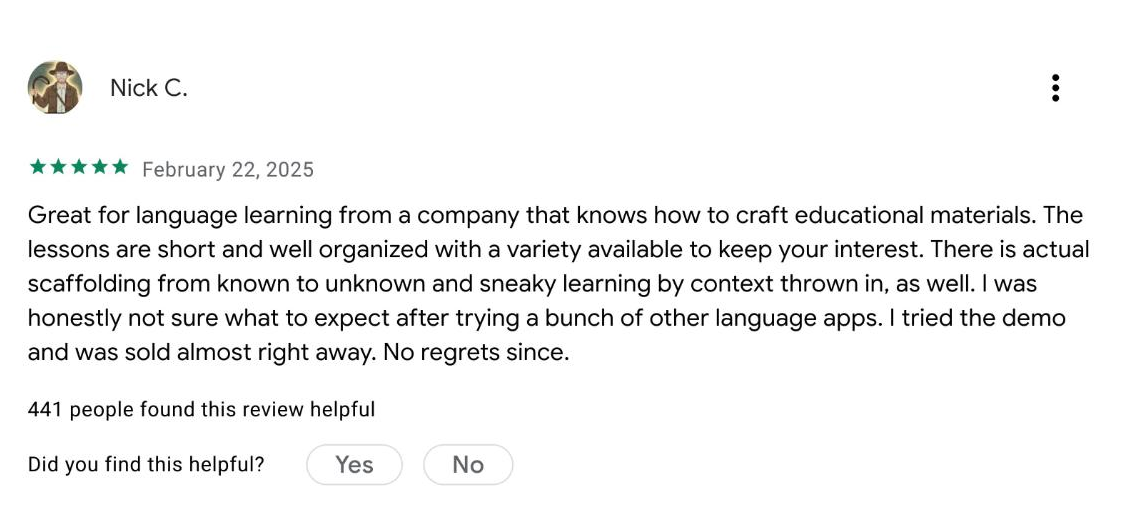
Mondly stands out for range and structure. Reviewers say its lessons are short, well organized and move from known to unknown in clear steps.
Its chatbot gives beginners a first taste of back-and-forth practice, with corrections along the way.
Pros
Mondly's strengths are range and structure.
- 41 languages, Dutch included
- AI chatbot with corrections
- Hands-free speaking practice
- Short, well-organized lessons
It's a solid all-rounder for learners juggling more than one language.
Cons
Mondly has weaknesses users mention often.
- Speech recognition frequently fails
- Little grammar explanation
- Course quality varies, with reviewers flagging accent and register problems in some courses
- Exercises can feel repetitive
Learners often plateau after the basics.
Customer Reviews
Mondly holds 4.7 stars on the US App Store (33K ratings) and 4.4 stars on Google Play (928K reviews, 50M+ downloads). Users praise its well-structured lessons, wide language range, hands-free speaking practice and AI chatbot.
The most frequent complaints concern speech recognition, limited grammar explanations and uneven quality across courses.
Final Verdict
Mondly is a good choice for learners who want Dutch and other languages in one tidy app. Its chatbot and hands-free mode add useful speaking practice.
Speech recognition issues and thin grammar limit progress beyond the basics. Learners who want real speaking confidence will need a more conversation-focused tool.
8. Memrise
Overview
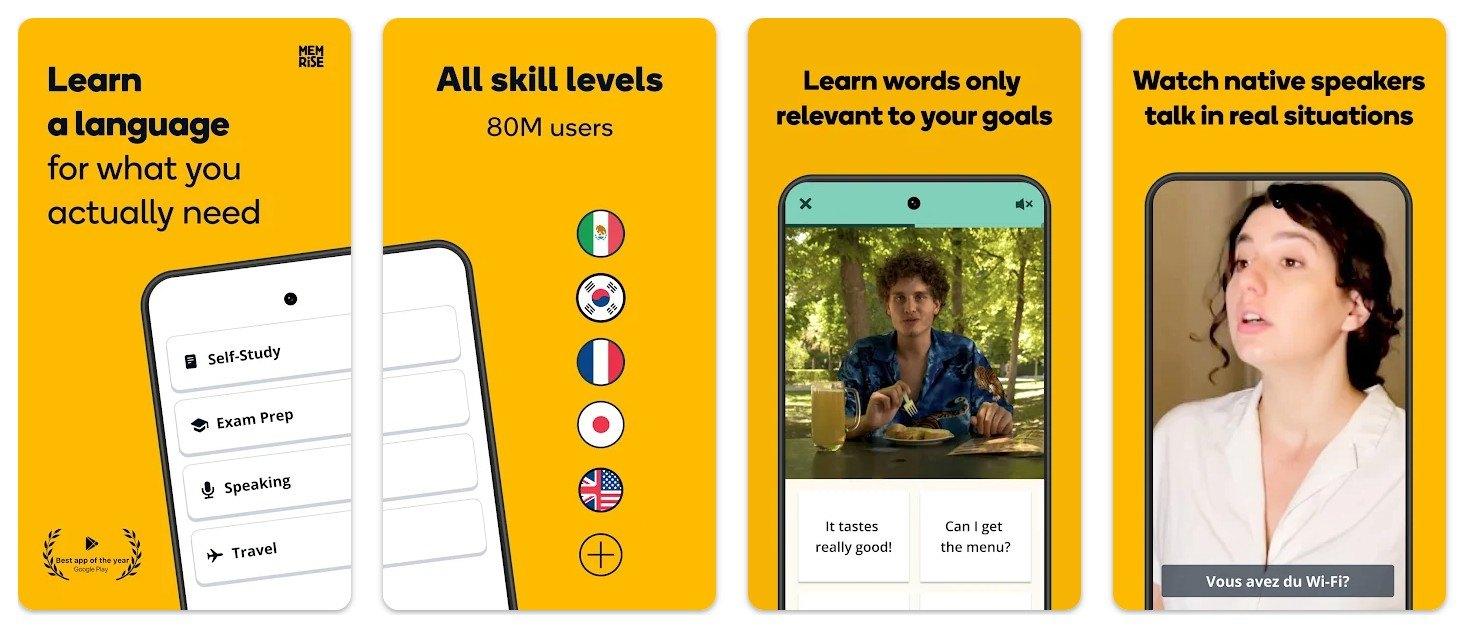
Memrise is a language app built around videos of real native speakers. You watch locals use phrases in everyday situations, which trains your ear for how Dutch sounds outside a textbook.
You choose a goal, such as travel or speaking at work, and Memrise focuses on the vocabulary that matters for it. Its official course list includes Dutch, alongside topic podcasts and AI conversation practice, while community-made courses have moved to a separate website.
Ideal For
Memrise suits learners who want authentic input.
- Visual and auditory learners who like seeing people speak
- Vocabulary builders focused on useful, goal-based words
- Newcomers who want to tune their ear to everyday Dutch
- Self-paced learners who prefer short sessions
It's less ideal for learners who want in-depth grammar on a free plan.
Top Features
Memrise's features focus on real-world language.
- Native-speaker videos: Real people, real accents, real situations
- Goal tracks: Self-study, speaking and travel paths
- AI conversation practice: Daily chats with an AI partner
- Topic podcasts: Listening practice on subjects you choose
Feature depth can vary by course, so check what the Dutch course includes before you subscribe.
Why It Stands Out
Memrise stands out for putting real people at the center of learning. Seeing a Dutch speaker say a word helps with sounds like the g and ui, which are hard to picture from spelling.
Reviewers also appreciate that it's less gamified than many rivals.
Pros
Memrise's strengths are authenticity and focus.
- Videos of real native speakers
- Goal-based learning paths
- AI conversation practice and podcasts
- A generous free tier
It's one of the smartest apps for training your ear.
Cons
Memrise has frustrated some loyal users recently.
- A redesign removed features long-time users liked
- Community courses moved out of the app
- Grammar explanations require a paid plan
- Reports of bugs and slow support
Advanced learners say progress tends to stall.
Customer Reviews
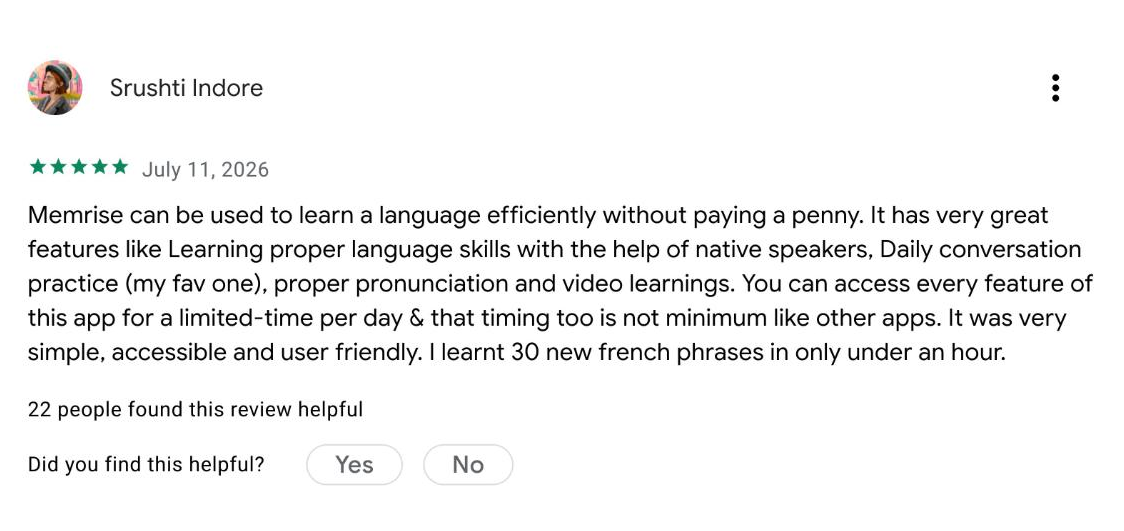
Memrise holds 4.8 stars on the US App Store (217K ratings, Editors' Choice) and 4.6 stars on Google Play (1.57M reviews, 50M+ downloads). Users love the native-speaker videos, the free daily conversation practice and the goal-based scenarios.
Complaints focus on the redesign, the loss of community courses, paywalled grammar and bugs.
Final Verdict
Memrise is a smart pick for learners who want to build Dutch vocabulary and listening skills with real native speakers. Its goal tracks keep study relevant.
The redesign has divided users, and deeper practice needs a paid plan. Learners who want regular spoken conversation with detailed feedback will need a speaking-focused app too.
9. italki
Overview
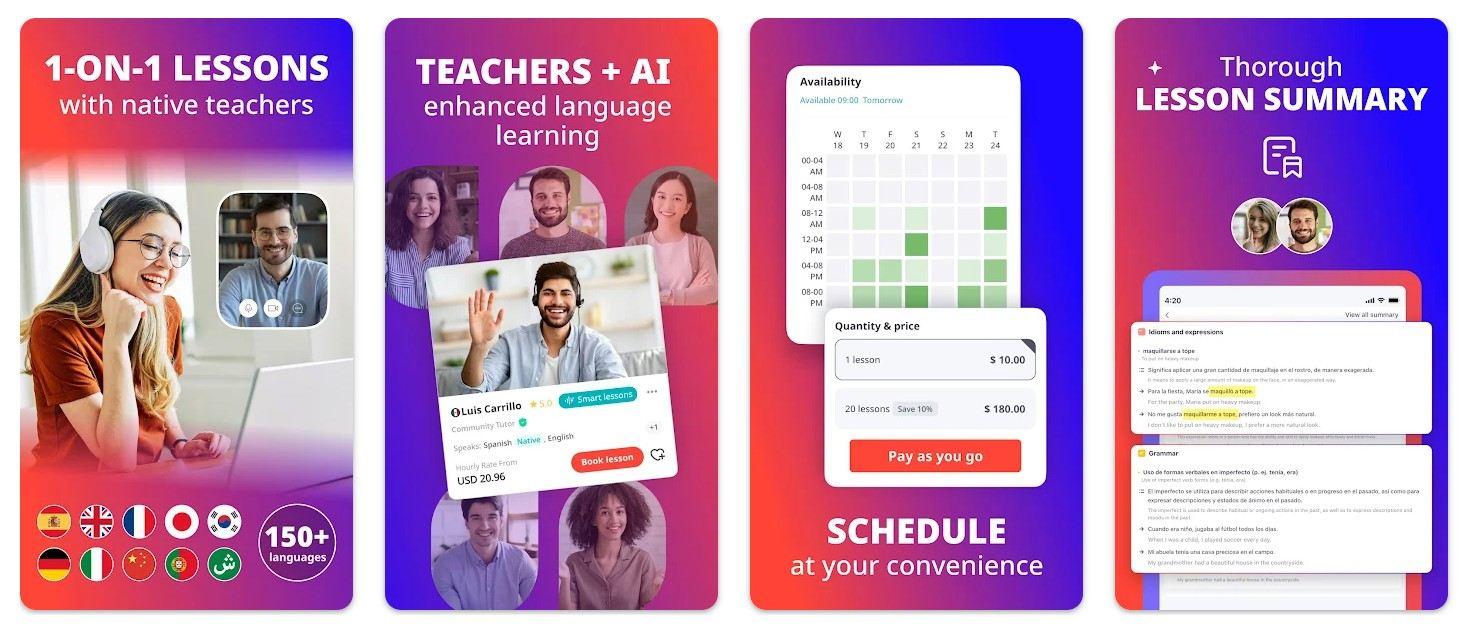
italki is an online marketplace for private language lessons with native teachers. You browse teachers, book one-on-one video lessons at times that suit you, and pay per lesson or by package, with no subscription.
It covers 150+ languages, and its Dutch teachers typically include people from both the Netherlands and Belgium. Lessons come with summaries of key expressions and grammar, and a free community helps learners find language partners.
Ideal For
italki is a great fit for learners who want personal teaching.
- Learners who want a human teacher to explain Dutch grammar live
- Professionals preparing for meetings or interviews in Dutch
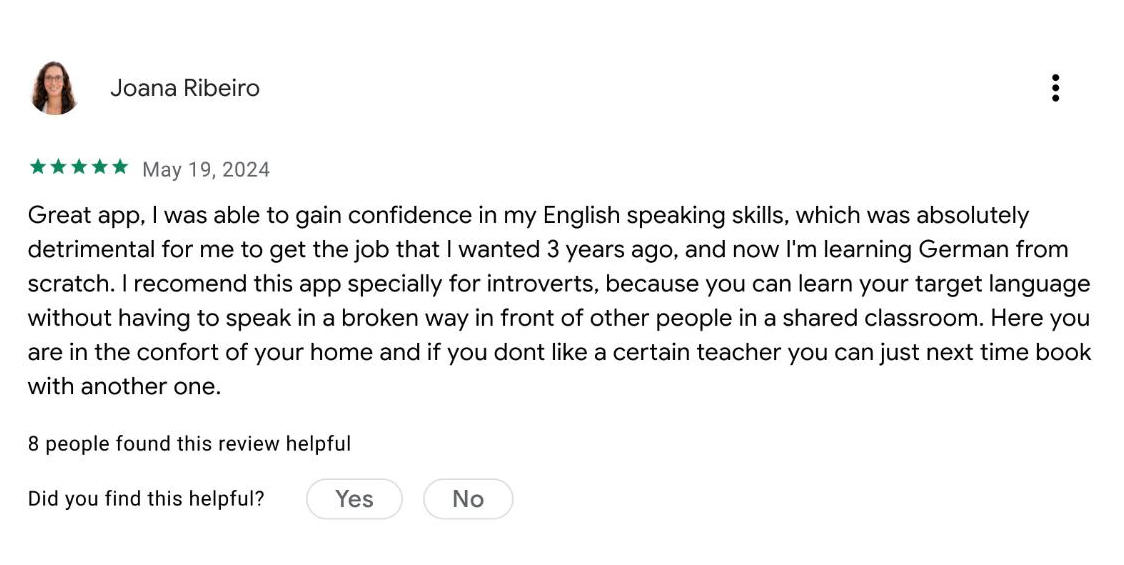
- Introverts who prefer private lessons from home
- Pay-per-lesson fans who avoid subscriptions
It's less suited to learners who want daily practice on a budget.
Top Features
italki's features support private tutoring.
- 1-on-1 lessons: Live video sessions with native Dutch teachers
- Flexible booking: Single lessons or packages, on your schedule
- Lesson summaries: Key phrases and grammar after each class
- Language community: A free space to find practice partners
The marketplace model gives you control over who teaches you.
Why It Stands Out
italki stands out for its range of teachers. You can often choose a teacher from the Netherlands or Flanders, one with a business focus, or one with a gentle style for beginners.
Reviewers say it helped them build the confidence to speak at work and land jobs.
Pros
italki's strengths are flexibility and choice.
- Private lessons with native teachers
- 150+ languages
- Pay-as-you-go booking
- Freedom to switch teachers
It's ideal for learners who want human teaching on their own terms.
Cons
italki shares the limits of tutor marketplaces.
- A higher cost per hour than self-study apps
- Lessons need scheduling around your workday
- Teacher quality varies
- The app lags behind the teaching, especially tutor search filters
Daily speaking practice gets expensive quickly.
Customer Reviews
italki holds 4.8 stars on the US App Store (9.9K ratings) and 4.4 stars on Google Play (18.7K reviews, 5M+ downloads). Learners praise the native teachers, private lessons from home and the freedom to change teachers.
Complaints focus on the app itself, especially tutor search filters and finding saved tutors.
Final Verdict
italki is a strong choice for learners who want native Dutch teachers without a subscription. Its flexibility is a real advantage.
The cost and scheduling make daily speaking practice hard to sustain. Many learners pair an AI tutor for daily practice with an occasional italki lesson.
10. Preply
Overview
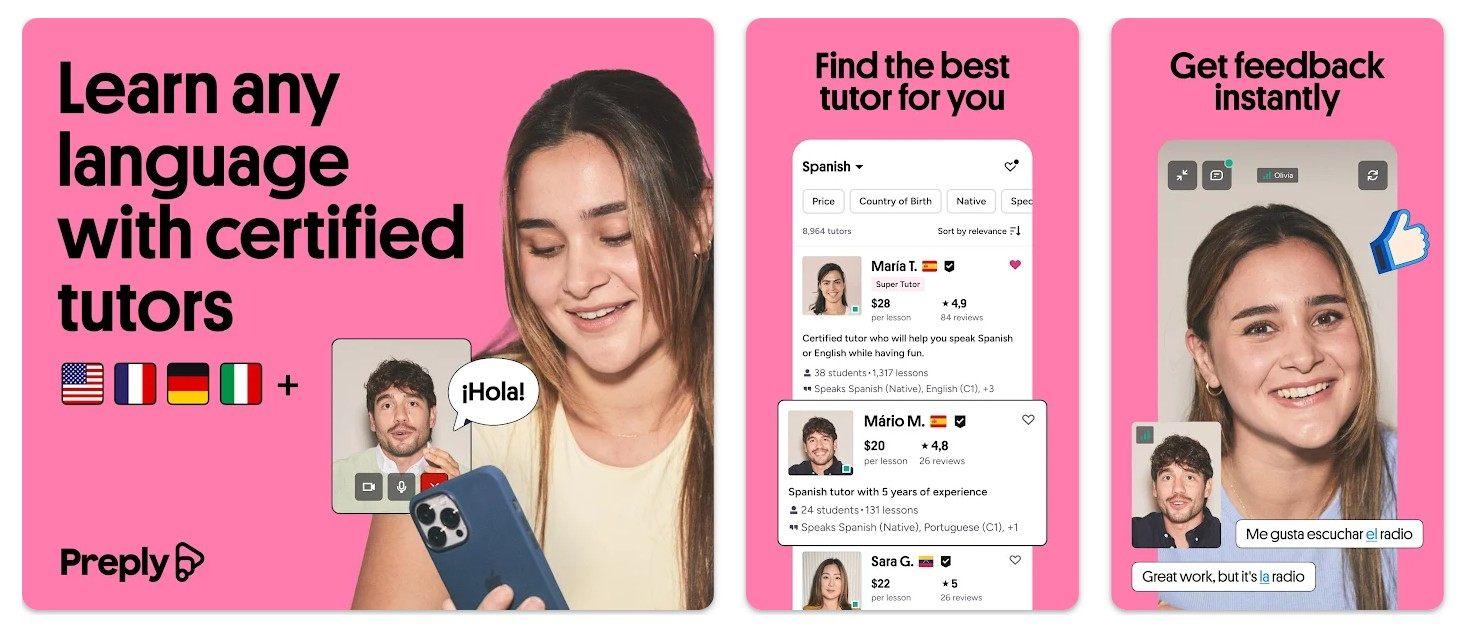
Preply is a tutoring marketplace that connects you with professional tutors for live, one-on-one lessons. You set a goal, such as speaking at work or preparing for an exam, choose a tutor and meet over video at agreed times.
Preply covers 90+ languages, and its catalog lists Dutch tutors with different backgrounds and teaching styles. Lessons usually run on a subscription that renews every 28 days.
Ideal For
Preply suits learners who want a steady relationship with one tutor.
- Learners who want accountability, with homework and a weekly slot
- Professionals who want lessons built around work goals
- Learners with specific needs, such as an exam or a new role
- Comparison shoppers who like to weigh tutors by style and schedule
It's less suited to learners who can't commit to a regular lesson time.
Top Features
Preply's features center on matching you with the right tutor.
- 1-on-1 video lessons: Personalized classes with your chosen tutor
- Goal setting: Work, speaking or exam goals shape the lessons
- Wide tutor choice: Compare tutors by teaching style and availability
- Lesson reminders: Notifications that keep weekly classes on track
The tutor relationship is what makes Preply work.
Why It Stands Out
Preply stands out for tutor variety and scheduling flexibility. Reviewers praise how easy it is to find a tutor who fits specific needs.
For many learners, homework and a weekly appointment add the discipline that self-study lacks.
Pros
Preply's strengths come from human teaching and choice.
- Personal feedback from a live tutor
- A wide choice of tutors and schedules
- Lessons shaped around your goals
- Accountability through homework and regular classes
It's one of the strongest choices for structured human tutoring.
Cons
Preply's weaknesses are mostly about billing and logistics.
- Auto-renewal and billing complaints dominate reviews
- Unused lessons can expire at renewal
- Some tutors raise their rates after the trial lesson
- Lessons need booking, and tutor no-shows happen
Daily speaking practice is hard to afford through lessons alone.
Customer Reviews
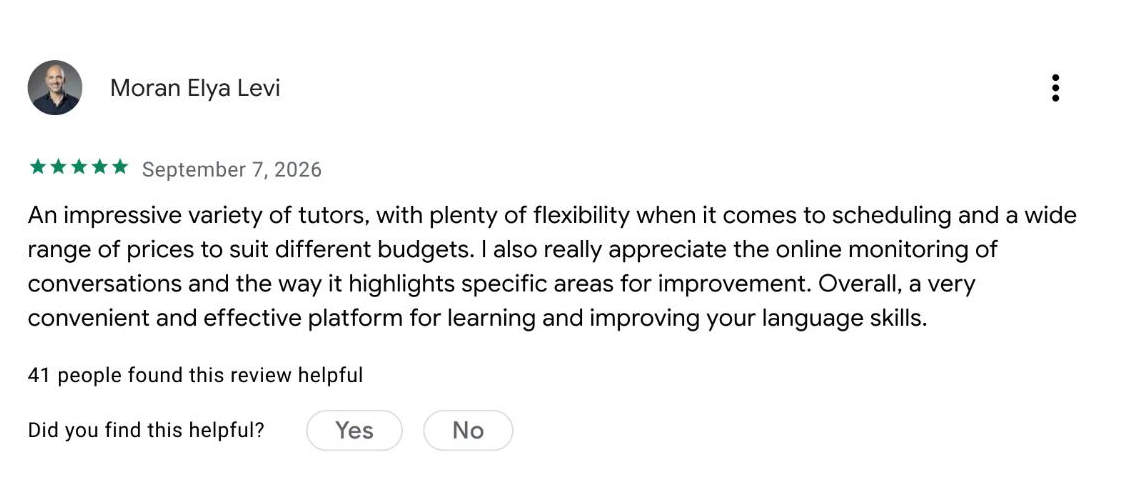
Preply holds 4.8 stars on the US App Store (45K ratings) and 4.8 stars on Google Play (64.8K reviews, 5M+ downloads). Learners praise the real tutors, the range of tutors and schedules, the organized app and the accountability of homework.
The main complaints concern auto-renewal, expiring lessons, tutor rate changes after the trial and slow support after no-shows.
Final Verdict
Preply is a good pick for learners who want a weekly Dutch tutor and the accountability that comes with one. Its tutor choice is wide.
Billing complaints and the need to book every session hold it back for many learners. Those who want daily speaking practice between lessons will need an app as well.
What Makes a Good App to Learn Dutch?
A good Dutch app changes what you can say at work, at the bakery and at the dinner table within a few weeks. The strongest ones meet five criteria, each tied to the parts of Dutch that trip up English speakers.
Use them to judge any app before you commit to a year.
1. Speaking Practice From the First Week
Dutch speakers tend to switch to English when a conversation stalls, so the skill you need most is producing a full sentence without a long pause. That only comes from saying sentences out loud, many times, with someone responding.
Check how much of a typical session you spend speaking. If most of the time goes on tapping and matching, you'll build recognition far faster than conversation.
2. Real-Time Feedback on Dutch Sounds
The g in gracht, the ui in huis and the long aa in maan decide whether people understand you on the first try. An app should catch these as you speak and show you a better way to say them.
Feedback works best in the moment and without breaking the flow. You fix the sound while the word is still in your mouth, then keep talking.
3. A Tutor That Remembers Your Mistakes
Dutch mistakes repeat: the wrong article with het-words, the verb that never reaches the end of the clause, the separable verb you forgot to split. An app with memory brings those errors back until they disappear.
Look for a tutor that remembers your goals, past mistakes and vocabulary across sessions. That's what turns a series of lessons into a plan that's yours.
4. Explanations in Your Native Language
Apps that only speak Dutch can overwhelm a beginner in the first week. Explanations in your own language make word order and articles far less confusing.
The best approach starts in your language and switches to Dutch gradually, so you keep speaking from day one without getting lost.
5. A Personal Plan and Progress You Can Measure
Your reason for learning shapes what you practice: office small talk, a partner's family, or calls with the landlord. A good app asks about your goal and level at setup, then adapts as you improve.
Progress should be visible in CEFR levels (A1 to C2), with settings for feedback style and speaking speed so fast native Dutch doesn't knock you off course. A CEFR level tells you what you can now say in Dutch.
How to Choose the Best App to Learn Dutch
The right app depends on why you're learning Dutch, how much time you have and how you like to learn. These six factors help you build a shortlist and test it in a week.
| Factor | What to Check | Why It Matters |
|---|---|---|
| Your Dutch situations | Write down where you need Dutch first: office small talk, meetings, the landlord or a partner's family. Note any deadline, such as a start date in Amsterdam. | Clear situations show which features matter, and conversation goals call for speaking practice first. |
| Speaking time per session | Run one full session and note how many minutes you spent speaking, and whether you could talk freely or only repeat set phrases. | Speaking time is what keeps a conversation in Dutch. Apps built on tapping leave you understanding more than you can say. |
| Pronunciation feedback | Say a few tricky words, such as goedemorgen, huis and Scheveningen, and see whether the app corrects you with a clear explanation. | Dutch sounds like the g and ui decide whether locals stay in Dutch. Vague or missing feedback lets bad habits set in early. |
| Beginner support | Check whether explanations come in your native language and whether the app adapts to your level. | Word order and de or het are confusing at first. Native-language help keeps beginners speaking with confidence from the first week. |
| Course depth in Dutch | Confirm that the app's Dutch course has the same features as its biggest courses, including AI conversation, feedback and native audio. | Many apps launch new features in Spanish or French first. A long language list doesn't guarantee a full Dutch course. |
| Daily fit | Check session length, whether you can adjust speaking speed and feedback style, and whether it works on your phone during a commute. | Ten to fifteen minutes most days beats long, irregular sessions. The app you'll open on the tram is the one that works. |
The same checklist works if your next posting is in Munich or Kraków. See our guides to the best app to learn German and the best app to learn Polish for those shortlists.
Everything You Need to Know About Dutch Learning Apps
This table condenses the guide into one reference. Use it to compare Dutch apps quickly before you download.
| Category | Key Considerations |
|---|---|
| Top 3 Apps | Praktika for speaking Dutch with an AI tutor, Babbel for structured grammar, and Pimsleur for hands-free audio on the commute. |
| Best Overall Option | Praktika, for spoken Dutch conversations with instant corrections, memory and native-language explanations. |
| Why Use a Dutch App | Apps turn commutes and breaks into practice, and the right one gets you speaking well enough that locals answer in Dutch. |
| How to Choose | Start from your Dutch situations, time a real session to measure speaking, test pronunciation feedback and confirm the Dutch course is complete. |
| Ease of Getting Started | Easy. Most apps place you by level in a few minutes, and some explain in your native language for beginners. |
| Must-Have Features | Speaking practice, real-time feedback on pronunciation and grammar, memory of your mistakes, a personal plan and CEFR-based progress. |
| Mistakes You Shouldn't Make | Chasing streaks over speaking time, skipping pronunciation, switching to English at the first pause and paying for a year before testing. |
For a wider comparison across languages, see our roundup of the best language learning apps.