
If you're looking for the best app to learn Russian in 2026, Praktika is the best overall choice for most learners. It gives you spoken Russian conversations with human-like AI tutors, instant corrections on pronunciation, grammar and word choice as you talk, and explanations in your native language while you're still finding your feet.
Praktika fits learners with a personal reason to speak. Maybe your partner's parents only speak Russian and you want to talk with them properly at the dinner table, or you have Russian-speaking grandparents, a trip coming up or colleagues who switch to Russian on calls. It also suits beginners who mostly have their commute to practice and want an app they'll still open after the first month.
The other nine apps cover the remaining routes into Russian: game-style lessons, structured grammar courses, immersion, audio lessons for the car, native-speaker videos and live teachers on tutor marketplaces. Each suits a different kind of learner, and the reviews below explain which.
This comparison is based on factual App Store and Google Play reviews and a detailed analysis of each app in November 2026.
Best App to Learn Russian: All 10 Apps at a Glance
This table compares the 10 best apps to learn Russian side by side, from AI tutors to audio courses and live teachers.
Use it to shortlist two or three, then read the full reviews further down.
| Tool | Best For | Key Features | Pros | Cons |
|---|---|---|---|---|
| Praktika | Speaking Russian with confidence | AI tutors with memory, real-time corrections, native-language explanations, 14 languages | Open conversation from the first session; tutors that remember you | No certificates; mobile apps only for now, with a web app in testing |
| Duolingo | A free daily habit | Bite-sized lessons, streaks and leagues, 40+ languages | Free core course; motivating game design | Trains recognition more than speaking; little grammar explanation |
| Babbel | Structured grammar | Expert-built lessons, native-language adaptation, dialogues, spaced review | Clear explanations of rules in context | Limited open conversation; speech recognition complaints |
| Busuu | Native-speaker feedback | Community corrections, study plan, cultural notes, real-speaker videos | Human corrections; grammar in context | Ads in the free version; AI conversation only on the top tier in some languages |
| Rosetta Stone | Immersion without translation | Picture-based lessons, pronunciation checks, offline mode, 25 languages | Calm, ad-free lessons; full immersion | No grammar explanations; strict speech recognition |
| Pimsleur | Hands-free audio on a commute | 30-minute audio lessons, spaced recall, Pronunciation Challenge | Speaking out loud in every lesson; no screen needed | Scripted dialogues; AI coach limited to Spanish and French so far |
| Mondly | Short lessons in many languages | 41 languages, chatbot, hands-free mode, VR app | Well-organized lessons; wide range | Frequent speech recognition complaints; thin grammar |
| Memrise | Listening and vocabulary | Native-speaker videos, goal tracks, AI chatbot | Real voices and faces; goal-based learning | Paywalled grammar; complaints about the redesign |
| italki | Private native teachers | 1-on-1 video lessons, flexible booking, lesson summaries | Native Russian teachers; pay per lesson | Lessons need scheduling; cost adds up for daily practice |
| Preply | Regular lessons with one tutor | Personalized 1-on-1 lessons, goal setting, 90+ languages | Wide tutor choice; homework and accountability | Auto-renewal complaints; lessons need booking |
If your goal is to talk with Russian speakers soon, start with Praktika, then add Pimsleur for listening in the car or italki for a human teacher. For a free habit or grammar-first study, Duolingo and Babbel are the familiar starting points.
Why Learn Russian With an App?
Russian has a reputation for being hard, and that reputation is half right. Cyrillic takes most people a few days to a couple of weeks to read, while six cases, paired verbs and stress that shifts between word forms take months of practice to use without thinking.
An app is the easiest way to fit that practice into every day. Ten minutes on the train, repeated most days, adds up faster than a weekly class you keep moving, and the app is there whenever a spare moment appears.
What Russian Apps Do Well
Good Russian apps make Cyrillic and core vocabulary feel manageable fast. Short lessons, audio for every new word and regular review help most beginners sound out simple words and signs within their first weeks.
They also fit around real life. You can review on the bus or listen in the car, and repeat a greeting until it sounds natural, with nothing to book and no one waiting on you.
Many apps now add speech recognition and some form of AI conversation. Even the most traditional courses give beginners at least a taste of saying Russian out loud from the first lesson.
Where Most Russian Apps Fall Short
Most apps train you to recognize Russian, and conversations ask you to produce it. Picking the right ending in a multiple-choice exercise is a different skill from choosing between на работе and на работу (at work, to work) halfway through a sentence while your partner's mother waits for the rest.
Stress is the second gap. Learner materials often mark stress with an accent, while everyday text leaves it out, and a moving stress changes how the vowels around it sound. Learners who mostly read often mispronounce words they know well.
Feedback is usually thin as well. Many apps mark a spoken answer right or wrong without saying which ending was off or why, so the same mistake comes back the next day.
If Russian is your first Slavic language, the habits you build here carry over. Our guide to the best app to learn Polish covers a close relative with seven cases and many shared roots.
Best App to Learn Russian Overall
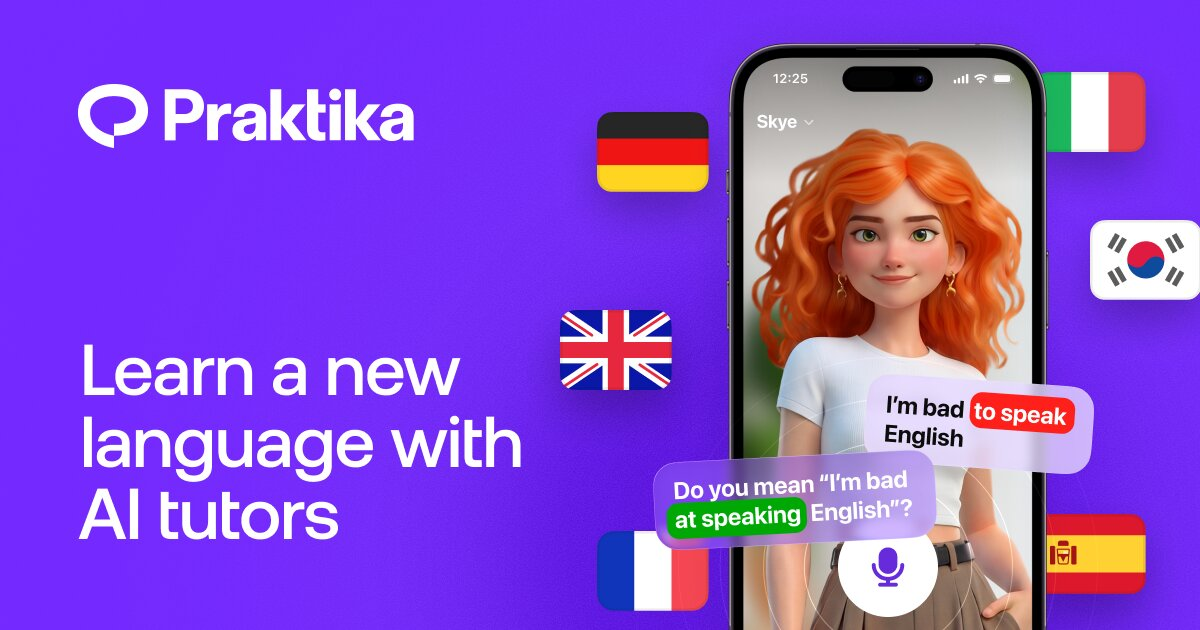
Praktika is the best app to learn Russian overall for learners who want to hold real conversations. Each session is a spoken conversation with a human-like AI tutor, so you practice cases, verbs and stress the way you'll use them: out loud, in full sentences.
The tutor corrects your pronunciation, grammar and word choice as you speak, shows a better way to say it and explains the mistake. Beginners get those explanations in their native language, and the tutor brings in more Russian as they progress.
You can tell your tutor what you're preparing for, such as meeting your partner's parents, and practice those conversations on any topic you choose. Because the tutor remembers your goals and recurring errors, each session builds on the one before.
You can learn Russian with an AI tutor in sessions that average 12 minutes, which fits most commutes. On average, 73% of active learners gain a full CEFR level in about 20 hours of practice, and more than 30 million people have learned with Praktika.
Best App to Learn Russian: In-Depth Review & Comparison
Below, each app is reviewed on who it suits, what it does best, where it falls short and what users say about it in their reviews.
The order reflects how well each option gets most learners speaking Russian, starting with the strongest all-round choice.
1. Praktika
Overview
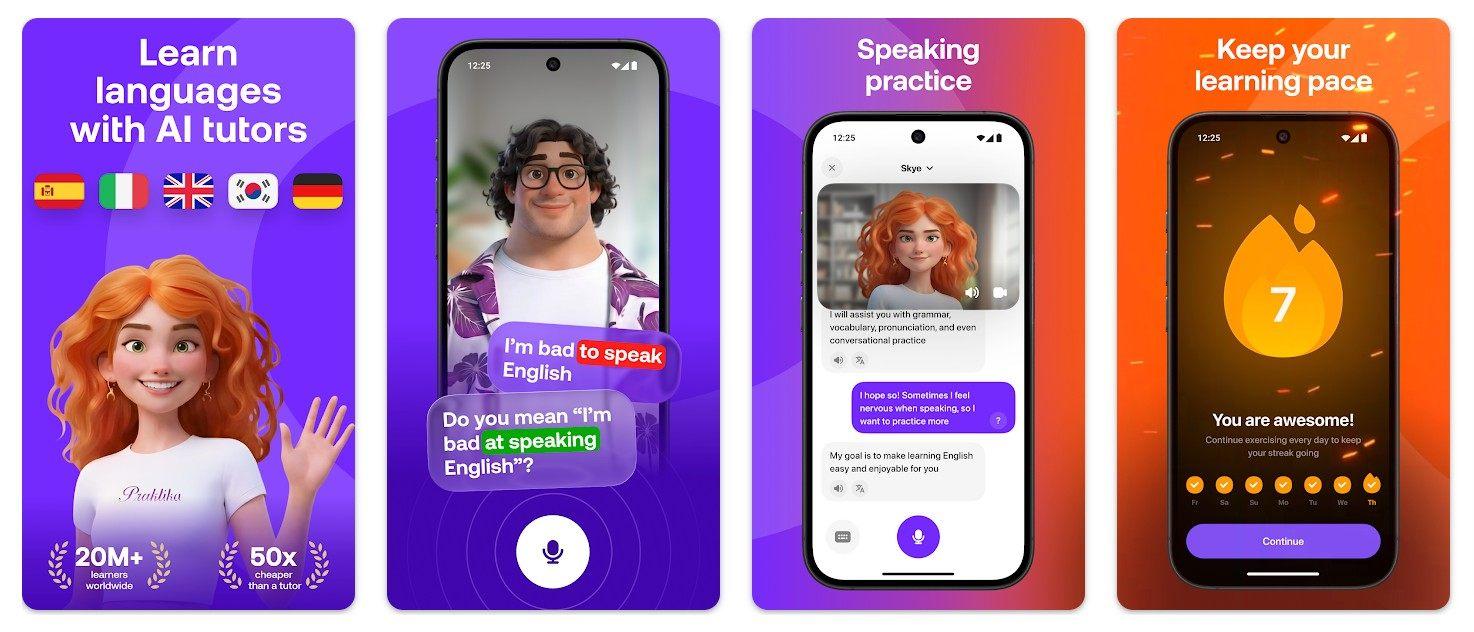
Praktika is an AI tutor app built to get you speaking a new language out loud with confidence. You hold spoken conversations with human-like AI tutors who remember your goals, your mistakes and the words you've learned, and they correct you as you talk.
Russian is one of the 14 languages Praktika teaches, and you can switch or add a language at any time. For beginners, the tutor starts in your native language and moves into Russian step by step, so you can begin from zero.
More than 30 million people have learned with Praktika, about 2 million use it every month, and its learners come from 200+ countries and territories. Praktika was featured as an OpenAI case study in January 2026.
Ideal For
Praktika is the strongest pick for Russian learners who want to talk more than they study. It fits these groups best:
- Partners and in-laws who want to talk with a partner's Russian-speaking parents in their own language
- Heritage learners reconnecting with grandparents or relatives who speak Russian
- Commuters with 10 to 15 minutes on a train or bus most days
- Complete beginners who want explanations in their own language while they learn to speak
- Learners who freeze after years of textbook Russian and need practice without judgment
It also suits travelers with a trip coming up and professionals with Russian-speaking colleagues or clients.
Top Features
Every Praktika feature aims at more speaking time and better feedback.
- Human-like tutors with memory: Each tutor has a personality, a backstory and a natural accent, and remembers your goals, errors and vocabulary over months, so you never start a session from scratch.
- Corrections as you speak: Pronunciation, grammar and word choice are corrected mid-conversation with a better phrasing and a short explanation, so a wrong case ending gets fixed while the sentence is still fresh.
- Native-language explanations: The tutor explains in your language first and gradually moves into Russian, which keeps the first weeks manageable.
- Adaptive study plan: Your plan follows your goal, level and pace, with role-plays and a Practice tab of ready-made scenarios such as ordering at a restaurant.
- Adjustable feedback and speed: Choose Soft, Balanced or Strict feedback plus your preferred speaking speed, which helps when Russian at full speed feels too fast to follow.
You can also switch to video-call mode for face-to-face sessions with your tutor. Uploading a photo, a document or a voice note starts a conversation about it, with corrections along the way.
Why We're the Best App to Learn Russian
Russian grammar becomes usable through repetition out loud, and Praktika makes that repetition a daily habit. Every session has you produce full Russian sentences, and every sentence gets feedback on pronunciation, grammar and word choice.
It's also easy to keep up on a commute. Sessions average 12 minutes, every session is scored, and your progress maps to CEFR levels, so you can watch your Russian vocabulary get more advanced over time.
Most AI-native language apps teach only English or Spanish. Praktika's tutors teach Russian as one of 14 languages, and 73% of active learners gain a full CEFR level in about 20 hours of practice, on average.
Pros
Praktika's strengths come from putting conversation at the center of every lesson.
- Open spoken conversations in Russian in every session
- Instant feedback on pronunciation, grammar and word choice
- Tutors that remember your goals, mistakes and vocabulary
- Explanations in your native language for beginners
- Adjustable feedback style and speaking speed
Few apps on this list bring all five together in one place.
Cons
No app suits every learner. These are the situations where Praktika may not be your first choice:
- You need an official certificate: Praktika tracks your CEFR level but doesn't issue certificates and isn't a certified exam pathway, so learners who need the TORFL exam should prepare for it separately.
- You only study on a computer: Praktika runs on iPhone and Android, with a web app still in testing.
- You want a human teacher on every call: Tutor marketplaces such as italki and Preply connect you with native Russian teachers.
For learners whose goal is talking with family and friends in Russian, these trade-offs rarely get in the way.
Customer Reviews
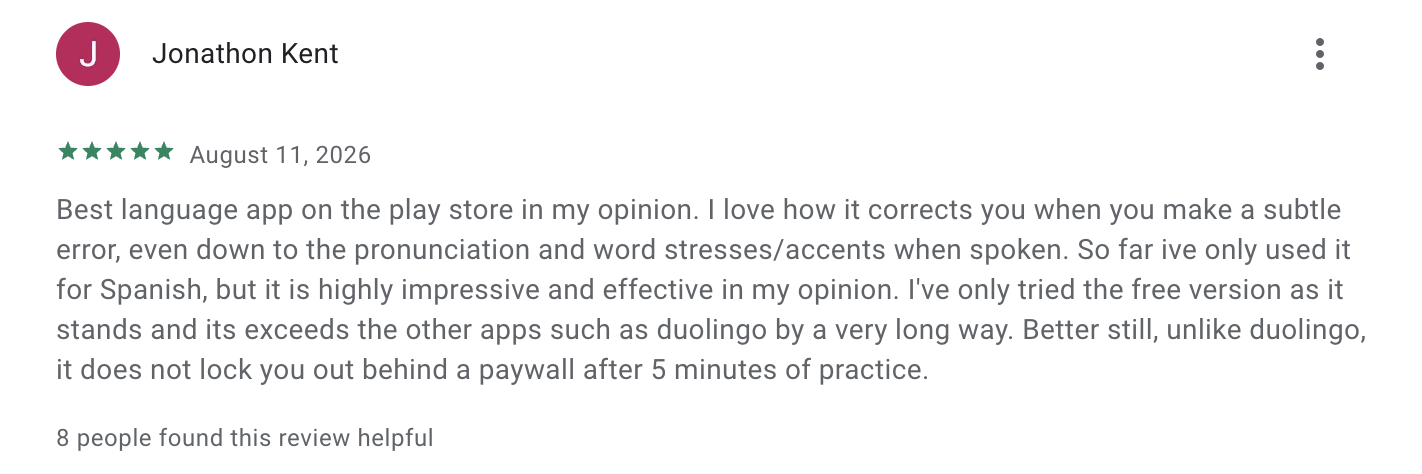
Praktika holds a 4.8-star average across more than 1.2 million ratings on the App Store and Google Play. Learners often say it's the first app that got them answering in complete sentences.
Reviewers single out corrections that go down to pronunciation and word stress, tutors whose voices sound like real people, and practice with no appointments and no timetable. Some had native speakers check the AI's corrections and came away impressed.
Final Verdict
Praktika is the best app to learn Russian for anyone who wants to speak it. It combines open conversation, instant feedback and a tutor that remembers you, in sessions short enough for a daily commute.
If your goal is to sit at the table with your partner's parents and follow the conversation, then join it, Praktika is the most direct route from your first Russian words to talking with them properly.
2. Duolingo
Overview
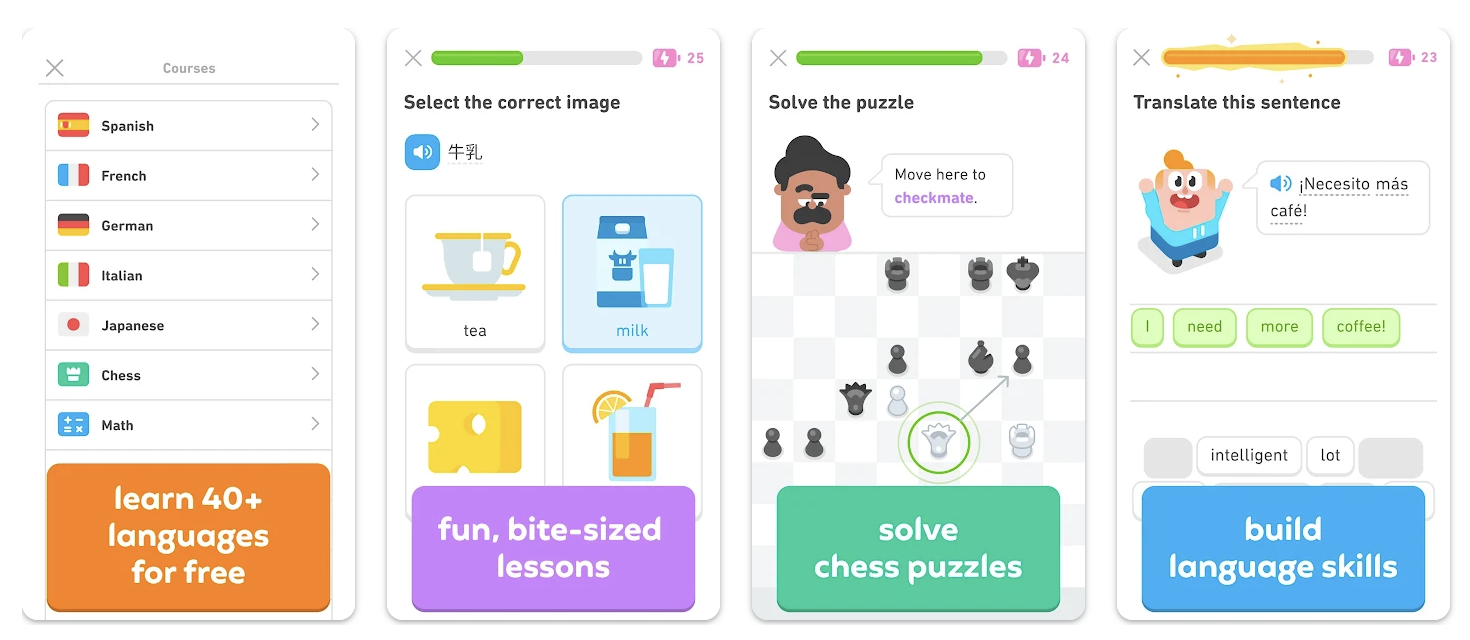
Duolingo is the most downloaded education app in the world and the best-known name in language learning. Founded in Pittsburgh in 2011, it turns study into a game with short lessons, points, streaks, leagues and a green owl that reminds you to come back.
Its free Russian course is one of 40+ language courses, alongside chess, math and music. Paid tiers remove ads and add extras, and the top tier, Duolingo Max, includes AI features such as Video Call with its character Lily in select courses.
For Russian, Duolingo's strength is the early stage. Letters and first words arrive in small steps, and the streak keeps beginners showing up.
Ideal For
Duolingo works best for Russian learners who want a low-pressure start.
- Curious beginners testing whether Russian is for them
- Learners on a tight budget who want a free core course
- Families who enjoy game-style learning together
- Habit builders who need a daily nudge before committing to a deeper course
It's a weaker fit if you need to hold a conversation with your partner's parents by a set date.
Top Features
Duolingo's features are built around motivation.
- Bite-sized lessons: Short exercises across reading, listening, writing and speaking, small enough to finish at a bus stop
- Streaks, XP and leagues: Game mechanics that reward daily practice and keep beginners coming back
- Speaking exercises: Spoken answers and repeat-after-me tasks that add some pronunciation practice
- Duolingo Max: AI features such as Video Call in select courses, so check whether the Russian course includes them before upgrading
These tools make it easy to keep going on busy days, which matters in the first months of Russian.
Why It Stands Out
Duolingo stands out for reach and motivation. Its free courses and game design have introduced hundreds of millions of people to a new language.
It's also one of the smartest ways to test your commitment before paying for anything. If you're still opening it after a month, you'll know you're ready for a speaking-focused app.
Pros
Duolingo's strengths are accessibility and engagement.
- Free core Russian course
- Habit-forming streaks and rewards
- Short lessons that fit any schedule
- A gentle introduction to Cyrillic and basic vocabulary
For building a first habit, few apps match it.
Cons
Duolingo's weaknesses show up once you try to speak Russian.
- Exercises train recognition more than spoken production
- Little explanation of grammar rules, including cases
- The energy system limits practice in the free version
- Speech recognition draws frequent complaints
Many learners keep long streaks and still struggle to answer a simple question out loud.
Customer Reviews
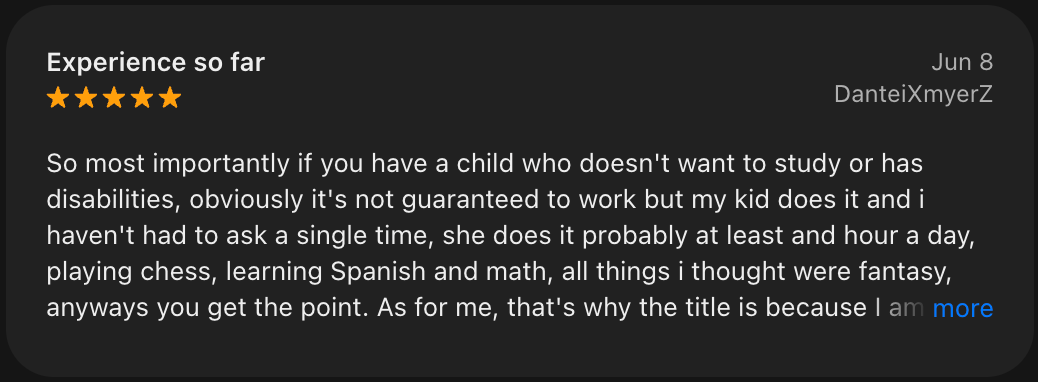
Duolingo holds 4.7 stars on the US App Store (5.5M ratings, Editors' Choice) and 4.8 stars on Google Play (51M reviews, 500M+ downloads). Users praise the habit-forming game design, the steady flow of new vocabulary and how engaging it is for families.
Recent complaints focus on the energy system that cuts practice short, reward clutter, bugs, little grammar explanation and surprise charges after free trials.
Final Verdict
Duolingo is a good free starting point for Russian beginners who want a fun daily habit. It makes Cyrillic and first words feel approachable.
It isn't built to make you a confident speaker, though. Learners who want real conversations in Russian will need a speaking-focused app alongside it.
3. Babbel
Overview
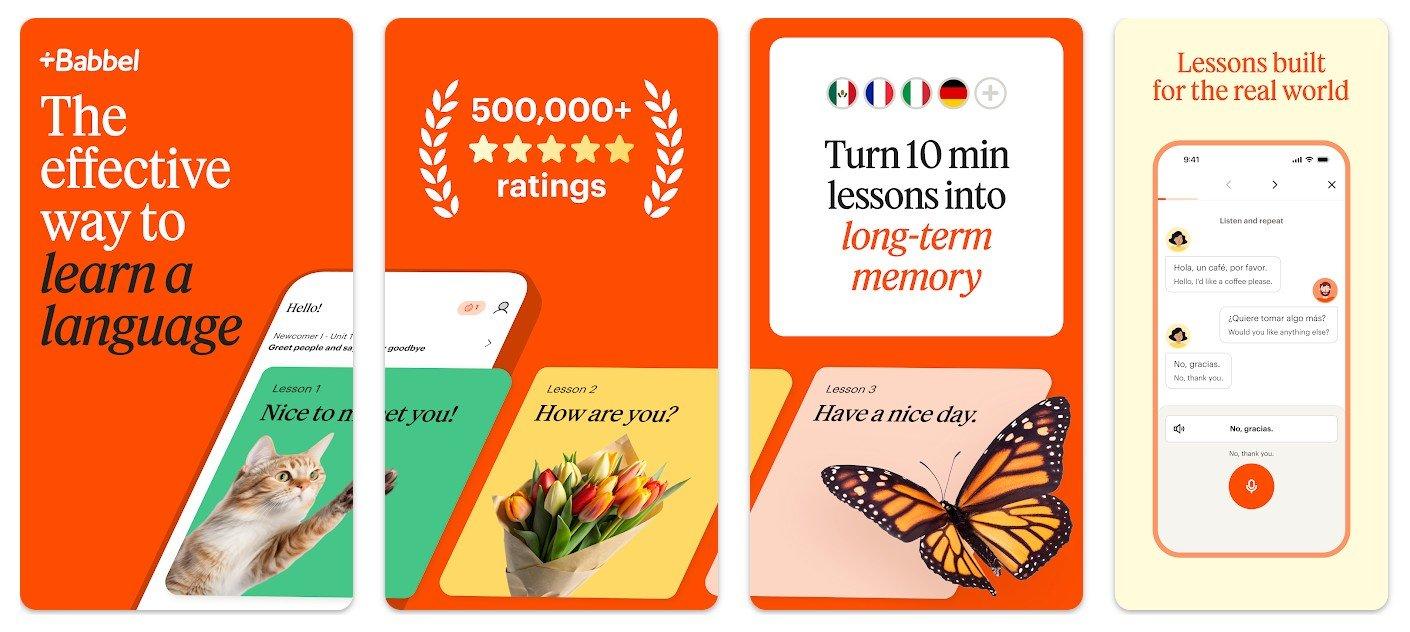
Babbel is a Berlin-based language app that teaches through structured, grammar-led courses. Its lessons are built by more than 200 language experts and adapted to your native language, so explanations target the mistakes you're most likely to make.
Russian is one of the 14 languages Babbel teaches, in short lessons built around real-life dialogues. Review sessions and writing practice add depth.
For Russian, Babbel's appeal is clarity. Case endings come with explanations, which suits learners who want to know why a word changes shape.
Ideal For
Babbel suits Russian learners who like knowing the rules.
- Adults who want clear, structured lessons
- Grammar-minded learners who want the six cases explained
- Self-paced learners who like to choose their own path
- Travelers who want practical everyday dialogues
It's less suited to learners who mainly want open conversation practice.
Top Features
Babbel's features focus on clear, practical lessons.
- Native-language adaptation: Lessons adapted to the language you already speak, so explanations match your likely mistakes
- Dialogue-based lessons: Real situations from shopping to small talk that you can reuse in conversation
- Grammar tips: Explanations built into each lesson, helpful when Russian endings start to multiply
- Spaced review: Flashcard-style practice that brings back words before you forget them
Together they give you a course-like structure inside an app.
Why It Stands Out
Babbel stands out for the quality of its explanations. Reviewers often say it explains far more than Duolingo, with lessons that build understanding through context.
It's also flexible. You can follow the guided path or study the topics you need in your own order.
Pros
Babbel's strengths are structure and clarity.
- Grammar explained clearly in context
- Lessons adapted to your native language
- Practical, real-life dialogues
- Self-paced structure with review built in
It's one of the most respected course-style apps for Russian.
Cons
Babbel's weak spots are speaking and depth.
- Speech recognition often marks correct answers as wrong
- Only one free lesson before subscribing
- Limited open conversation practice
- Thin content at advanced levels
- AI dialogue practice limited to select languages, according to reviewers
It builds knowledge well, but you get little practice saying Russian out loud in real time.
Customer Reviews
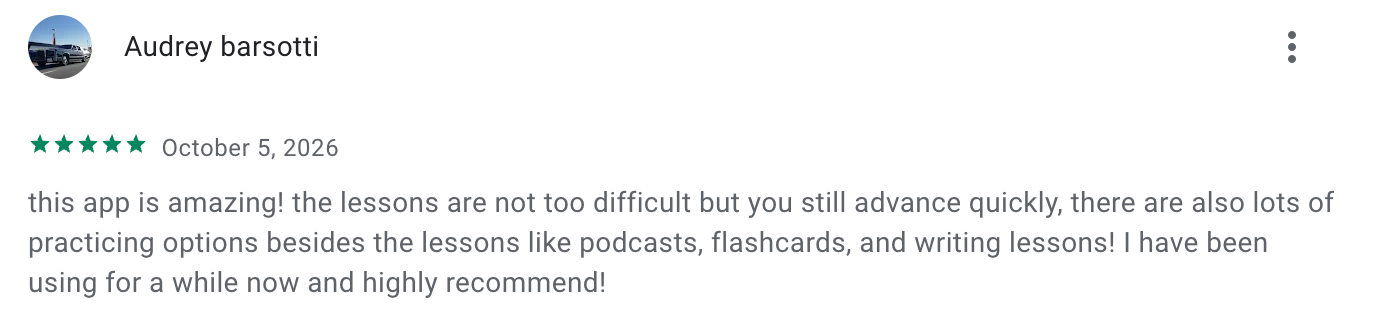
Babbel holds 4.7 stars on the US App Store (756K ratings) and 4.4 stars on Google Play (1.13M reviews, 50M+ downloads). Reviewers value its explanations, the no-games format, the self-paced structure and its podcasts and writing lessons.
The main complaints are about speech recognition, the early paywall, a limited language list and weaker advanced content.
Final Verdict
Babbel is a strong pick for adults who want grammar-first Russian lessons. It turns short sessions into a clear picture of how the language works.
Its speaking practice is limited and its speech recognition frustrates many users. Learners who mainly want to talk with Russian speakers will need a conversation-focused app as well.
4. Busuu
Overview
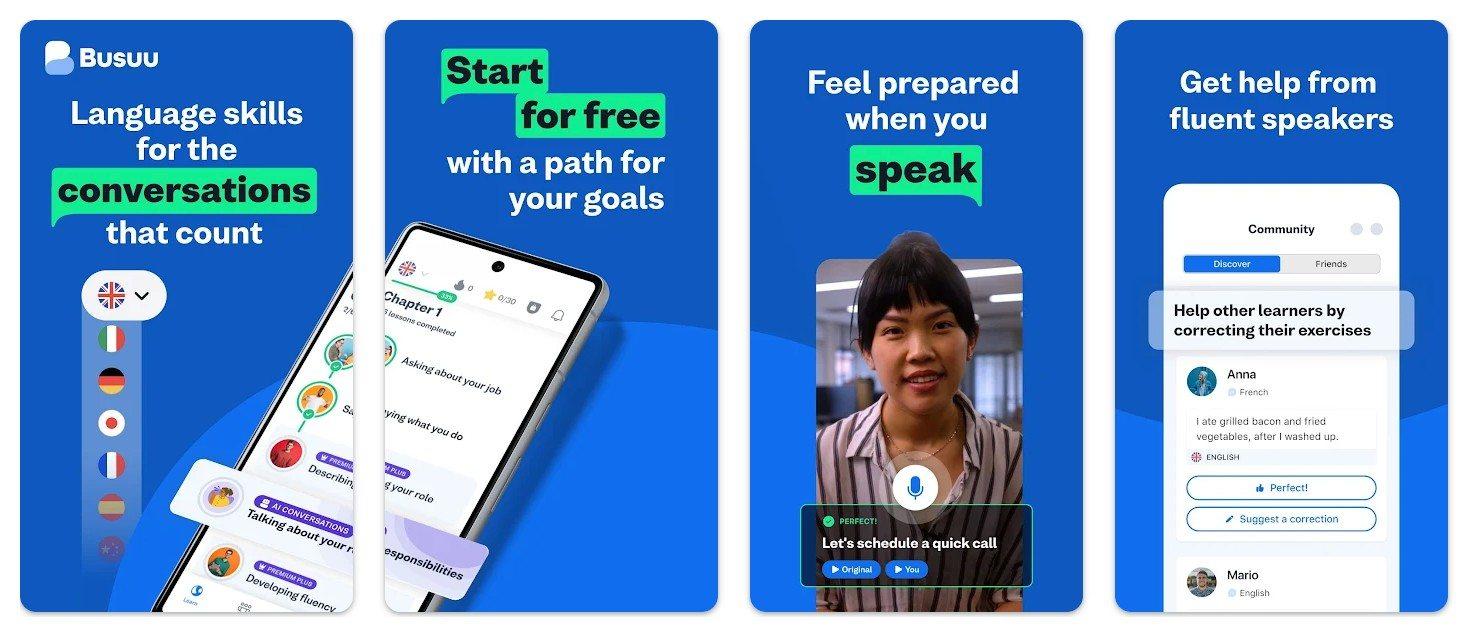
Busuu is a language app that combines expert-designed courses with feedback from a global community of native speakers. You complete exercises, fluent speakers correct your writing and pronunciation, and you help learners of your own language in return.
Russian is one of the 14 languages on Busuu, alongside Polish, Turkish and Dutch. Lessons include grammar explanations, cultural notes, videos of real speakers and checkpoints, and an adaptive study plan estimates when you'll reach your goal.
Busuu is a Chegg service. Its Premium Plus tier adds AI-powered Conversations in some languages, so check whether Russian is included before you upgrade.
Ideal For
Busuu fits Russian learners who want human input on their progress.
- Learners who want native-speaker corrections on written and spoken exercises
- Beginners who need structure and clear checkpoints
- Grammar-minded learners who like explanations in context
- Culture-curious learners who value notes on how Russian is used day to day
It's less suited to learners who want open conversation every day.
Top Features
Busuu's features balance self-study with real feedback.
- Community feedback: Native speakers correct your exercises, so you learn how a Russian speaker would phrase it
- Grammar and culture: Explanations and cultural tips inside lessons
- Adaptive study plan: Goals, timelines and checkpoints that show how far you've come
- Real-speaker videos: Clips that show how mouths move as people pronounce words
- AI Conversations: Conversation practice on Premium Plus, in select languages
The community remains its signature feature.
Why It Stands Out
Busuu stands out because it brings real people into a self-study app. Corrections from native speakers add a layer of feedback few apps offer.
Reviewers also say its lessons go deeper on grammar and context than gamified apps, with more useful phrases.
Pros
Busuu's strengths come from people and structure.
- Corrections from native speakers
- Grammar explanations and cultural notes
- An adaptive study plan with checkpoints
- Videos showing how native speakers pronounce words
It's one of the easiest ways to get human feedback inside an app.
Cons
Busuu has limits, especially on the free plan.
- Frequent ads in the free version
- Speech recognition glitches
- AI conversation limited to the top tier and some languages
- Community feedback takes time to arrive
Daily speaking practice with instant feedback isn't its strong point.
Customer Reviews
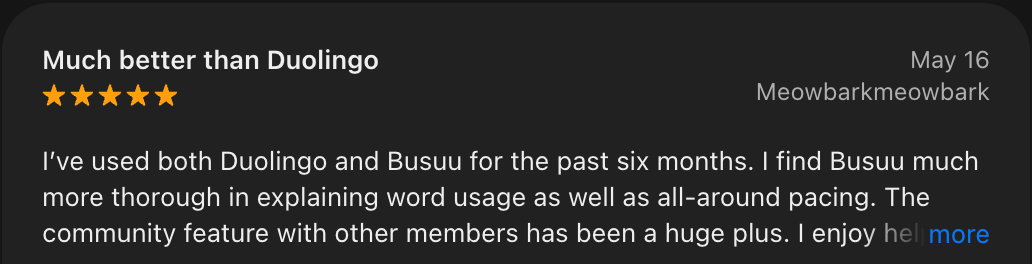
Busuu holds 4.7 stars on the US App Store (101K ratings) and 4.7 stars on Google Play (1.24M reviews, 50M+ downloads). Users praise the community corrections, the grammar detail, the cultural notes and the real-speaker videos.
The most frequent complaints are ads in the free version, speech recognition problems, pricing tactics and limited AI conversation in some languages.
Final Verdict
Busuu is a smart choice for Russian learners who want a structured course plus corrections from native speakers. Its grammar notes help with cases and everyday phrasing.
The free version's ads and the limited live speaking practice hold it back. Learners who want to talk confidently soon will need more conversation than Busuu provides.
5. Rosetta Stone
Overview
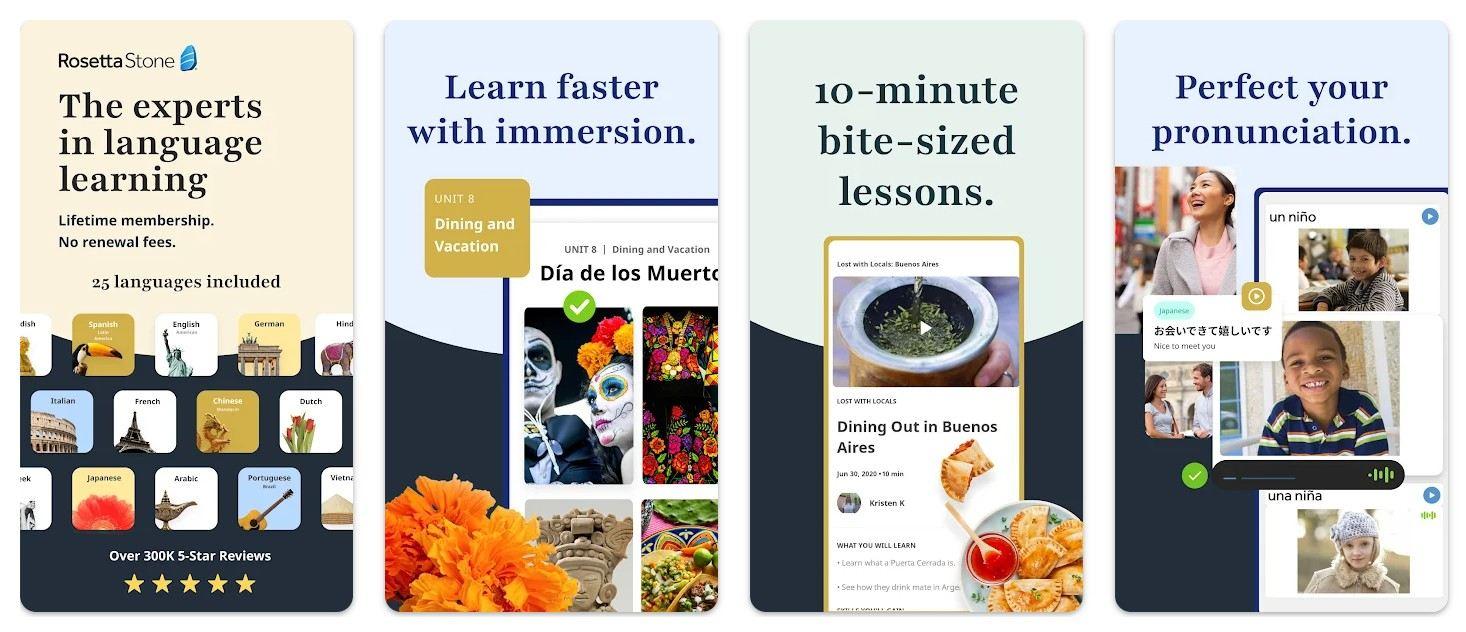
Rosetta Stone pioneered immersion-based language software and has taught languages since 1992. Its method skips translation: you connect Russian words and sentences to pictures, the way children learn a first language. The company is now part of IXL Learning.
Russian is among its 25 languages, with lessons of about 10 minutes, pronunciation practice and offline downloads. Rosetta Stone Classic now serves existing subscribers and enterprise or education users, while new learners start with Rosetta Stone Sapphire.
For Russian, immersion means you meet Cyrillic in context from the first lesson. It's a calm, ad-free way to build a feel for the language.
Ideal For
Rosetta Stone suits learners who enjoy learning through context.
- Visual learners who think in images
- Learners who want total immersion without translations
- Offline learners who study on planes, trains or a subway with no signal
- People who dislike game-style apps and want a quiet study space
Learners who want Russian cases explained step by step may find it frustrating.
Top Features
Rosetta Stone's features revolve around immersion.
- No-translation lessons: Pictures and Russian only, so you start linking words straight to meaning
- Pronunciation checks: Speech feedback on your spoken answers
- Short lessons: Around 10 minutes each, sized for a commute
- Offline mode: Downloaded lessons that work anywhere
The method trains you to work out meaning from context, a skill that pays off in real conversations.
Why It Stands Out
Rosetta Stone stands out for its pure immersion approach. You build direct links between Russian words and what they mean, and many learners find that this sticks.
It's also calm and ad-free. Reviewers often describe it as more thorough than gamified apps, and its pronunciation audio is a frequent highlight.
Pros
Rosetta Stone's strengths come from its method.
- Immersive, translation-free lessons
- Pronunciation practice in every unit
- Offline downloads
- Ad-free, distraction-free study
It's a focused option for learners who want a quiet course.
Cons
Rosetta Stone's approach doesn't work for everyone.
- No grammar explanations, which makes six cases harder to untangle
- Speech recognition often rejects correct answers
- Early vocabulary isn't always practical
- Confusion during the move from Classic to Sapphire
Learners may end up understanding more Russian than they can say.
Customer Reviews
The Rosetta Stone Classic app holds 4.8 stars on the US App Store (239K ratings) and 4.8 stars on Google Play (406K reviews, 10M+ downloads). Users praise the immersion method, pronunciation audio, offline mode and calm, ad-free lessons.
The main complaints concern speech recognition, the lack of grammar teaching, a clunky interface and access problems for lifetime subscribers moving to the newer app.
Final Verdict
Rosetta Stone is a good fit for patient, visual learners who want Russian immersion without distractions. It's handy for study on the move with no signal.
Without grammar explanations or open conversation, many learners plateau. Those who want to speak with Russian-speaking family soon will need more active speaking practice.
6. Pimsleur
Overview
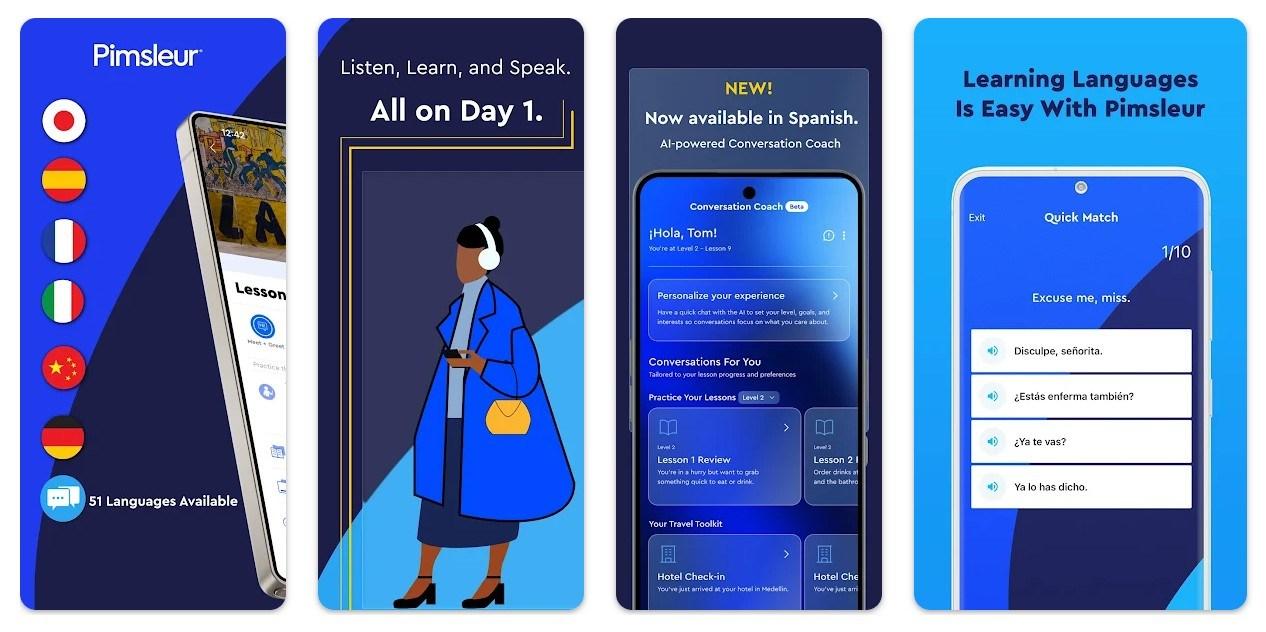
Pimsleur is an audio-based course that teaches you to speak by listening and answering out loud. Each 30-minute lesson asks you to recall phrases and respond, using the Pimsleur Method that Simon & Schuster has published for around 50 years.
Russian is one of its 51 languages for English speakers. In the app, flash cards, quick-match games, short Minis and a Pronunciation Challenge add practice between audio lessons.
Pimsleur is also adding AI, and its AI Conversation Coach (Beta) currently covers Latin American Spanish and French on the All Access plan. Russian learners get the audio method and its extras.
Ideal For
Pimsleur is ideal for Russian learners who want to practice hands-free.
- Commuters who drive or walk and can't look at a screen
- Auditory learners who learn best by listening
- Beginners who want to hear Russian stress and rhythm before they read much
- Travelers preparing for spoken interactions
Visual learners may miss written support, especially while Cyrillic is still new.
Top Features
Pimsleur's features build on its audio method.
- 30-minute audio lessons: Each builds on the one before, so phrases accumulate
- Spaced recall: Phrases return at set intervals to keep them from fading
- Pronunciation Challenge: Focused speaking practice on individual sounds and words
- Flash cards and games: Vocabulary review between lessons
The audio lessons remain the heart of the course.
Why It Stands Out
Pimsleur stands out for fitting speaking and listening practice into daily life. You respond out loud in every lesson without needing to look at a screen.
Reviewers say it's one of the few apps that focuses on pronunciation and listening. That matters in Russian, where stress is mostly learned by ear.
Pros
Pimsleur's strengths come from its long-running method.
- Hands-free audio lessons
- Speaking out loud in every session
- Native-speaker audio that models stress and intonation
- Cumulative lessons that build on each other
Few apps fit a commute this well.
Cons
Pimsleur's format has trade-offs.
- Fixed pacing that some find rushed
- Few visuals and limited reading, a gap while you learn Cyrillic
- Inconsistent voice recognition in the extras
- AI Conversation Coach not yet offered for Russian
- Less effective at higher levels, according to some reviewers
Most dialogues are scripted, so open conversation stays limited.
Customer Reviews
Pimsleur holds 4.7 stars on the US App Store (30K ratings) and 3.9 stars on Google Play (16.7K reviews, 1M+ downloads). Learners praise its focus on speaking and pronunciation, the hands-free format and its cumulative lessons.
Complaints cover plan costs, rigid pacing, subscription management and weak visual support for some languages.
Final Verdict
Pimsleur is a strong pick for Russian learners who want to build listening and speaking skills on the move. Its method trains your ear for stress and rhythm.
Scripted lessons and fixed pacing limit flexible conversation. Learners who want open, personalized speaking practice will get more from a conversation-first app.
7. Mondly
Overview
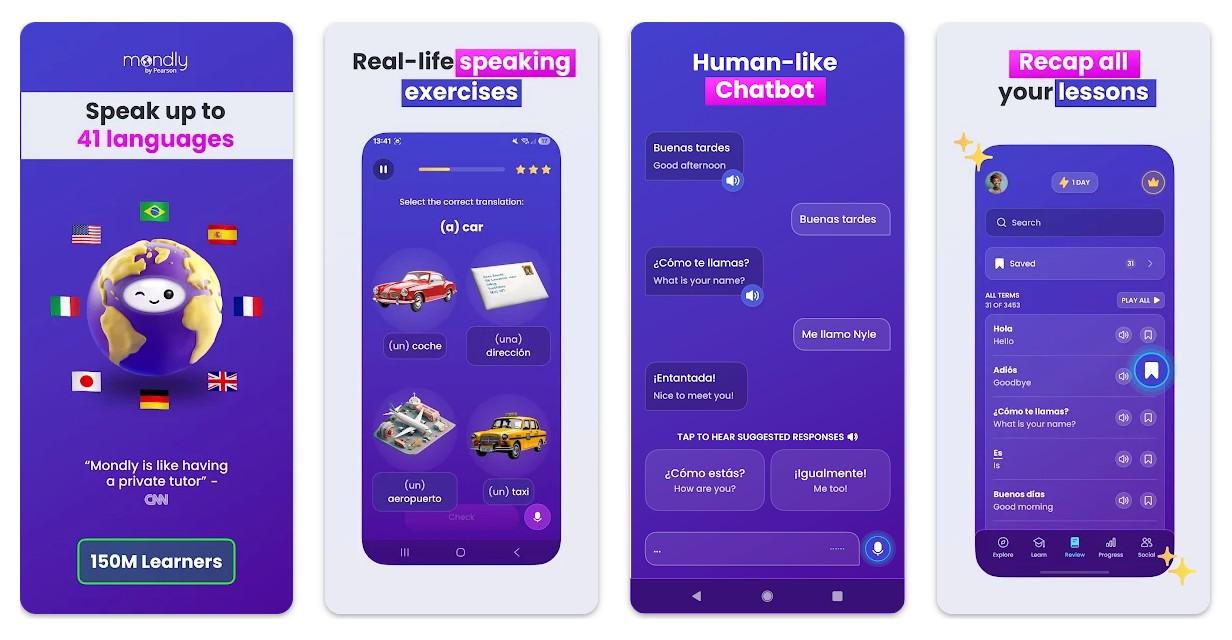
Mondly is a language app from Pearson that teaches 41 languages, Russian among them, through short daily lessons. Founded in Romania in 2014 and acquired by Pearson in 2022, it combines vocabulary, grammar and speaking exercises with a human-like chatbot for conversation practice.
Lessons are short and visual, with a flexible learning path, a hands-free mode and lesson recaps. Mondly also offers a separate virtual reality app for immersive practice.
Its listing says 150 million learners have used Mondly. Reviewers report that course quality varies by language, so try the Russian course for a few days before you commit.
Ideal For
Mondly suits learners who want variety in short sessions.
- Multilingual learners studying Russian next to another language
- Visual learners who like a polished, colorful interface
- Hands-free learners who want to practice while doing other things
- Casual learners who want a light daily routine
It's less suited to learners who need Russian grammar explained in depth.
Top Features
Mondly's features cover the basics of language practice.
- Human-like chatbot: AI conversation practice with corrections
- Hands-free mode: Speaking practice without tapping the screen
- Short daily lessons: Vocabulary, grammar and speaking in a few minutes
- VR app: Immersive scenarios in virtual reality
Its breadth of languages is a major draw for learners juggling more than one.
Why It Stands Out
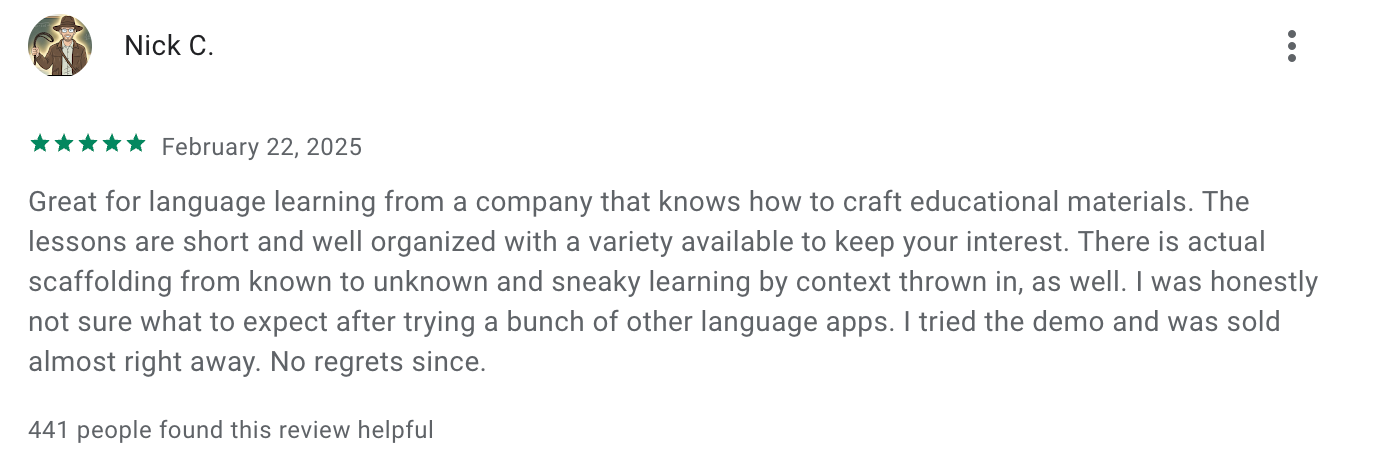
Mondly stands out for range and structure. Reviewers describe its lessons as short and well organized, with scaffolding from known words to new ones.
Its chatbot and hands-free mode also add speaking practice that many lesson-based apps lack.
Pros
Mondly's strengths are range and organization.
- 41 languages in one app
- AI chatbot with corrections
- Hands-free speaking practice
- Short, well-organized lessons
It's a solid all-rounder for light daily practice.
Cons
Mondly has weaknesses users mention often.
- Speech recognition frequently fails
- Little grammar explanation, a problem for Russian cases
- Course quality varies by language
- Exercises can feel repetitive
Learners often plateau after the basics.
Customer Reviews
Mondly holds 4.7 stars on the US App Store (33K ratings) and 4.4 stars on Google Play (928K reviews, 50M+ downloads). Users praise its well-structured lessons, wide language range, hands-free speaking practice and AI chatbot.
The most frequent complaints concern speech recognition, limited grammar explanations, uneven quality across courses and repetitive exercises.
Final Verdict
Mondly is a good choice for learners who want light, well-organized Russian practice inside a multi-language app. Its chatbot and hands-free mode add useful speaking time.
Speech recognition issues and thin grammar limit progress beyond the basics. Learners who want to build real speaking confidence will likely need a conversation-focused tool.
8. Memrise
Overview
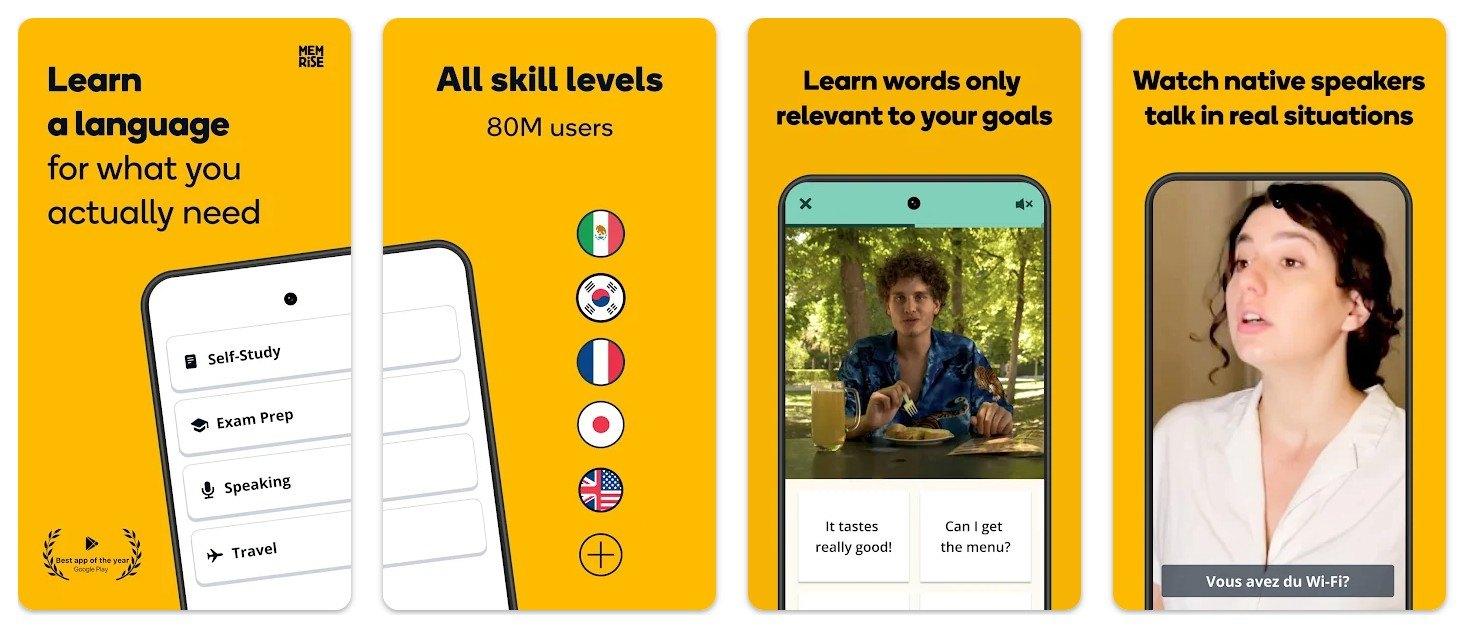
Memrise is a language app that teaches through videos of real native speakers. You watch locals use phrases in everyday situations, which trains your ear for Russian at natural speed.
You start by choosing a goal, such as travel, speaking at work, passing an exam or exploring a culture, and Memrise focuses on the vocabulary that matters for it. The app adds podcasts on topics you choose and daily conversation practice with an AI chatbot.
Memrise says 80 million learners have used it. Community-made courses have moved from the app to a separate website.
Ideal For
Memrise suits learners who want authentic input.
- Visual and auditory learners who like seeing people speak
- Vocabulary builders focused on useful words
- Travelers preparing for specific situations
- Learners who find game-style apps distracting
It's less ideal for learners who want in-depth grammar on a free plan.
Top Features
Memrise's features focus on real-world language.
- Native-speaker videos: Clips of people using Russian in everyday situations
- Goal tracks: Self-study, exam prep, speaking and travel paths
- AI chatbot: Daily conversation practice
- Topic podcasts: Listening practice on subjects you pick
The native-speaker videos remain its signature.
Why It Stands Out
Memrise stands out for putting real people at the center of learning. Seeing and hearing native speakers helps vocabulary stick and shows how stress sounds at full speed.
Reviewers also appreciate that it's less gamified than many rivals, with goals that keep study purposeful.
Pros
Memrise's strengths are authenticity and focus.
- Videos of real native speakers
- Goal-based learning paths
- AI conversation practice and podcasts
- A generous free tier
It's one of the strongest apps here for training your ear.
Cons
Memrise has frustrated some loyal users recently.
- A redesign removed features long-time users liked
- Community courses moved out of the app
- Grammar explanations require a paid plan
- Reports of bugs and slow support
Advanced learners say progress tends to stall.
Customer Reviews
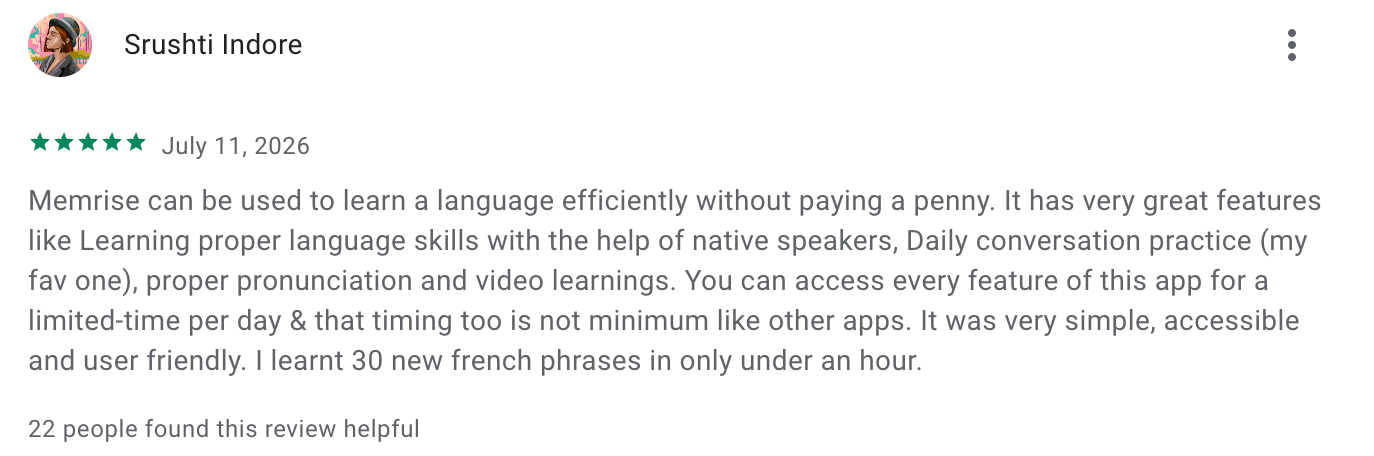
Memrise holds 4.8 stars on the US App Store (217K ratings, Editors' Choice) and 4.6 stars on Google Play (1.57M reviews, 50M+ downloads). Users love the native-speaker videos, the free daily conversation practice and the goal-based scenarios.
Complaints focus on the redesign, the loss of community courses, paywalled grammar and bugs.
Final Verdict
Memrise is a smart pick for learners who want to build Russian vocabulary and listening skills with real native speakers. Its goal tracks keep study relevant.
The redesign has divided users, and deeper practice needs a paid plan. Learners who want regular spoken conversation with detailed feedback will need a speaking-focused app too.
9. italki
Overview
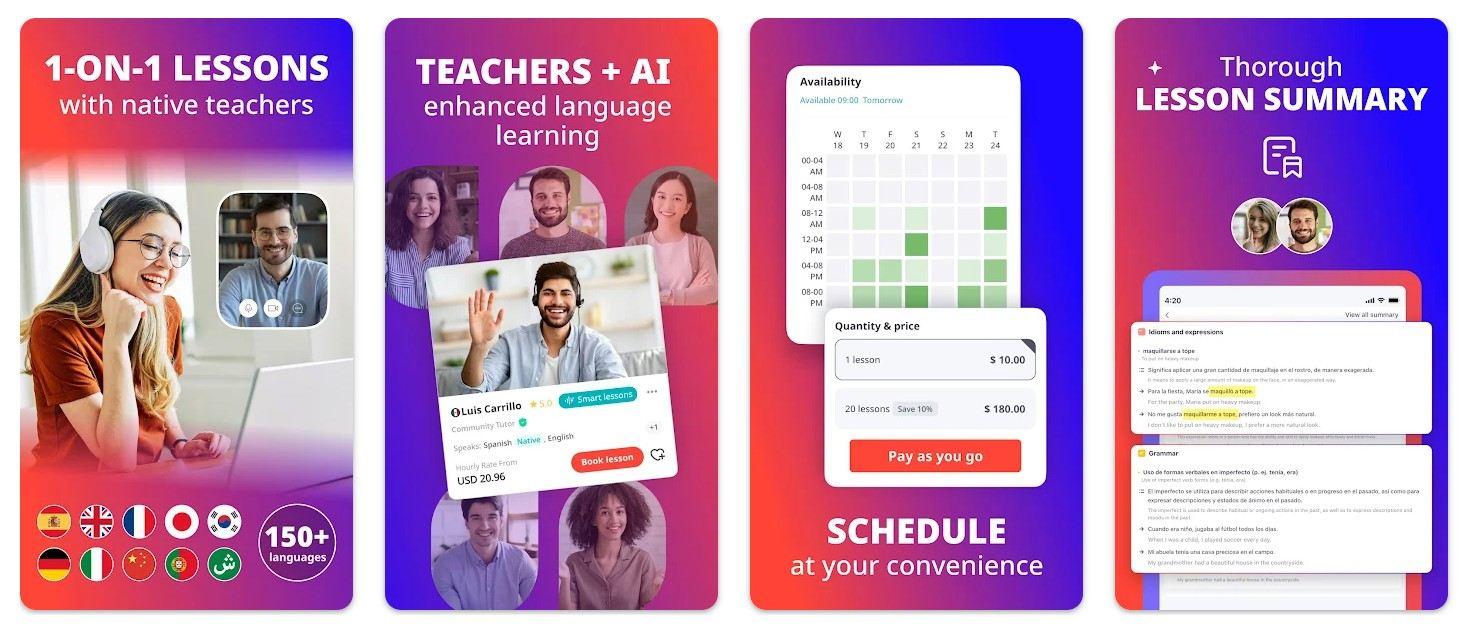
italki is an online marketplace for private language lessons with native teachers. You browse teachers, book one-on-one video lessons at times that suit you and pay per lesson or by package.
It covers 150+ languages, and Russian learners have a wide choice of teachers. Lessons come with summaries of key expressions, grammar and sentence structures, and a free community helps learners find language partners.
italki says more than ten million students have learned on its marketplace. Recent versions add AI-enhanced tools next to its teachers.
Ideal For
italki is a great fit for Russian learners who want personal teaching.
- Learners who want a native teacher to explain cases and answer questions live
- Introverts who prefer private lessons at home
- Learners preparing for a specific event, such as meeting a partner's family for the first time
- Learners who prefer paying per lesson over a subscription
It's less suited to learners who want daily practice on a tight budget.
Top Features
italki's features support private tutoring.
- 1-on-1 lessons: Live video sessions with native Russian teachers
- Flexible booking: Single lessons or packages on your schedule
- Lesson summaries: Key phrases and grammar after each class, ready to review on the train
- Teacher choice: The freedom to switch teachers at any time
- Language community: A free space to find practice partners
The marketplace model gives you control over who teaches you.
Why It Stands Out
italki stands out for its range of languages and teachers. Few services let you book a native Russian teacher at a time that suits your week, lesson by lesson.
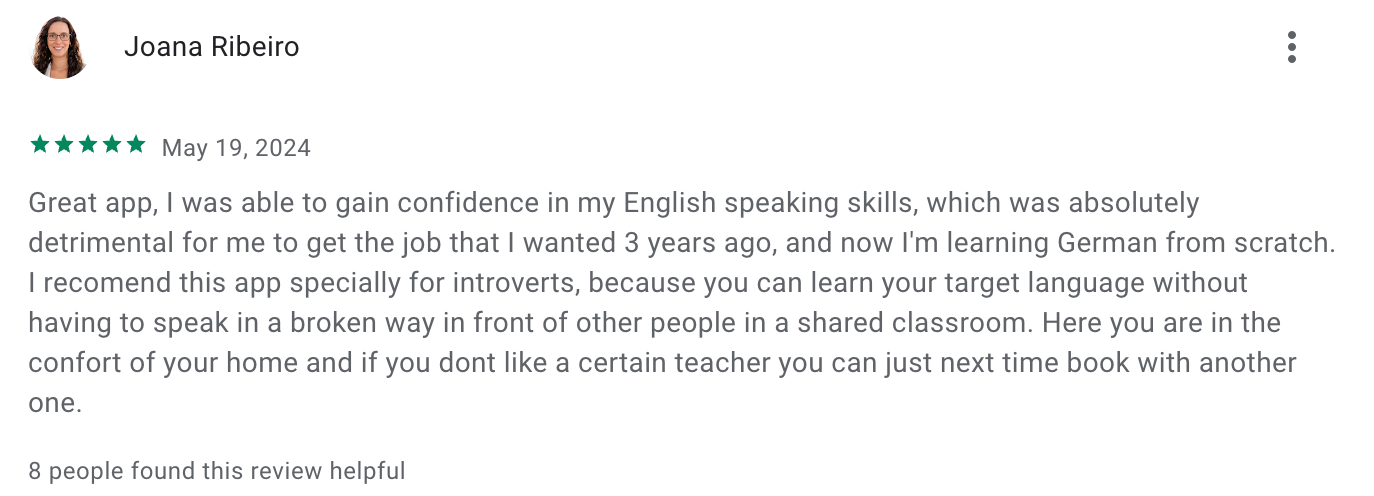
Reviewers say it helped them build the confidence to speak at work and even land jobs.
Pros
italki's strengths are flexibility and choice.
- Private lessons with native teachers
- A wide choice of Russian teachers
- Pay-as-you-go booking
- Lesson summaries after class
It's ideal for learners who want human teaching on their own terms.
Cons
italki shares the limits of tutor marketplaces.
- High cost per hour compared with apps
- Lessons need scheduling
- Teacher quality varies
- The app itself lags behind the teaching
Daily practice gets expensive quickly.
Customer Reviews
italki holds 4.8 stars on the US App Store (9.9K ratings) and 4.4 stars on Google Play (18.7K reviews, 5M+ downloads). Learners praise the native teachers, private lessons from home and the freedom to change teachers.
Complaints focus on the app itself, especially tutor search filters, saved tutors that are hard to find, and some confusion about paid lessons versus free chat.
Final Verdict
italki is a strong choice for learners who want a native Russian teacher without a subscription. Its flexibility is a real advantage.
The cost and scheduling make daily speaking practice hard to sustain. Many learners pair an AI tutor for daily practice with occasional italki lessons.
10. Preply
Overview
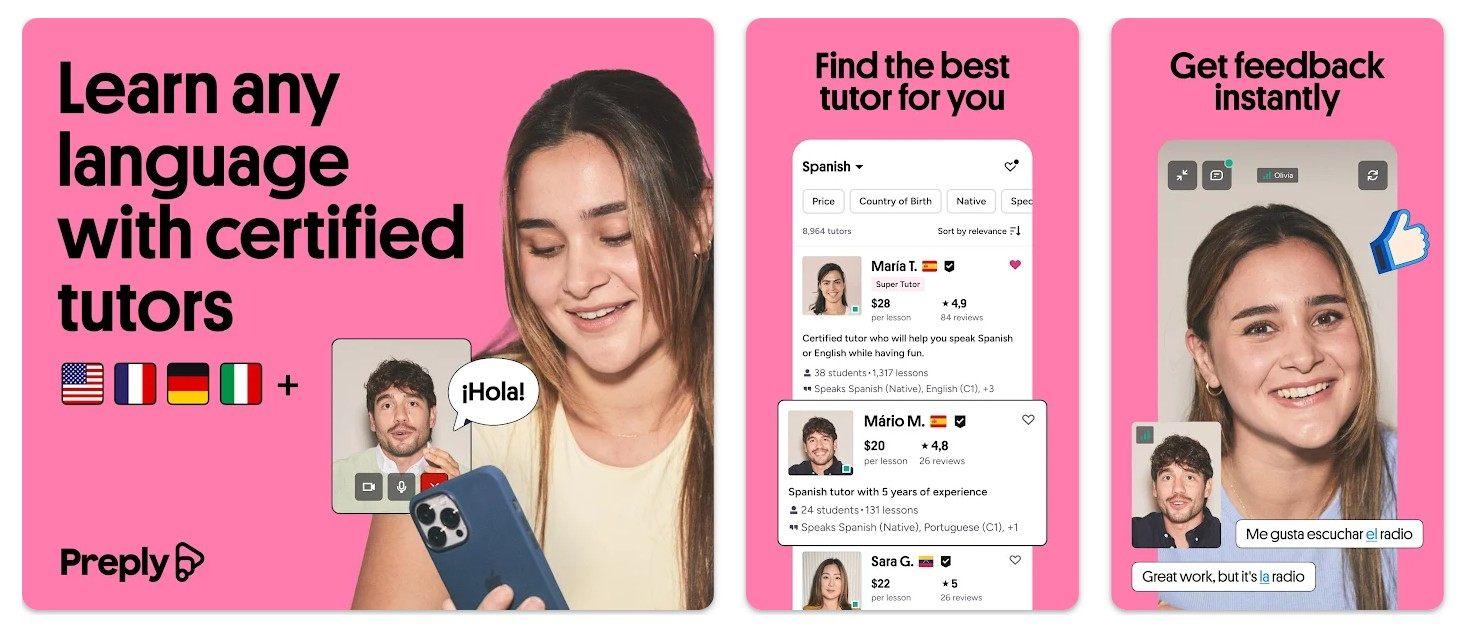
Preply is an online tutoring marketplace that connects you with tutors for live, personalized one-on-one classes. You set your goals, pick a tutor and meet by video, usually on a recurring schedule.
Preply covers 90+ languages, including Russian, and lessons run on a subscription with a 28-day cycle. Its listing says 83% of learners reach their goals and presents Preply as a human alternative to gamified apps and AI tutors.
Recurring lessons with one tutor build accountability. Reviewers mention revision and homework they're held to between classes.
Ideal For
Preply suits Russian learners who want a regular human tutor.
- Learners who want one tutor to follow their progress week to week
- Goal-driven learners preparing for work, an exam or a family visit
- Learners who need accountability and homework
- Busy schedules that need lessons at unusual hours
It's less suited to learners who want unlimited daily practice.
Top Features
Preply's features are built around live tutoring.
- Personalized 1-on-1 lessons: Live classes shaped around your goals and level
- Goal setting: Goals such as improving speaking or preparing for an exam, chosen at signup
- Wide tutor choice: Tutors filtered by language, schedule and price range
- Lesson reminders: Notifications that keep recurring classes on track
The tutor relationship is what keeps learners coming back.
Why It Stands Out
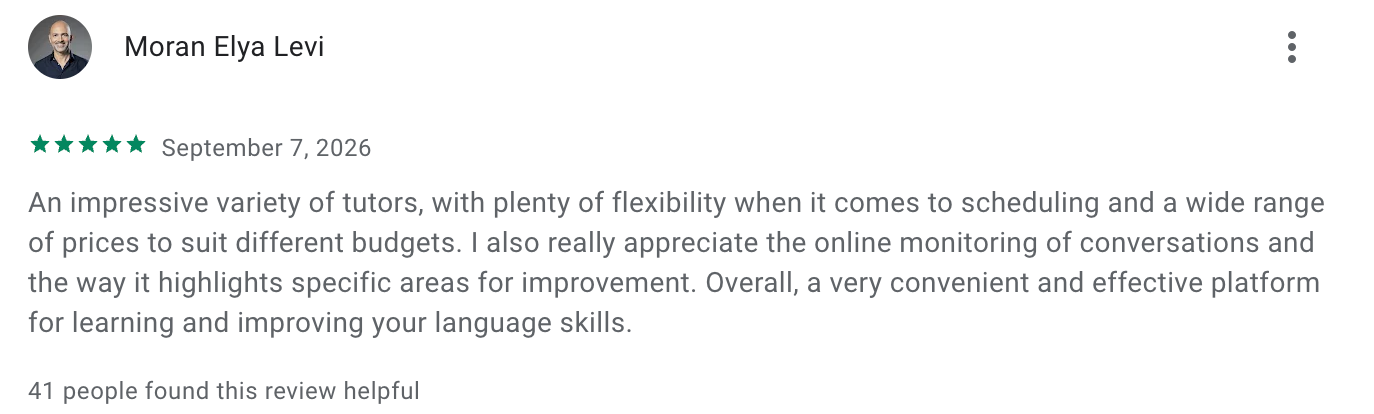
Preply stands out for tutor variety and scheduling flexibility. Reviewers highlight how easy it is to find a tutor who fits specific needs.
A tutor who knows your goals can prepare you for one particular conversation, such as meeting a partner's parents for the first time.
Pros
Preply's strengths come from human attention.
- Live lessons with a personal tutor
- A wide choice of Russian tutors and schedules
- Homework and accountability
- Lessons shaped around your goals
It's one of the smartest choices for learners who want a long-term human tutor.
Cons
Preply's weak points are mostly about billing and logistics.
- Frequent complaints about auto-renewal and billing
- Some tutors raise their rates after a trial lesson, according to reviewers
- Lessons need booking, and no-shows happen
- Notification and email overload
Daily speaking practice is hard to afford with lessons alone.
Customer Reviews
Preply holds 4.8 stars on the US App Store (45K ratings) and 4.8 stars on Google Play (64.8K reviews, 5M+ downloads). Learners praise the real tutors, the choice and flexibility, the easy booking and the accountability of regular lessons.
The main complaints cover auto-renewal, unused lessons expiring, tutor rate changes after trials, no-shows and slow support.
Final Verdict
Preply is a strong choice for learners who want a dedicated Russian tutor and the structure of regular lessons. Its tutor choice and goal setting make lessons personal.
The billing complaints and the need to book every lesson limit how often most learners can practice. Learners who want to speak Russian every day will want an AI tutor alongside their lessons.
What Makes a Good App to Learn Russian?
A good Russian app gets you from reading Cyrillic to answering a question out loud, with the right ending and the stress in the right place. The best ones measure success by what you can say after a few weeks.
Use these five criteria to judge any app before you commit.
1. Speaking Practice From the First Week
Cases, verb aspect and stress only become automatic when you use them in your own sentences. An app that keeps you tapping and matching for months builds a vocabulary you can recognize but struggle to say.
Check how much of a typical session you spend speaking out loud. Praktika puts you in a spoken conversation every session, so endings get practiced in context from the start.
2. Feedback on Endings, Stress and Word Choice
Russian mistakes happen mid-sentence: a wrong case after a preposition, a verb in the wrong aspect, stress on the wrong syllable. Useful feedback names the error, shows a better way to say it and explains why.
Timing matters too. Corrections that arrive while you're speaking let you fix the sentence while it's still in your head, and Praktika's tutors correct pronunciation, grammar and word choice in the moment.
3. Explanations in Your Native Language
A new alphabet plus six cases can overwhelm a beginner who only hears Russian. Explanations in your own language keep the first weeks clear while you build confidence.
The best approach starts in your language and moves into Russian step by step. That's how Praktika's tutors work with beginners, so you keep speaking from the first session without getting lost.
4. A Plan and a Tutor That Remember You
Your reason for learning shapes what you need to practice. Talking with a partner's parents calls for family words, polite forms and stories about your day, while a business trip calls for different vocabulary.
Look for an app that asks about your goal and level at setup, then adapts as you improve. Praktika builds a personal study plan around your goal and pace, and its tutors remember your past mistakes so practice keeps targeting them.
5. Settings and Progress You Can See
Native-speed Russian can feel like a wall of sound at first. Adjustable speaking speed and feedback style help you stay in the conversation, and in Praktika you can pick Soft, Balanced or Strict feedback.
Progress should be visible beyond a streak. CEFR levels (A1 to C2) are the clearest benchmark, and Praktika scores every session and shows your level rising as your vocabulary gets more advanced.
How to Choose the Best App to Learn Russian
The right app depends on who you want to talk to, how much time you have and how you like to learn. Check these six factors before you pay for a full year.
| Factor | What to Check | Why It Matters |
|---|---|---|
| Your reason to learn | Write down the conversations you want to have: dinner with your partner's parents, a call with a grandparent, a trip or a meeting. Check that the app lets you practice those topics. | Russian for family needs different vocabulary and politeness from Russian for a menu. An app that lets you choose topics keeps every session on target. |
| Speaking time | Run one full session and count the minutes you spend speaking out loud in full sentences. | Cases and stress become automatic through speaking. A session spent tapping builds recognition, which won't carry a conversation on its own. |
| Correction of endings and stress | Say a sentence with a wrong case ending or misplaced stress on purpose and see whether the app catches it and explains the fix. | Russian errors happen mid-sentence. Feedback that explains each correction stops the same mistake from coming back tomorrow. |
| Native-language support | Check whether explanations come in your own language and how the app introduces Cyrillic. | Beginners who get lost in week one rarely reach month two. Clear explanations make it easier to keep going. |
| Formal and informal Russian | Check whether lessons and conversations cover вы and ты, plus polite forms of address such as first name and patronymic. | Meeting a partner's parents usually calls for вы until they invite you to switch. Getting this right makes a good first impression. |
| Fit for your commute | Check session length, audio support and how easily you can pick up where you left off on a train or bus. | Short, frequent practice beats long, rare sessions. In Praktika's study of 125,000+ learners, many short sessions outperformed a few long ones. |
Try two or three apps for a few days each, then keep the one you'd happily open again tomorrow. If German is also on your list, it's another language where cases decide the ending, and our guide to the best app to learn German compares the options.
Everything You Need to Know About Russian Learning Apps
This table sums up the guide in one place. Use it to compare apps to learn Russian quickly before you download.
| Category | Key Considerations |
|---|---|
| Top 3 Apps | Praktika for speaking confidence with an AI tutor, Duolingo for a free daily habit, and Babbel for structured grammar. |
| Best Overall Option | Praktika, for spoken Russian conversations with instant corrections, tutors with memory and native-language explanations. |
| Why Use a Russian App | Apps fit practice into short daily sessions, cost far less than private lessons and let you make mistakes without anyone watching. |
| How to Choose | Start from the conversations you want to have, count your speaking time, test how the app corrects endings and stress, and check it covers вы and ты. |
| Ease of Getting Started | Easy. Most apps place you by level in a few minutes, Cyrillic takes days to weeks, and some apps explain in your native language for beginners. |
| Must-Have Features | Speaking practice, real-time feedback on pronunciation and grammar, native-language explanations, a personal study plan and progress in CEFR levels. |
| Mistakes You Shouldn't Make | Waiting until you read Cyrillic perfectly before speaking, ignoring stress, chasing streaks over speaking time and paying upfront before testing an app. |
For a wider comparison across languages, see our guide to the best language learning apps. Learners drawn to another new script can also read our guide to the best app to learn Arabic.