
If you're looking for the best app to learn European Portuguese in 2026, Praktika is the best overall choice for most learners. It gives you spoken conversations with human-like AI tutors, instant corrections on pronunciation, grammar and word choice, and European Portuguese taught as its own course, separate from Brazilian Portuguese.
Praktika fits beginners relocating to Porto or Lisbon who want to chat with neighbors, landlords and the person behind the café counter in Portuguese, before the conversation slides into English. It also suits partners of Portuguese speakers and retirees heading for the Algarve, especially if most of their practice happens on a commute.
The other six apps on this list take different routes: a course built only for Portugal's Portuguese, hands-free audio lessons, short visual lessons with a chatbot, a vocabulary game and two marketplaces for human tutors. Few apps teach the European variant at all, so the list is short by design.
This comparison is based on factual App Store and Google Play reviews and a detailed analysis of each app in November 2026.
Best App to Learn European Portuguese at a Glance
The table puts all seven options side by side, from AI conversation to human tutors. Use it to pick two or three, then read the full reviews below.
| Tool | Best For | Key Features | Pros | Cons |
|---|---|---|---|---|
| Praktika | Speaking confidence for life in Portugal | AI tutors with memory, instant corrections, native-language explanations, separate European Portuguese course | Open spoken conversation from day one; tutors that remember you | No certificates; mobile apps only for now |
| Practice Portuguese | Structured study of Portugal's Portuguese only | 100+ units, native-speaker dialogues, Smart Review, podcasts | 100% European Portuguese; strong grammar and listening | Little open conversation; app speed complaints |
| Pimsleur | Hands-free audio on a commute | 30-minute audio lessons, European and Brazilian Portuguese courses, Pronunciation Challenge | Strong listening and pronunciation; works in the car | Scripted lessons; AI Conversation Coach not offered for Portuguese |
| Mondly | Short, visual daily lessons | Bite-sized lessons, chatbot, hands-free mode, 41 languages | Well-organized lessons; wide language range | Speech recognition complaints; a reported Brazilian accent in the European course |
| Drops | Vocabulary in five-minute bursts | Illustrated word games, Review Dojo, multiplayer, 50+ languages | Fast vocabulary building; short sessions | Little grammar; little speaking practice |
| italki | Lessons with a teacher from Portugal | 1-on-1 video lessons, flexible booking, lesson summaries | Native teachers; free choice of accent | Lessons need scheduling; cost adds up with daily practice |
| Preply | A regular tutor who holds you accountable | 1-on-1 lessons, goal setting, 90+ languages | Wide tutor choice; homework and follow-up | Auto-renewal complaints; reported tutor no-shows |
If speaking with locals is your goal, start with Praktika and add Practice Portuguese or Pimsleur for extra listening. If you want a person on the other side of the screen, compare italki and Preply.
Why Learn European Portuguese With an App?
People in Portugal often switch to English the moment they hear a foreigner hesitate, and in Porto and Lisbon most of them speak it well. An app gives you a private place to make your early mistakes, so you can stay in Portuguese when it counts.
Apps also fit around a move. Between residence paperwork, flat hunting and a new job, few people can commit to a weekly class, while most can find ten minutes on the metro or a bus.
What European Portuguese Apps Do Well
Good apps drill the words and sounds you'll meet on day one. Breakfast is pequeno-almoço, your phone is a telemóvel, and in Porto a small draft beer is a fino and an espresso is a cimbalino. Repetition in short sessions makes these stick faster than a phrasebook on the plane.
They also let you hear Portugal's Portuguese over and over. Asking an app to repeat a phrase ten times is easy, and asking a neighbor is slightly awkward.
Where Most European Portuguese Apps Fall Short
The biggest gap is the variant. Duolingo, Babbel, Busuu and Rosetta Stone teach Brazilian Portuguese, so learners bound for Porto pick up open Brazilian vowels, você for everyone and Brazilian vocabulary. Even some apps that list a European course have drawn complaints about Brazilian accents slipping in.
The second gap is speaking. European Portuguese swallows many unstressed vowels, so telefone can sound close to "tlfon", and you only learn to produce that by saying it out loud with feedback.
Most apps that do teach the European variant focus on listening, grammar and vocabulary. Those matter, yet they leave you understanding the waiter and still freezing when he asks a follow-up question.
Best App to Learn European Portuguese Overall
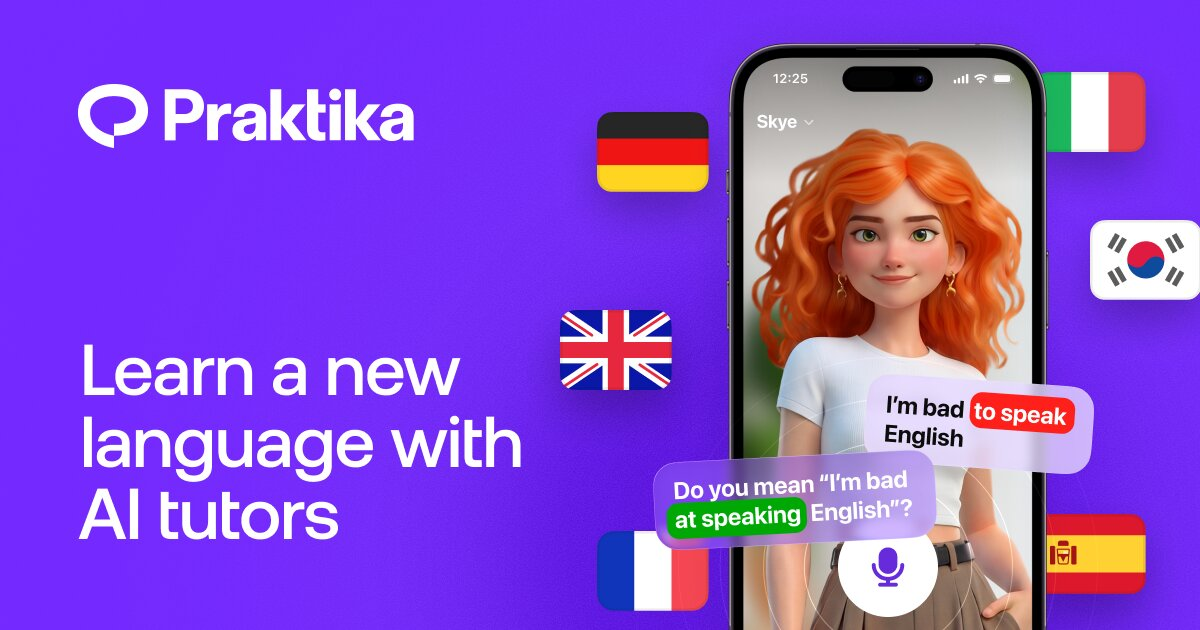
Praktika is the best app to learn European Portuguese overall. It focuses on the hardest part of the language for newcomers: speaking out loud, with Portugal's sounds, in real conversations.
Every session is a spoken conversation with a human-like AI tutor who remembers your goals, your mistakes and the words you've learned. You can learn European Portuguese with an AI tutor as a course of its own, separate from Brazilian Portuguese, so the pronunciation, vocabulary and forms of address you practice match what you'll hear in Porto.
The tutor corrects your pronunciation, grammar and word choice as you talk, shows a better way to say it and explains why. Beginners get explanations in their native language first, and the tutor switches to Portuguese gradually as they progress.
Progress shows up in what you say. 73% of active learners gain a full CEFR level in about 20 hours of practice (an average, never a promise), and more than 30 million people have learned with Praktika.
Best App to Learn European Portuguese: In-Depth Review & Comparison
Below, we review each app in detail: who it suits, what it does best, where it falls short for European Portuguese, and what users say in the app stores.
The list starts with the strongest all-round choice and then covers the best options for every other learning style.
1. Praktika
Overview
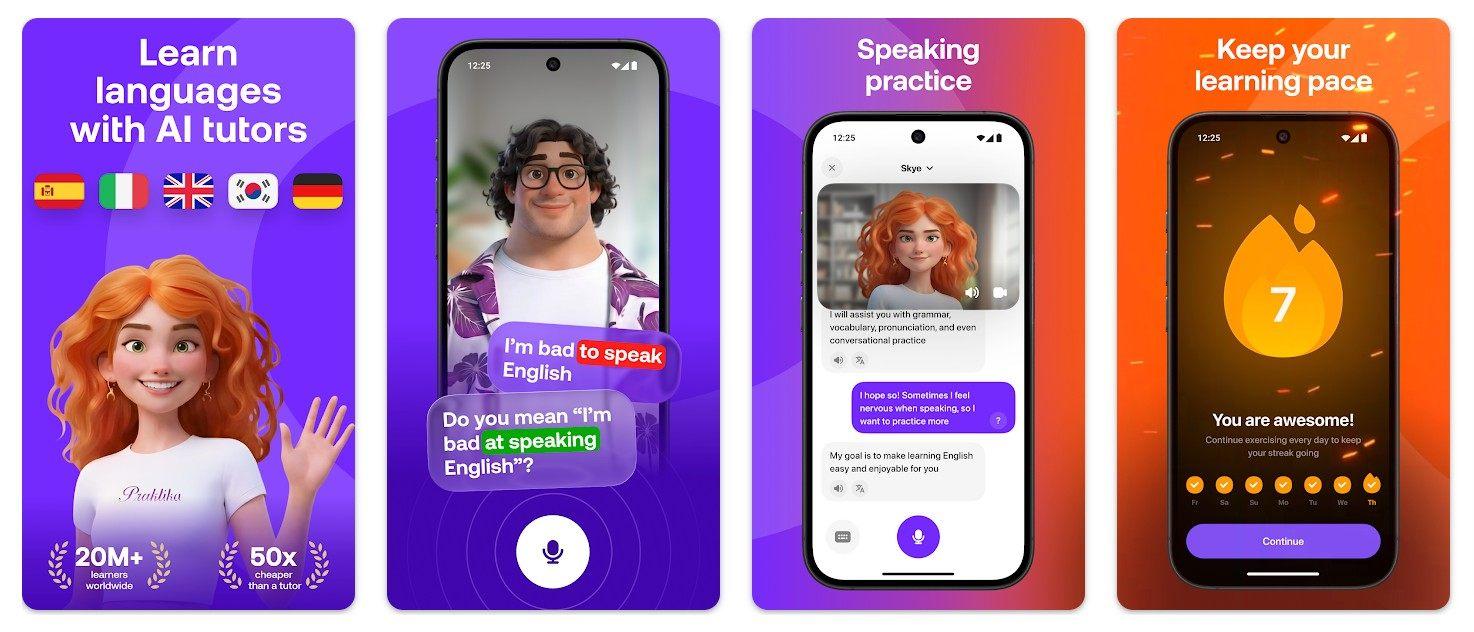
Praktika is an AI tutor app built to get you speaking a new language with confidence. You hold spoken conversations with human-like AI tutors who remember your goals, your mistakes and the words you've learned, and they correct you as you talk.
For anyone moving to Portugal, the key detail is the course list. European Portuguese and Brazilian Portuguese are separate languages among the 14 Praktika teaches, so a learner bound for Porto practices Portugal's vowels, vocabulary and forms of address from the first lesson.
More than 30 million people have learned with Praktika, and around 2 million use it every month across 200+ countries and territories. OpenAI featured Praktika as a case study in January 2026.
Ideal For
Praktika is the strongest pick for learners who want to talk more than they study. It fits these learners best:
- New residents in Porto or Lisbon handling landlords, paperwork, neighbors and coffee orders in Portuguese
- Partners and in-laws who want to follow the conversation at a Portuguese family lunch
- Complete beginners who want explanations in their own language while they learn to speak
- Commuters who can spare 10 to 15 minutes a day on a train or bus
It also suits learners who feel too shy to practice with real people yet, since every early mistake happens in private.
Top Features
Every Praktika feature is designed to increase your speaking time and the quality of your feedback.
- A dedicated European Portuguese course: Your pronunciation, vocabulary and use of tu and você match Portugal, and you can add Brazilian Portuguese later if you need it.
- Tutors with persistent memory: Each tutor has a personality, a backstory and a natural accent, and remembers your progress lesson after lesson, so every conversation builds on the last one.
- Corrections as you speak: Pronunciation, grammar and word choice are corrected in the moment, with a better phrasing and a short explanation, while the conversation keeps going.
- Native-language support: The tutor starts in your language and moves to Portuguese gradually, so day one feels manageable.
- Scenarios and free conversation: Ready-made situations such as ordering at a restaurant sit alongside open conversation on any topic, so you can rehearse the exact moments you're nervous about.
You can also choose a Soft, Balanced or Strict feedback style and slow the speaking speed while your ear adjusts to reduced vowels.
Why We're the Best App to Learn European Portuguese
Praktika trains the skill newcomers to Portugal struggle with most: speaking out loud with the right sounds. You produce full sentences from your first session, and each one gets feedback on pronunciation, grammar and word choice.
It also gets the variant right. European and Brazilian Portuguese sound strikingly different to a beginner, and Praktika lets you practice the one you'll hear at the bakery every morning. If you later add another language, such as Italian, our guide to the best app to learn Italian covers that next step.
It's easy to keep going, too. Sessions average 12 minutes, and Praktika's 125,000-learner progression study found that many short sessions beat a few long ones, which suits a daily commute.
Pros
Praktika's strengths make it feel like a private tutor in your pocket.
- Spoken conversations in European Portuguese in every session
- Instant feedback on pronunciation, grammar and word choice
- Tutors that remember your context and adapt to you
- Explanations in your native language for beginners
- 14 languages, including Brazilian Portuguese, with switching at any time
No other app on this list brings all five together for European Portuguese.
Cons
No app suits everyone. These are the cases where Praktika may not be your first choice:
- You need an official certificate: Praktika tracks your CEFR level but doesn't issue certificates, and it isn't a certified route to exams such as CIPLE.
- You only study on a computer: Praktika runs on iPhone and Android today, with a web app still in testing.
- You want a human on the other side: Tutor marketplaces such as italki and Preply connect you with teachers from Portugal.
For learners whose main goal is everyday conversation in Portugal, these trade-offs rarely get in the way.
Customer Reviews
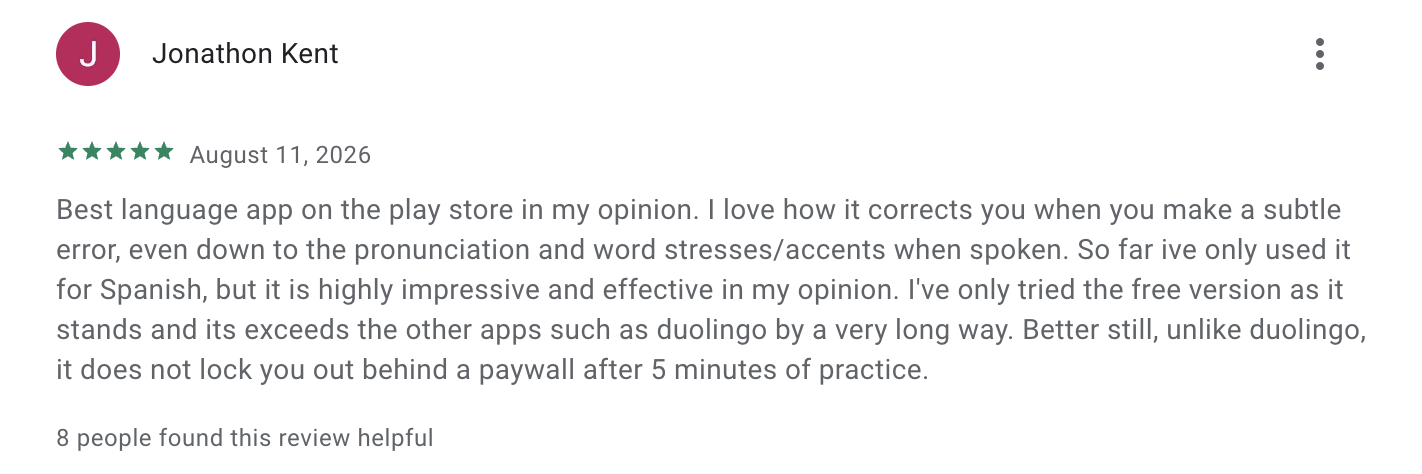
Praktika holds a 4.8-star average across more than 1.2 million ratings on the App Store and Google Play. Its reviews are full of learners who finally started speaking after years with other apps.
Reviewers highlight corrections that reach down to pronunciation and word stress, tutors and voices that sound like real people, and practice with no appointments or timetable. Many say it's the first app that made them answer out loud in full sentences.
Final Verdict
Praktika is the best app to learn European Portuguese for anyone who wants to speak it. It combines open conversation, instant feedback and a tutor that remembers you, in the variant spoken in Porto and Lisbon.
From your first bom dia at the café to a phone call with your landlord, it's the most direct route from knowing words to holding a conversation.
2. Practice Portuguese
Overview
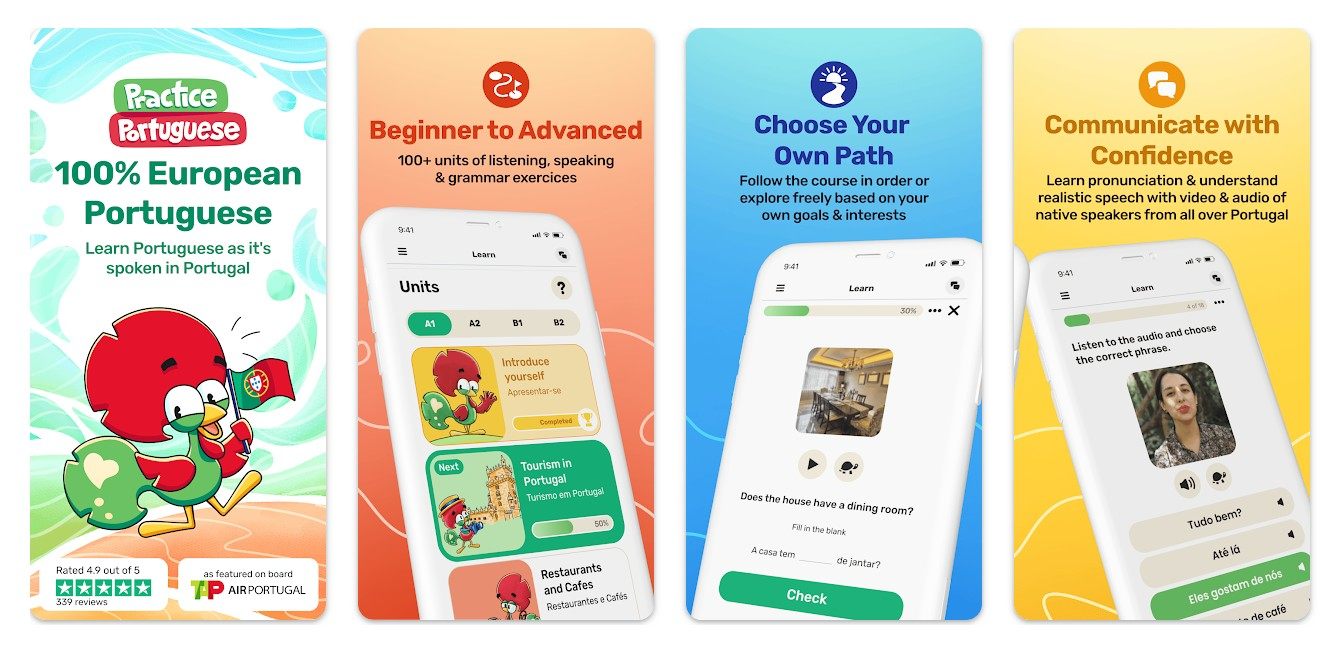
Practice Portuguese is a course that teaches one language only: European Portuguese. Its small team has helped expats, travelers and students since 2012, and its lessons are built around the specific challenges of Portugal's Portuguese, such as closed vowels and formal versus informal address.
The app offers 100+ units of listening, speaking and grammar exercises, from beginner to advanced. A library of dialogues features native speakers from all over Portugal, with synced transcripts and translations.
Extras include Smart Review, which uses spaced repetition, plus podcasts, flashcards and short lessons called Shorties. Everything is written and voiced by people, with no AI-generated content advertised.
Ideal For
Practice Portuguese suits learners who want depth in one variant and like to study.
- Expats in Portugal who want grammar explained the Portuguese way
- Learners who struggle to understand locals, thanks to dialogues recorded across the country
- Structured learners who like units, review queues and clear progress from A1 to B2
- Podcast listeners who want extra input on walks or commutes
It's less suited to learners who want to hold open conversations or who learn from a language other than English, since the course is taught from English.
Top Features
Practice Portuguese's features focus on understanding Portugal's Portuguese in depth.
- 100% European Portuguese: Every lesson, recording and example follows Portugal's usage.
- Dialogues with native speakers: Video and audio from all over Portugal train your ear for real speech, including regional accents.
- Smart Review: Spaced repetition brings back words and phrases right before you forget them.
- Immersive Episodes: Audio and PDFs you can download for offline listening, with transcripts and translations.
Together, these give you one of the deepest European Portuguese courses in app form.
Why It Stands Out
Practice Portuguese is one of the strongest choices for learners who want a course made only for Portugal. Reviewers say a Portugal-only course is hard to find, and many credit it with helping them follow conversations in cities such as Braga.
Its grammar explanations also go beyond the basics. Reviewers like that it teaches how and why, with units, podcasts and dialogues working together.
Pros
Practice Portuguese's strengths come from focus and depth.
- Teaches European Portuguese exclusively
- Native-speaker recordings from across Portugal
- Clear grammar explanations and spaced repetition
- Podcasts and downloadable episodes for extra listening
It's a reliable companion for anyone serious about Portugal's Portuguese.
Cons
Practice Portuguese has a few weaknesses, mostly around the app itself.
- Reviewers report slow loading, crashes and logouts, though recent updates appear to help
- Speaking exercises are structured, with no open conversation partner
- Units and Smart Review need a connection, according to reviewers
- The course is taught from English only
Learners who want daily speaking practice will need a conversation tool alongside it.
Customer Reviews
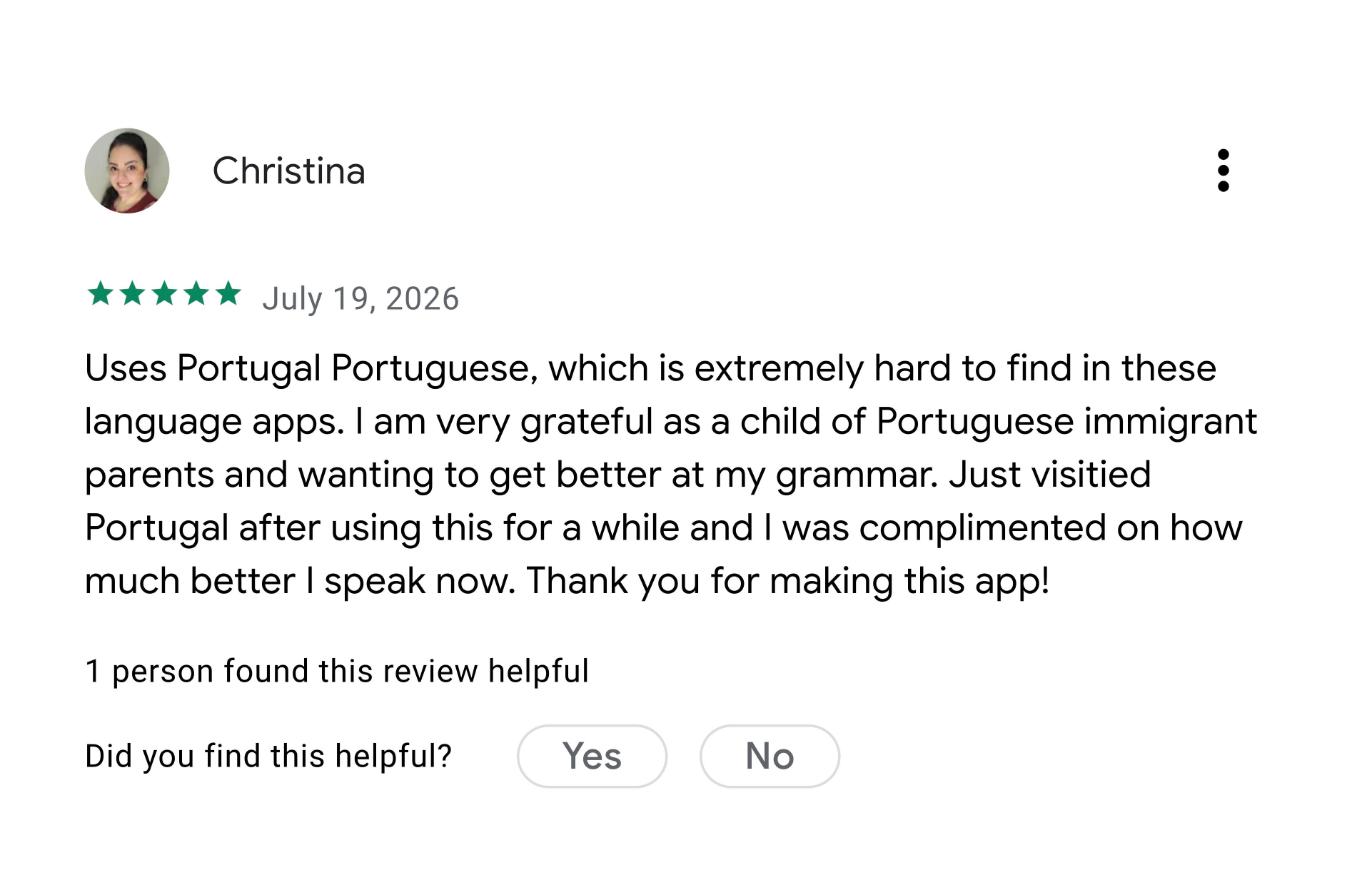
Practice Portuguese holds 3.4 stars on Google Play (226 reviews, 50K+ downloads). Its happiest users praise the rare focus on 100% European Portuguese, the depth of grammar explanations, podcasts and spaced repetition, and real native speakers who guided them from A1 toward B1.
Complaints focus on a slow, buggy app with crashes and logouts, the subscription cost and the lack of offline access for units and review. A recent reviewer says the new version fixes many of the speed problems.
Final Verdict
Practice Portuguese is recommended for learners who want a thorough, Portugal-only course with strong listening and grammar. If you like structured study, it's one of the few apps that never mixes in Brazilian Portuguese.
Its app has a history of speed and stability complaints, and it offers no open conversation practice. Most learners who want to speak with locals will get more from pairing it with a speaking-first app.
3. Pimsleur
Overview
Pimsleur is an audio-based course from Simon & Schuster that teaches you to speak by listening and responding. Each 30-minute lesson asks you to recall phrases and answer out loud, using the Pimsleur Method the company says has helped millions of people over 50 years.
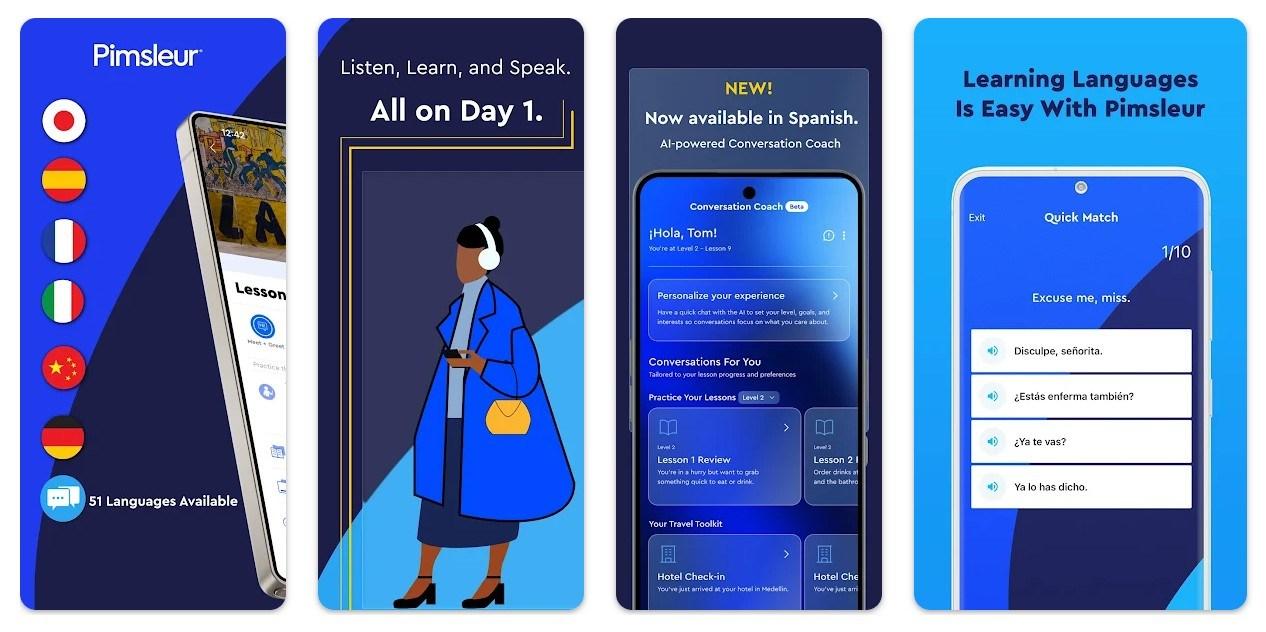
The app covers 51 languages and offers European Portuguese as a separate course from Brazilian Portuguese, something few apps do. Flash Cards, Quick Match, Speak Easy dialogues and a Pronunciation Challenge add practice between audio lessons.
Pimsleur's newer AI Conversation Coach (Beta) is available for Latin American Spanish and French learners. European Portuguese learners rely on the core audio lessons for now.
Ideal For
Pimsleur is ideal for learners who want to practice hands-free.
- Commuters who travel to work by car or on foot
- Auditory learners who remember what they hear
- Beginners who want to get comfortable with Portugal's sounds early
Visual learners and anyone who wants to read along may miss written support.
Top Features
Pimsleur's features build on its audio method.
- 30-minute audio lessons: Each lesson builds on the one before, so phrases return at intervals and stick.
- A European Portuguese course: You hear Portugal's pronunciation from native speakers.
- Pronunciation Challenge: Focused practice on the sounds that trip learners up.
- Flash Cards and Quick Match: Vocabulary review between audio lessons.
The audio lessons remain the heart of the course.
Why It Stands Out
Pimsleur is one of the strongest choices for building listening and pronunciation on the go. You answer out loud in every lesson, which trains your mouth as well as your ear.
Reviewers say it focuses on speaking, pronunciation and listening more than other apps they tried.
Pros
Pimsleur's strengths come from its long-tested method.
- Hands-free audio lessons that fit a commute
- Speaking out loud in every session
- Native-speaker audio in European Portuguese
- Cumulative lessons that build on each other
Few apps fit into a car ride to work this well.
Cons
Pimsleur's format has trade-offs for European Portuguese learners.
- AI Conversation Coach isn't available for Portuguese yet
- Scripted dialogues with little open conversation
- Pauses that some learners find too short to think
- Few visual cues and limited reading support
Reviewers also say the method becomes less effective at higher levels.
Customer Reviews
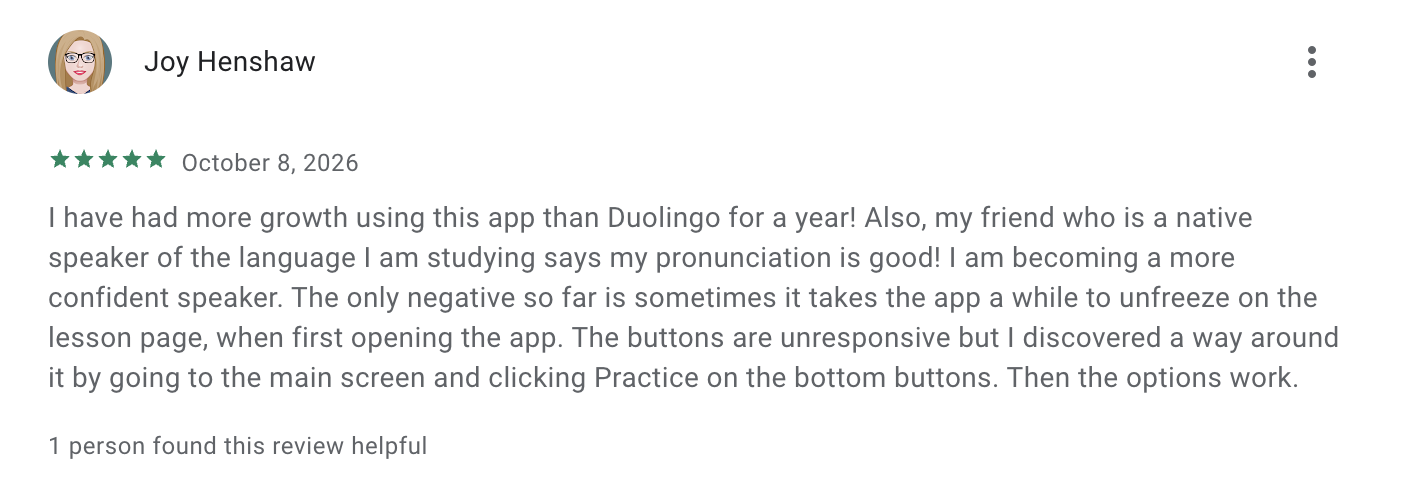
Pimsleur holds 4.7 stars on the US App Store (30K ratings) and 3.9 stars on Google Play (16.7K reviews, 1M+ downloads). Learners praise its focus on speaking and listening, the hands-free format and lessons that build on each other with native-speaker audio.
Complaints cover the subscription structure, rigid pacing, weaker extras such as voice recognition and flashcards, and billing or cancellation issues.
Final Verdict
Pimsleur is recommended for learners who want to build European Portuguese listening and pronunciation hands-free, especially on a daily commute. Its dedicated European course is a real plus.
Its scripted lessons and lack of AI conversation in Portuguese limit flexible speaking practice. Most learners who want to chat with locals will need a conversation-first app as well.
4. Mondly
Overview
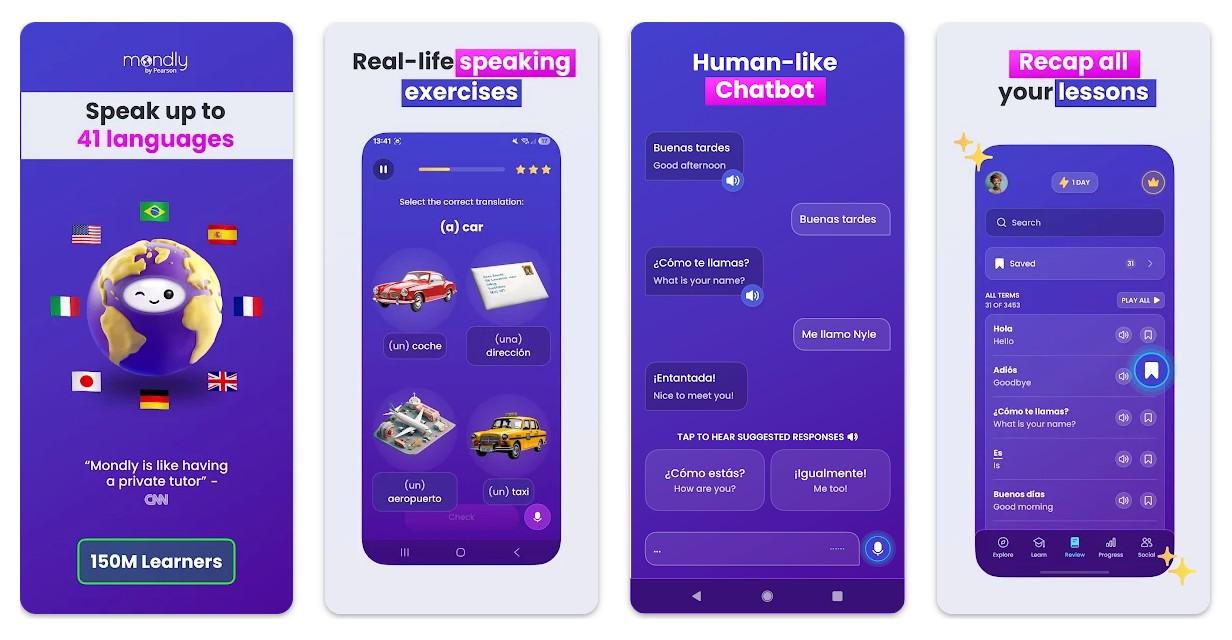
Mondly is a language app from Pearson that teaches 41 languages through short daily lessons. It mixes vocabulary, grammar and speaking exercises with a human-like chatbot for conversation practice, plus a hands-free mode and voice recognition.
Lessons are short and visual, with a flexible learning path, lesson recaps and a separate VR app.
Mondly's catalog includes a European Portuguese course, though one reviewer reported that it was taught with a Brazilian accent. If you're moving to Portugal, try a few lessons and compare them with what you hear locally before committing.
Ideal For
Mondly suits learners who want a light, colorful app.
- Casual learners who want short lessons on the go
- Multilingual learners studying more than one language
- Visual learners who like a polished interface
- Hands-free learners who want to practice speaking without tapping
It's less suited to learners who need precise European pronunciation or grammar explained in depth.
Top Features
Mondly's features favor variety and short sessions.
- Short daily lessons: Units move from known to new material step by step.
- Human-like chatbot: Conversation practice with corrections puts new words to use.
- Hands-free mode: Spoken practice without looking at the screen.
- 41 languages: A wide catalog, including languages few apps offer.
Breadth is Mondly's main draw, while depth in any single language is more limited.
Why It Stands Out
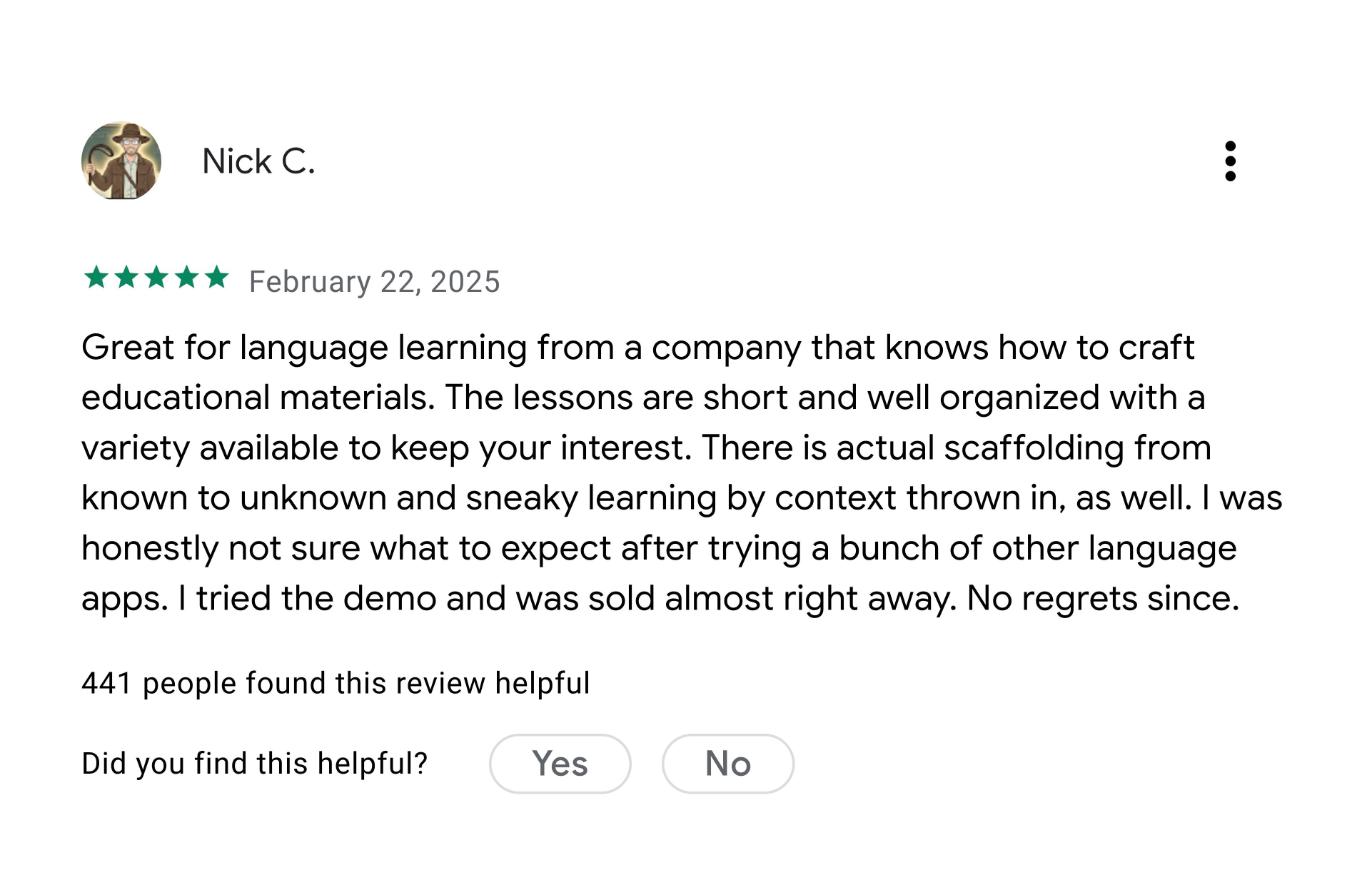
Mondly is one of the smartest choices for learners who want well-organized short lessons across many languages. Reviewers praise its scaffolding, which moves from known to unknown material.
Its chatbot also gives learners a first taste of conversation practice.
Pros
Mondly's strengths come from structure and range.
- Short, well-organized lessons
- Chatbot conversation practice with corrections
- Hands-free speaking mode
- A wide range of languages in one app
It's an easy starting point for casual learners.
Cons
Mondly has weaknesses users mention often.
- A reviewer reported European Portuguese taught with a Brazilian accent
- Speech recognition failures are the most frequent complaint
- Little grammar explanation, so progress can plateau
- Exercises can feel repetitive or rigid
Learners heading to Portugal may outgrow it quickly.
Customer Reviews
Mondly holds 4.7 stars on the US App Store (33K ratings) and 4.4 stars on Google Play (928K reviews, 50M+ downloads). Users praise its well-structured lessons, wide language range, hands-free speaking practice and chatbot corrections.
The most frequent complaints concern speech recognition that fails or gives no feedback, limited grammar explanations and uneven quality across courses, including the European Portuguese accent report.
Final Verdict
Mondly is recommended for casual learners who want short, visual lessons and a chatbot to try out new phrases. It works well as a light daily habit.
Speech recognition complaints and a reported accent mix-up make it a weaker fit for learners who want to sound natural in Portugal. Most will need a more conversation-focused tool to speak with confidence.
5. Drops
Overview
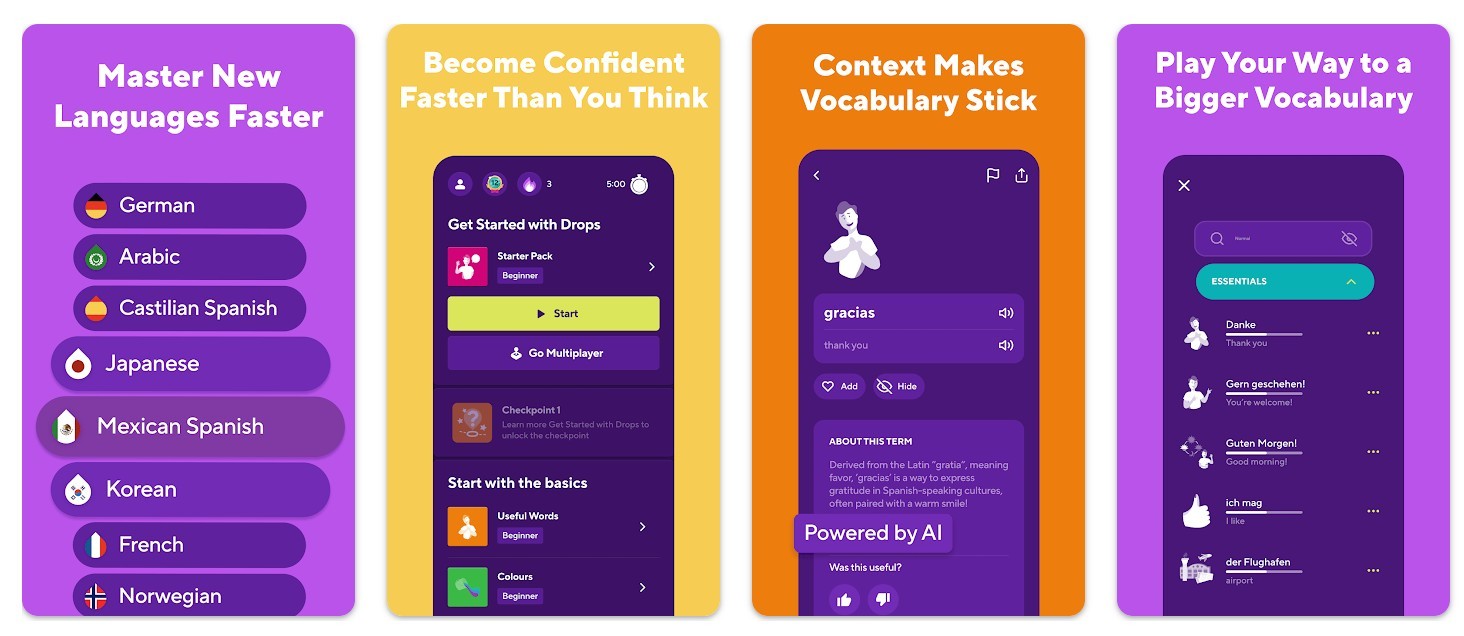
Drops is a visual vocabulary app that teaches words through quick, illustrated games. Each word comes with a picture, native audio and a few swipes, and sessions are designed to fit into a few spare minutes. Drops is part of Kahoot!.
It covers more than 50 languages, its course list shows both Portugal and Brazil, and the developer has confirmed it offers European Portuguese content. Topic selection lets you focus on areas such as food, travel or home, and a newer AI panel explains terms in context.
Ideal For
Drops suits learners who want vocabulary fast and in small doses.
- Busy beginners who can only spare a few minutes at a time
- Visual learners who remember words through images
- Learners preparing for daily life, from groceries to transport
- Supplement seekers who want extra vocabulary alongside a main course
It's less suited to learners who want grammar or speaking practice.
Top Features
Drops' features center on quick word learning.
- Illustrated vocabulary games: Words tied to images help them stick without translation drills.
- Short sessions: Practice fits into a coffee break or a stop on the metro.
- Review Dojo: Focused review of words you're starting to forget.
- Topic selection: Choose the vocabulary areas that matter for your move.
The format makes it easy to build a daily habit.
Why It Stands Out
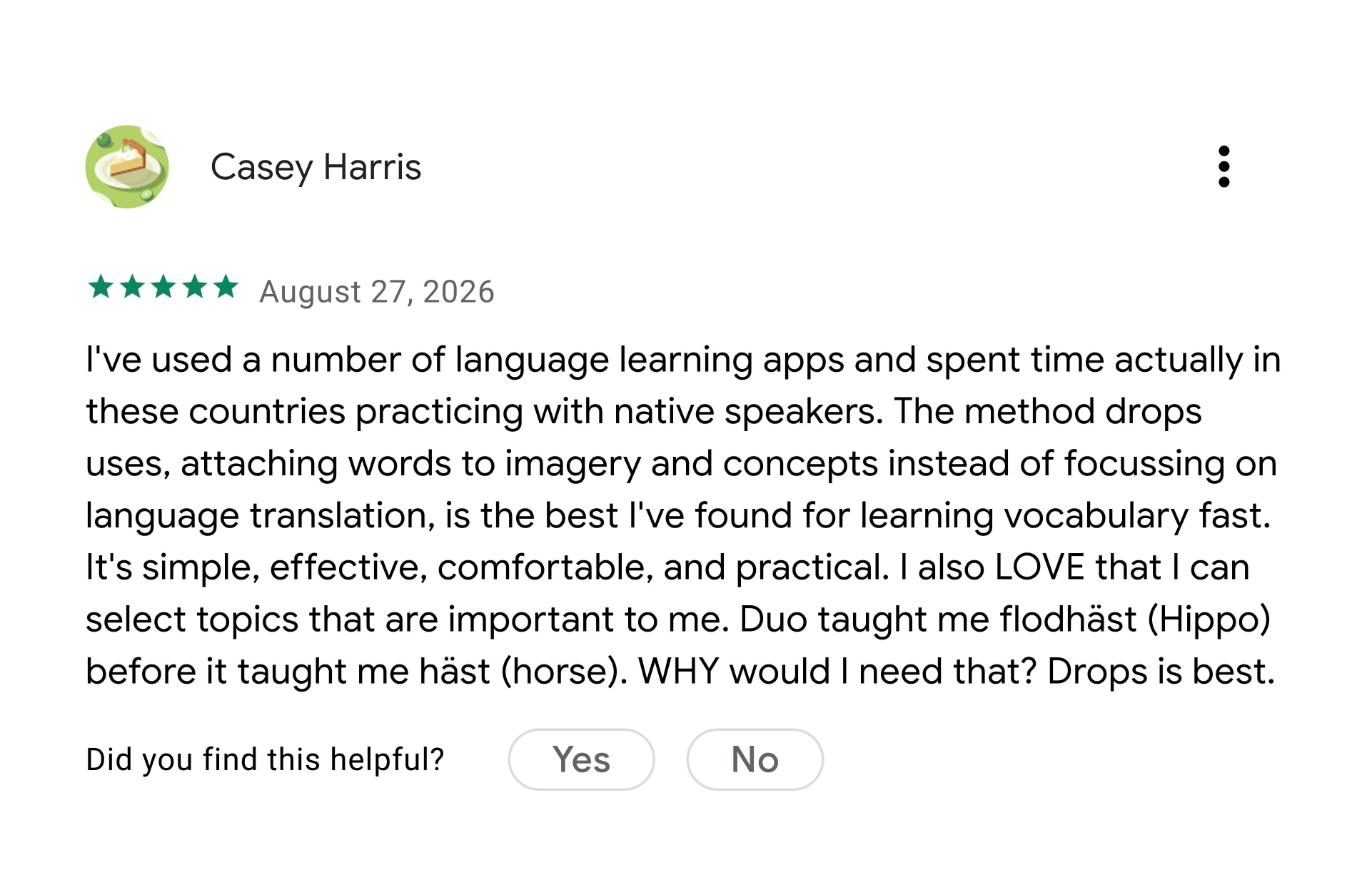
Drops is one of the smartest choices for building a base vocabulary quickly. Reviewers say attaching words to images works better for them than translation-based learning.
It's also one of the few vocabulary apps that offers Portugal's variant at all. One reviewer singles out the European Portuguese course as a reason to use it.
Pros
Drops' strengths come from its format.
- Fast, visual vocabulary learning
- Sessions short enough for any schedule
- European Portuguese content
- Engaging review tools and multiplayer
It's a pleasant way to grow your word bank.
Cons
Drops has clear limits as a main course.
- Little grammar, so you learn words more than sentences
- Little speaking practice or pronunciation feedback
- Reviewers report lag and timer glitches
- Difficulty can jump around between levels
Learners who want to hold conversations will need another app for speaking.
Customer Reviews
Drops holds 4.7 stars on the US App Store (72K ratings, Editors' Choice) and 4.5 stars on Google Play (319K reviews, 10M+ downloads). Users praise its image-based method for learning vocabulary fast, short sessions for busy days, a wide choice of languages and engaging review tools.
Complaints focus on lag and pauses, uneven difficulty, little grammar beyond vocabulary, occasional accuracy errors and persistent upgrade prompts.
Final Verdict
Drops is recommended for learners who want a quick, visual way to build European Portuguese vocabulary in spare minutes. It works well as a companion to a main course.
With little grammar and little speaking practice, it won't get you through a conversation with your neighbor on its own. Most learners pair it with a speaking-first app.
6. italki
Overview
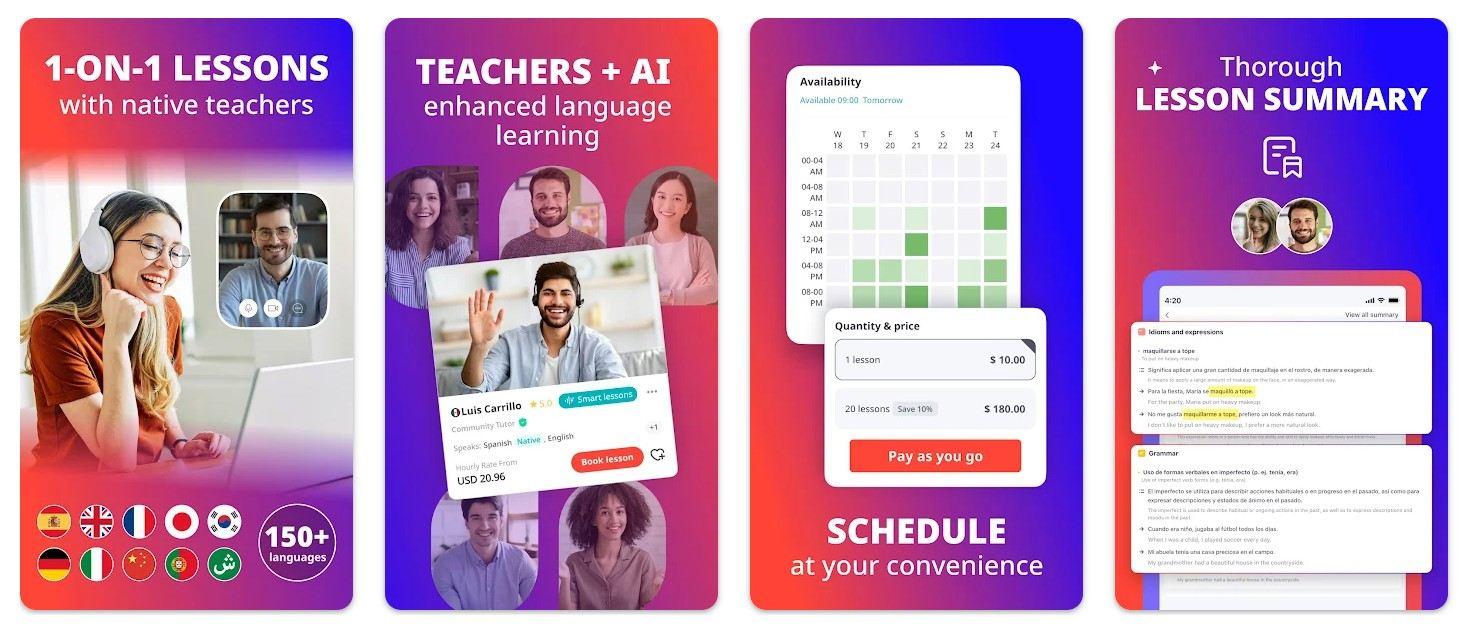
italki is an online marketplace for private lessons with independent language teachers. You browse teachers, book one-on-one video lessons at times that suit you, and pay per lesson or by package. italki says more than ten million students have used it.
It covers 150+ languages, and teacher profiles let you look for teachers from Portugal, so you hear the accent you'll live with. Lessons come with summaries of key expressions and grammar, and a free community helps you find language partners.
Ideal For
italki suits learners who want a person teaching them.
- Learners who want a specific accent, such as Porto or Lisbon
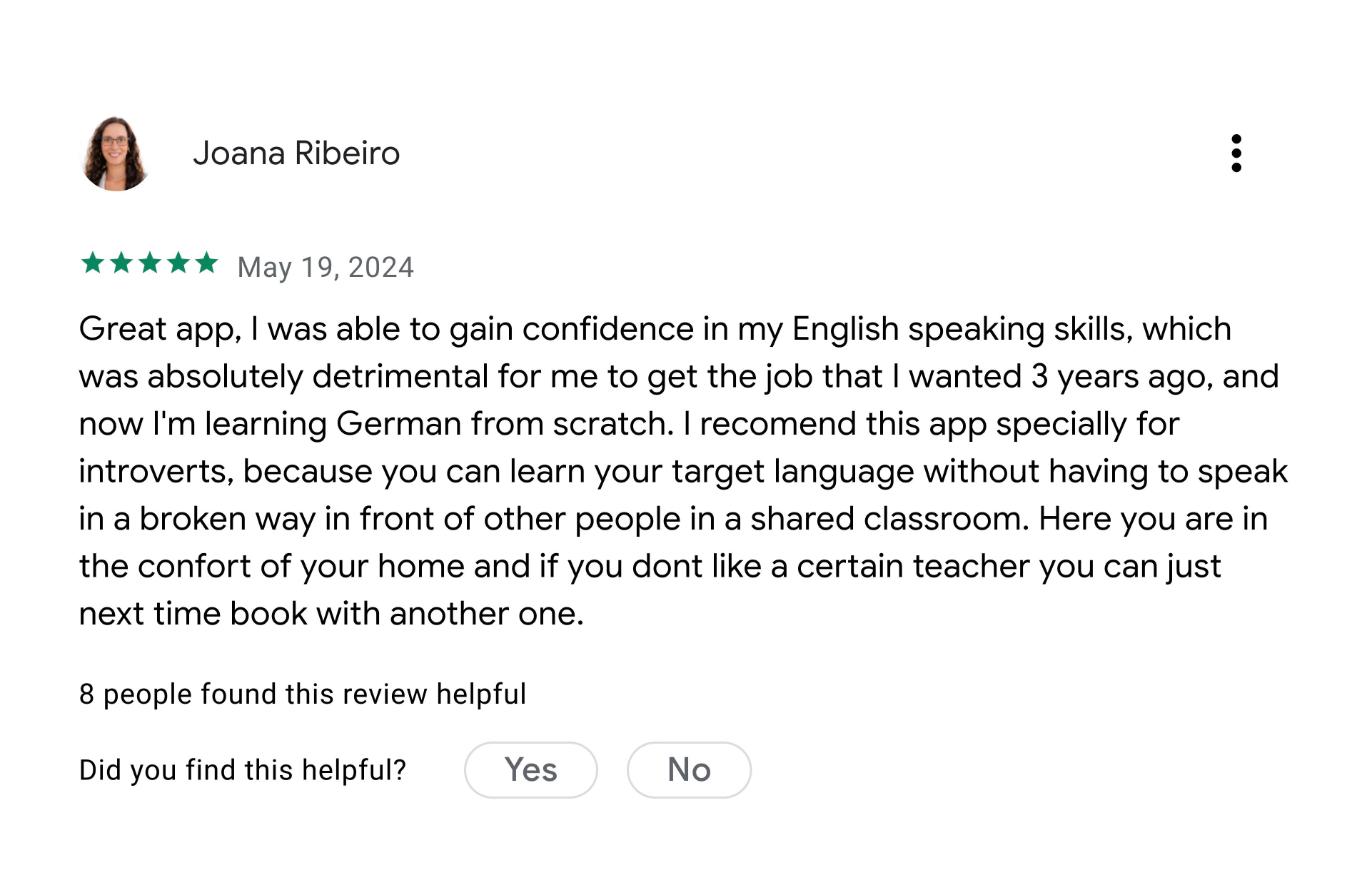
- Introverts who prefer private lessons at home
- Learners preparing for something specific, such as a CIPLE exam or a job interview
- Learners who prefer paying per lesson over a subscription
It's less suited to learners who want daily practice on a tight budget.
Top Features
italki's features revolve around teacher choice.
- 1-on-1 lessons: Live conversation with a native teacher who can answer any question.
- Teacher choice: Profiles help you pick a teacher, accent and teaching style.
- Flexible booking: Single lessons or packages, scheduled around your week.
- Lesson summaries: Recaps of idioms, expressions and grammar after each class.
Results depend on finding a teacher who fits you.
Why It Stands Out
italki is one of the strongest choices for flexible access to native teachers in almost any language or regional variant. A teacher from Portugal can explain when tu sounds friendly and when it sounds too familiar, in context.
Reviewers say italki lessons gave them the confidence to speak at work, and some credit it with landing a job.
Pros
italki's strengths come from choice and flexibility.
- Native teachers from Portugal
- Free choice of teacher and teaching style
- Pay-as-you-go booking
- Lesson summaries for review
It works well for motivated learners who know what they need.
Cons
italki shares the limits of tutor marketplaces.
- Lessons need scheduling, which is hard during a move
- Cost per hour makes daily practice expensive
- Teacher quality varies widely
- Reviewers say the app lags behind the teaching
Speaking time is limited to the lessons you book.
Customer Reviews
italki holds 4.8 stars on the US App Store (9.9K ratings) and 4.4 stars on Google Play (18.7K reviews, 5M+ downloads). Learners praise one-to-one lessons with native teachers, low-pressure learning from home and the freedom to switch teachers.
Complaints focus on the app itself, especially tutor search filters and saved tutors. One reviewer expected free chat with native speakers and found paid teachers instead.
Final Verdict
italki is recommended for learners who want native European Portuguese teachers on flexible terms, in exactly the accent they need. It's a good choice for targeted help before an exam or interview.
Cost and scheduling make daily speaking practice hard to sustain. Many learners use an AI tutor for everyday practice and book an italki lesson now and then.
7. Preply
Overview
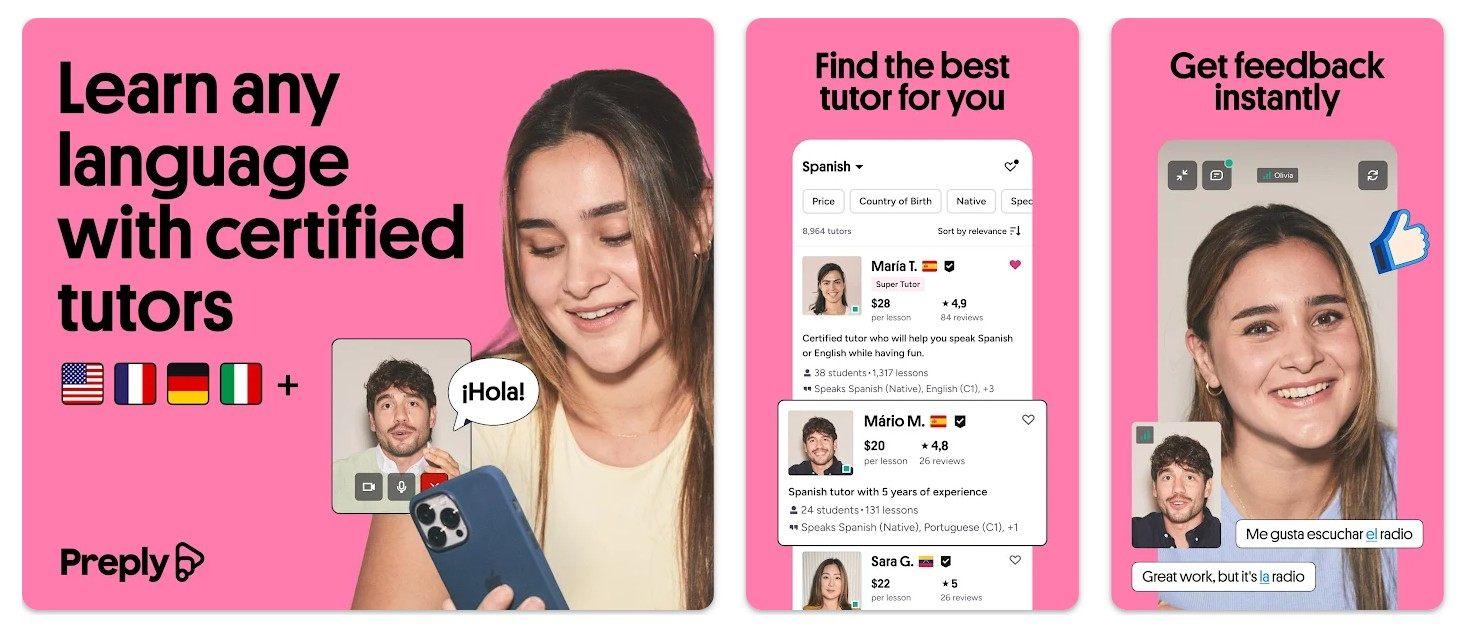
Preply is a tutoring marketplace that connects learners with tutors for live, one-to-one lessons. It lists thousands of professional tutors across 90+ languages and lets you set goals such as improving your speaking or preparing for an exam.
Lessons run on a subscription cycle, and you choose a tutor by background, teaching style and availability. For European Portuguese, that means you can look for a tutor from Portugal.
Preply positions itself on human teaching, and some reviewers mention tools that highlight areas to improve.
Ideal For
Preply suits learners who want steady, scheduled lessons.
- Learners who need accountability, with homework and a regular slot
- Professionals preparing for work conversations in Portugal
- Exam candidates who want a tutor to guide preparation
- Learners who want a long-term relationship with one tutor
It's less suited to learners with unpredictable schedules or a small budget.
Top Features
Preply's features support ongoing tutoring.
- 1-on-1 lessons: Personalized video lessons with a tutor you choose.
- Goal setting: Lessons shaped around your reason for learning.
- Wide tutor choice: Filters for background, price range and availability.
- Class reminders: The app keeps your lesson schedule organized.
A good tutor adapts every lesson to your progress.
Why It Stands Out
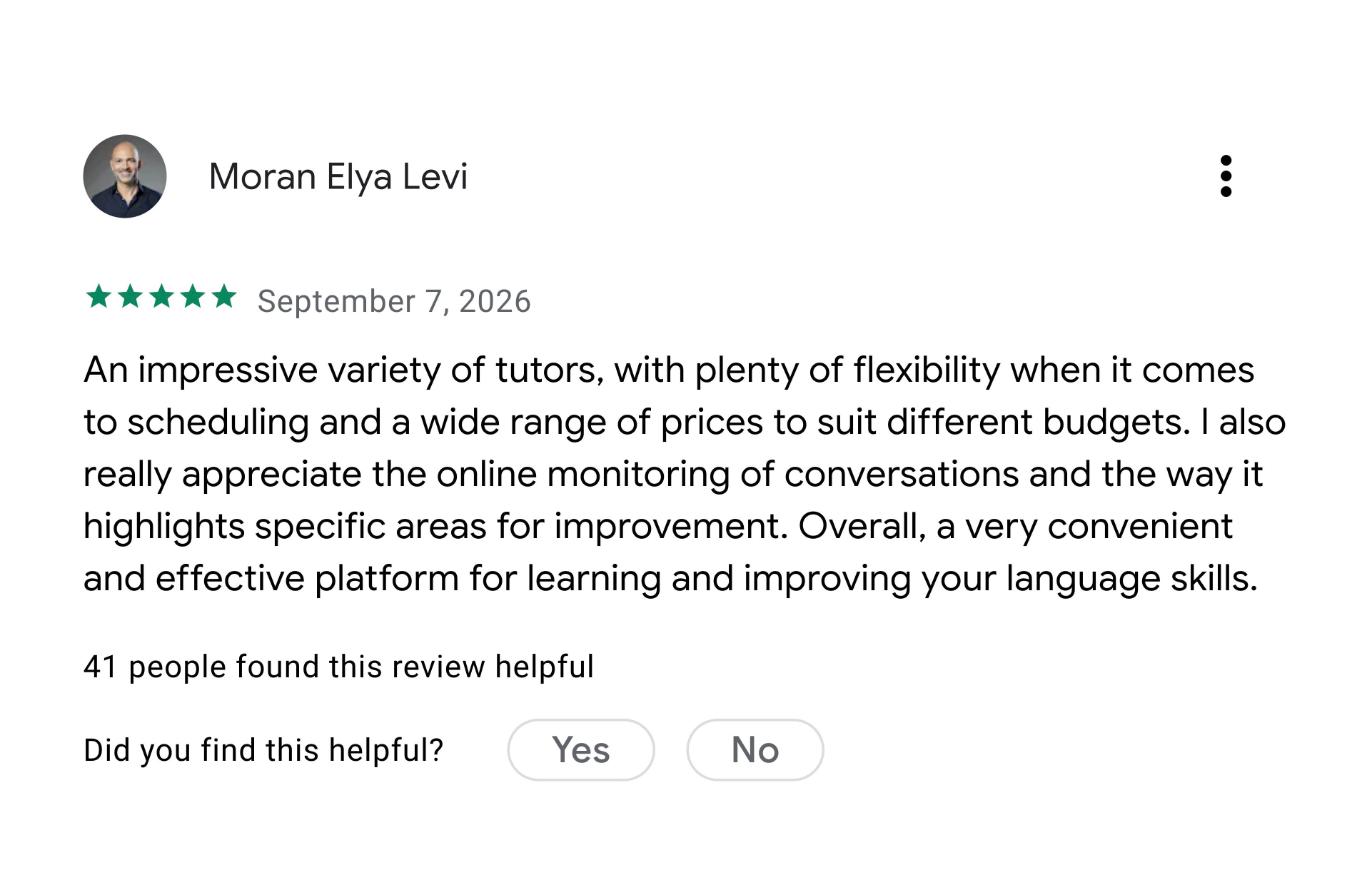
Preply is one of the strongest choices for learners who want a dedicated tutor and a fixed routine. Reviewers praise the variety of tutors and the flexibility of scheduling.
Many also value the accountability. Regular homework and review keep progress moving between lessons.
Pros
Preply's strengths come from human teaching.
- A wide choice of tutors, including tutors from Portugal
- Personalized lessons around your goals
- Homework and accountability
- An organized app with class reminders
It's a good fit for learners who like structure with a person.
Cons
Preply has limits that users mention often.
- Auto-renewal and billing complaints dominate reviews
- Some tutors raise their rates after a trial lesson
- Reports of tutor no-shows and slow support
- Frequent emails and notifications
Daily speaking practice with a tutor gets expensive quickly.
Customer Reviews
Preply holds 4.8 stars on the US App Store (45K ratings) and 4.8 stars on Google Play (64.8K reviews, 5M+ downloads). Learners praise the progress they make with a personal tutor, the variety of tutors, flexible scheduling and the accountability of homework.
The main complaints concern auto-renewal and unused lessons expiring, tutor rate changes after the trial, no-shows and too many notifications.
Final Verdict
Preply is recommended for learners who want a regular tutor, homework and someone checking on their progress. For European Portuguese, it's a good way to find a teacher from Portugal.
Billing complaints, scheduling and cost per lesson make it hard to use for daily practice. Most learners will get more speaking time by pairing occasional lessons with an AI tutor.
What Makes a Good App to Learn European Portuguese?
A good European Portuguese app gets you ready for real moments in Portugal: ordering at the café, sorting out your residence paperwork, chatting with the neighbor on the stairs. The strongest apps meet five criteria.
Use them to judge any app, including the ones on this list, before you commit to a long plan.
1. Real Speaking Practice From Day One
Speaking is the skill newcomers to Portugal want most and the one most apps train least. A good app gets you saying full sentences out loud from the first session, with someone or something responding.
Check how much of a typical session you spend talking. If it's mostly tapping and matching, you'll recognize Portuguese long before you can produce it.
2. Feedback on Portugal's Sounds
European Portuguese pronunciation is where most learners stumble. Unstressed vowels shrink or vanish, a final s often sounds like "sh", and nasal sounds such as ão in não take practice.
A good app corrects your pronunciation as you speak and explains what to change. Settings for speaking speed and feedback style help too, since slowing a tutor down makes reduced vowels easier to catch.
3. European Portuguese as Its Own Course
Brazilian and European Portuguese share grammar, yet they differ in sound, everyday words and forms of address. In Portugal you'll hear estou a aprender ("I'm learning") where a Brazilian would say estou aprendendo.
Look for an app that teaches European Portuguese as a separate course and says so clearly. If a listing only says "Portuguese", check which variant it means before you subscribe.
4. Explanations in Your Native Language
Apps that only speak Portuguese can overwhelm a complete beginner. Explanations in your own language make the first weeks far less frustrating.
The best approach starts in your language and switches to Portuguese gradually. You keep speaking from day one without getting lost in grammar terms.
5. A Plan That Adapts and Progress You Can Measure
Your reasons for learning shape what you practice. Someone relocating to Porto for work needs different phrases from a retiree in the Algarve or a partner preparing for a family lunch.
Look for an app that asks about your goal and level at setup, remembers your mistakes and adapts as you improve. Progress tracked in CEFR levels from A1 to C2 shows whether your Portuguese is moving forward.
How to Choose the Best App to Learn European Portuguese
The right app depends on where you'll use Portuguese, how much time you have and how you like to learn. These six factors help you build a shortlist fast.
| Factor | What to Check | Why It Matters |
|---|---|---|
| Variant | Confirm the app teaches European Portuguese as its own course, and test a lesson against what you hear in Portugal. | Many popular courses teach Brazilian Portuguese, so you'd practice sounds, words and forms of address that don't match Porto or Lisbon. |
| Speaking Time | Run a full session and count the minutes you spend speaking out loud in full sentences. | Locals switch to English when you hesitate, and only regular speaking practice builds the speed to keep a conversation in Portuguese. |
| Pronunciation Feedback | Check whether the app corrects your pronunciation as you speak and explains what to fix. | Reduced vowels and the "sh" sound are the main reasons learners sound foreign or go unheard in Portugal. |
| Your Real Situations | List the moments you need: renting a flat, calling a clinic, ordering a francesinha, chatting with in-laws. Then look for scenarios or free conversation that cover them. | Practice tied to your own life sticks faster and gives you phrases you'll use the same week. |
| Fit With Your Day | Decide whether you can practice in short daily sessions, in the car or only at booked times. | Consistency beats long sessions, and an app you can open on the metro gets used far more than a weekly lesson. |
| Certificates and Human Teachers | Decide whether you need an official exam such as CIPLE, or a human teacher for specific questions. | AI apps track your level and build speaking confidence, while exam passes and formal certificates need dedicated preparation. |
Score two or three apps against these factors, then try each for a few days before you pay for a full year. If you're still weighing which language to learn, our roundup of the best language learning apps compares options across every language.
Everything You Need to Know About European Portuguese Learning Apps
This table pulls the key points of the guide together. Use it as a quick reference before you download.
| Category | Key Considerations |
|---|---|
| Top 3 Apps | Praktika for speaking with an AI tutor, Practice Portuguese for a Portugal-only structured course, and Pimsleur for hands-free audio. |
| Best Overall Option | Praktika, for spoken conversations in European Portuguese with instant corrections, tutors that remember you and native-language explanations. |
| Why Use a European Portuguese App | Apps let you practice in short daily sessions around a move and make your early mistakes in private, before you speak with locals. |
| How to Choose | Confirm the app teaches European Portuguese, then compare speaking time, pronunciation feedback and fit with your daily routine. |
| Ease of Getting Started | Easy. Most apps set your level in a few minutes, and the best ones explain in your native language for complete beginners. |
| Must-Have Features | A European Portuguese course, daily speaking practice, real-time pronunciation feedback, an adaptive plan and progress in CEFR levels. |
| Mistakes You Shouldn't Make | Learning Brazilian Portuguese by accident, chasing streaks over speaking time, and waiting until you arrive in Portugal to start talking. |
For most learners, the variant question settles half the decision. Once you're sure an app teaches Portugal's Portuguese, choose the one that gets you speaking most.